 PlantFun
Plant Needs
Characteristics
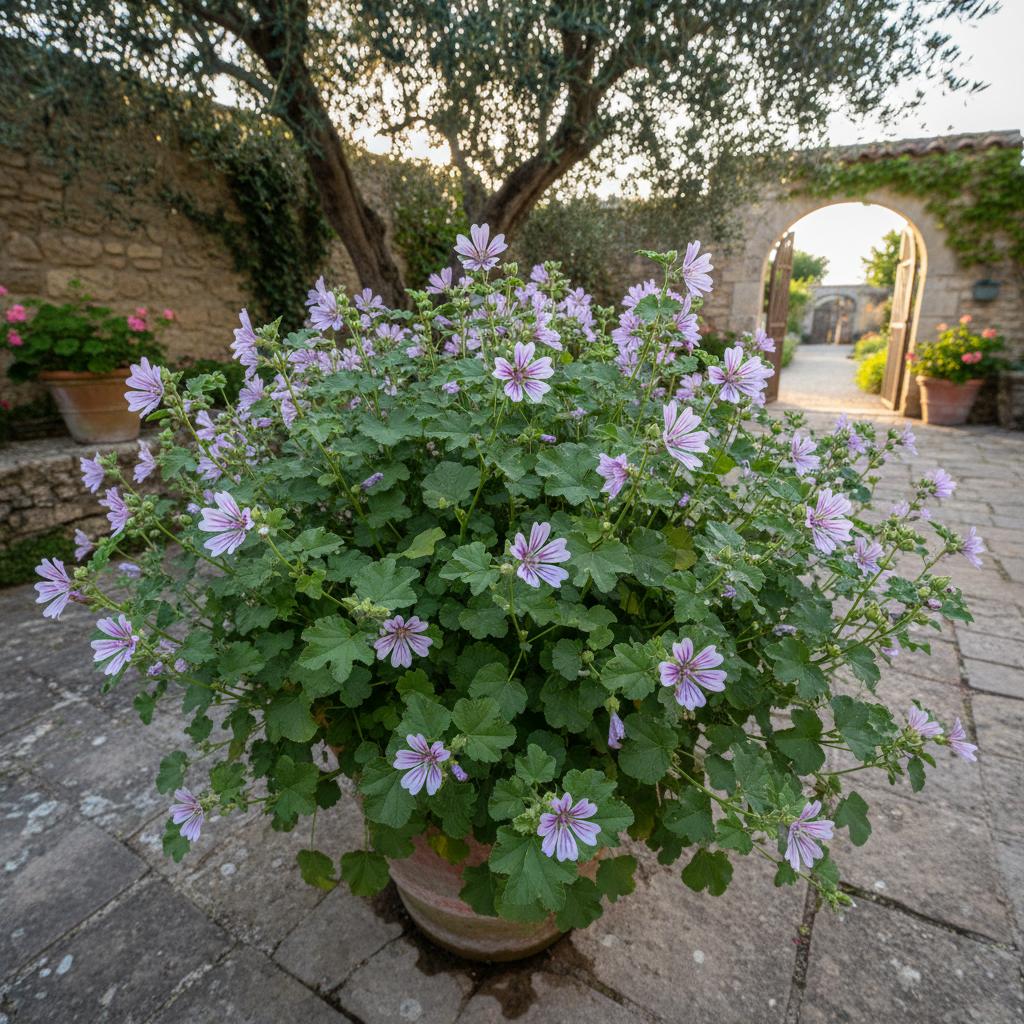
- Leaves: Alternate, orbicular to reniform, shallowly 5-7 lobed with crenate margins, borne on long petioles.
- Flowers: Clustered in leaf axils, petals pale pink to whitish with darker veins, deeply notched at the apex; epicalyx segments are ovate to lanceolate.
- Stem: Erect or decumbent, branching from the base, sparsely hairy to glabrescent.
- Fruit: A disc-like schizocarp consisting of 8-10 mericarps, strongly reticulate-rugose (wrinkled) on the dorsal surface, glabrous or slightly hairy.
Care Guide
Water moderately during active growth, allowing the soil to dry out between waterings.
Apply a light top-dressing of compost if grown in extremely poor soil.. Generally does not require supplemental feeding; thrives in low-nutrient environments.
Compost Tea:Steep a handful of finished garden compost or vegetable scraps (like potato peels and carrot tops) in water for 24 hours. Strain and use the liquid to water the base of the plant. Avoid using raw, uncomposted materials directly on the soil to prevent odor.- Cut back spent flower stalks to prevent aggressive self-seeding if grown in a managed garden.
- Remove dead or yellowing basal leaves to improve air circulation.
- Can be pulled entirely after setting seed, as it completes its life cycle rapidly.
Toxicity
Warning: this plant may be toxic.
Pets: Non-toxic per ASPCA guidelines for the Malva genus.
Humans: Leaves and young shoots are edible and historically consumed as a potherb.
Garden Uses & Culture
Culture: Historically, mallow species have been a staple in Mediterranean peasant diets, valued for their ability to grow in poor soils and provide early spring greens. They were also utilized in traditional European herbalism for their soothing mucilage.
Usage: - **Culinary**: Young leaves and shoots can be eaten raw in salads or cooked like spinach. - **Medicinal**: The mucilage-rich leaves have been traditionally used in poultices or teas to soothe sore throats and mild skin irritations. - **Ecological**: Attracts pollinators such as bees and small butterflies to disturbed habitats.