 PlantFun
Plant Needs
Sunlight
Requires full sun for optimal blooming and sturdy stem growth.
Watering
Moderate watering; prefers evenly moist soil but exhibits good drought tolerance once established.
Temperature
Thrives in warm summer temperatures; not frost-hardy as it is an annual.
Characteristics
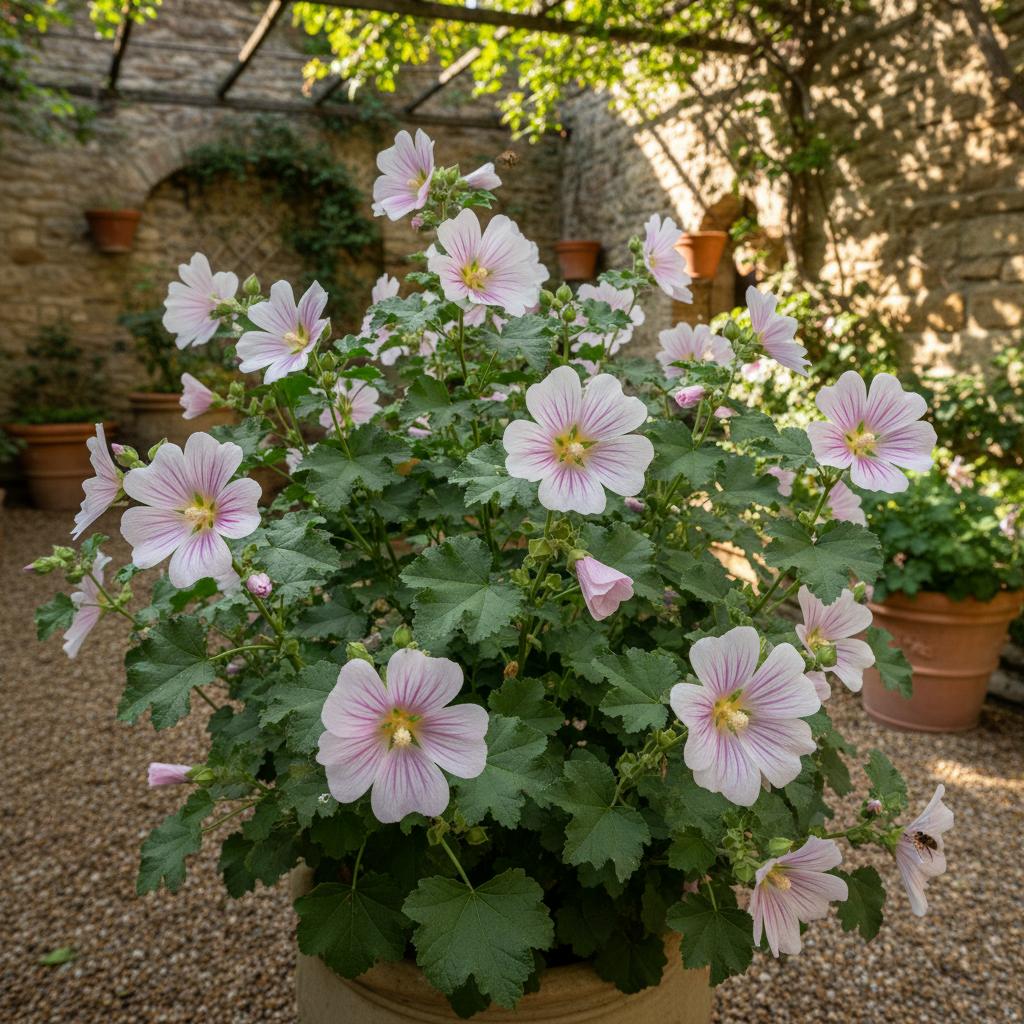
- Leaves: Alternate, lower leaves are rounded to heart-shaped, while upper leaves are palmately lobed (3-7 lobes) with serrated margins and a slightly hairy texture;
- Flowers: Solitary in leaf axils, large (up to 10 cm across), funnel-shaped with 5 petals, typically bright pink, rose, or white, featuring darker longitudinal veins and a prominent central staminal column;
- Stem: Erect, branching, and covered in fine hairs;
- Fruit: A disc-like schizocarp that breaks into several single-seeded mericarps upon maturity.
Care Guide
Watering
Water deeply when the top inch of soil feels dry, typically twice a week during hot, dry spells.
Fertilization
Apply a balanced, slow-release fertilizer at planting time.. Avoid high-nitrogen fertilizers, which will result in lush green growth at the expense of flowers.
Banana Peel Tea:Steep chopped banana peels in a jar of water for 24-48 hours. Dilute the liquid 1:1 with fresh water and pour around the base of the plant to boost flower production. Discard the solid peels in a compost bin to prevent attracting pests or creating odors.Pruning
- Deadheading: Regularly remove spent flowers to prevent seed formation and encourage a longer blooming period;
- Pinching: Pinch back young growing tips early in the season to promote a bushier habit;
- Clearance: Pull up and compost the entire plant after it dies back following the first autumn frost.
Toxicity
Warning: this plant may be toxic.
Pets & Humans
Pets: Non-toxic to cats per ASPCA guidelines for the Malvaceae family.
Humans: Generally considered non-toxic to humans; safe for typical garden cultivation.
Garden Uses & Culture
Culture: A staple of traditional European cottage gardens since the 17th century, prized for its effortless charm and vibrant, papery blooms that attract beneficial insects.
Usage: Widely used as an ornamental border plant, in wildflower meadows, and as a striking cut flower for summer arrangements.