 PlantFun
Plant Needs
Sunlight
Requires full sun to bright indirect light for optimal growth and spine coloration.
Watering
Water thoroughly only when the soil is completely dry; highly drought-tolerant.
Temperature
Prefers warm temperatures; protect from frost and freezing conditions.
Characteristics
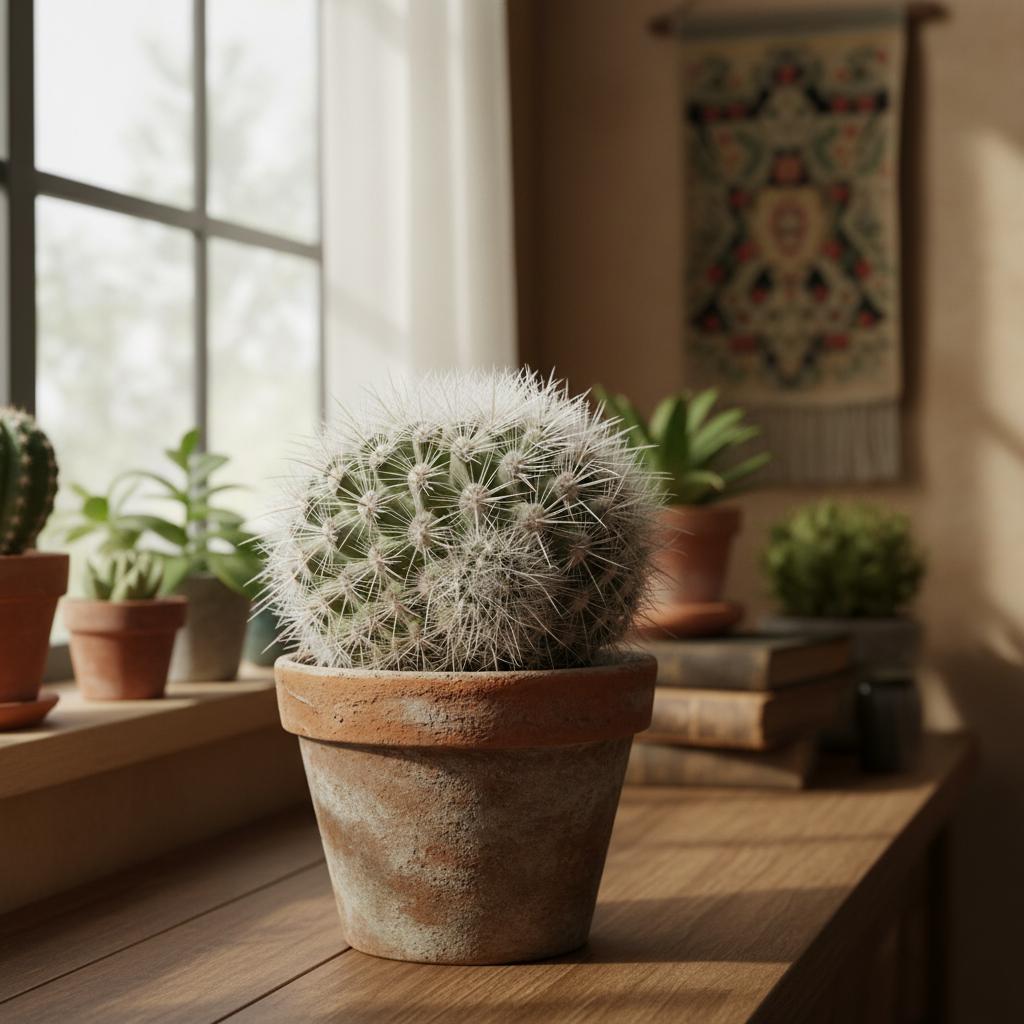
- Stems: Cylindrical, elongated, clustering at the base, densely covered in spines;
- Spines: Radial spines yellow to golden-brown, interlocking; central spines usually absent or 1-2;
- Flowers: Small, bell-shaped, pale yellow to pinkish, blooming in a ring near the apex.
Care Guide
Watering
Water deeply when the soil is completely dry, allowing excess to drain.
Fertilization
Apply a diluted, low-nitrogen cactus fertilizer once.. Fertilize once every 1 month during spring and summer; withhold fertilizer in winter.
Banana Peel Tea:Soak dried banana peels in water for 24 hours, then dilute 1:1 with water. Apply to soil. Avoid using raw peels directly on the soil to prevent rot, pests, and foul odors.Pruning
- Deadheading: Gently remove spent flowers with tweezers to maintain appearance;
- Propagation: Carefully separate offsets (pups) from the base using thick gloves and let them callous before planting;
- Maintenance: No regular pruning required; immediately remove any rotting or dead stems.
Toxicity
Warning: this plant may be toxic.
Pets & Humans
Pets: Non-toxic per ASPCA, but spines pose a puncture hazard to curious pets.
Humans: Non-toxic chemically, but sharp spines can cause mechanical injury and skin irritation.
Garden Uses & Culture
Culture: In Victorian Europe, collecting exotic cacti like Mammillaria became a symbol of botanical curiosity and wealth, often displayed in specialized glasshouses.
Usage: Popular as an ornamental potted plant, in desert landscaping, and in rock gardens.