 PlantFun
Plant Needs
Sunlight
Requires bright, indirect light to full sun for optimal blooming.
Watering
Keep soil evenly moist but not waterlogged; allow the top inch to dry out between waterings.
Temperature
Thrives in warm, tropical temperatures and is highly sensitive to frost.
Characteristics
- Leaves: Opposite, elliptical to rectangular, 8-20 cm long, dark green, glossy, and somewhat rugose (wrinkled) with prominent venation;
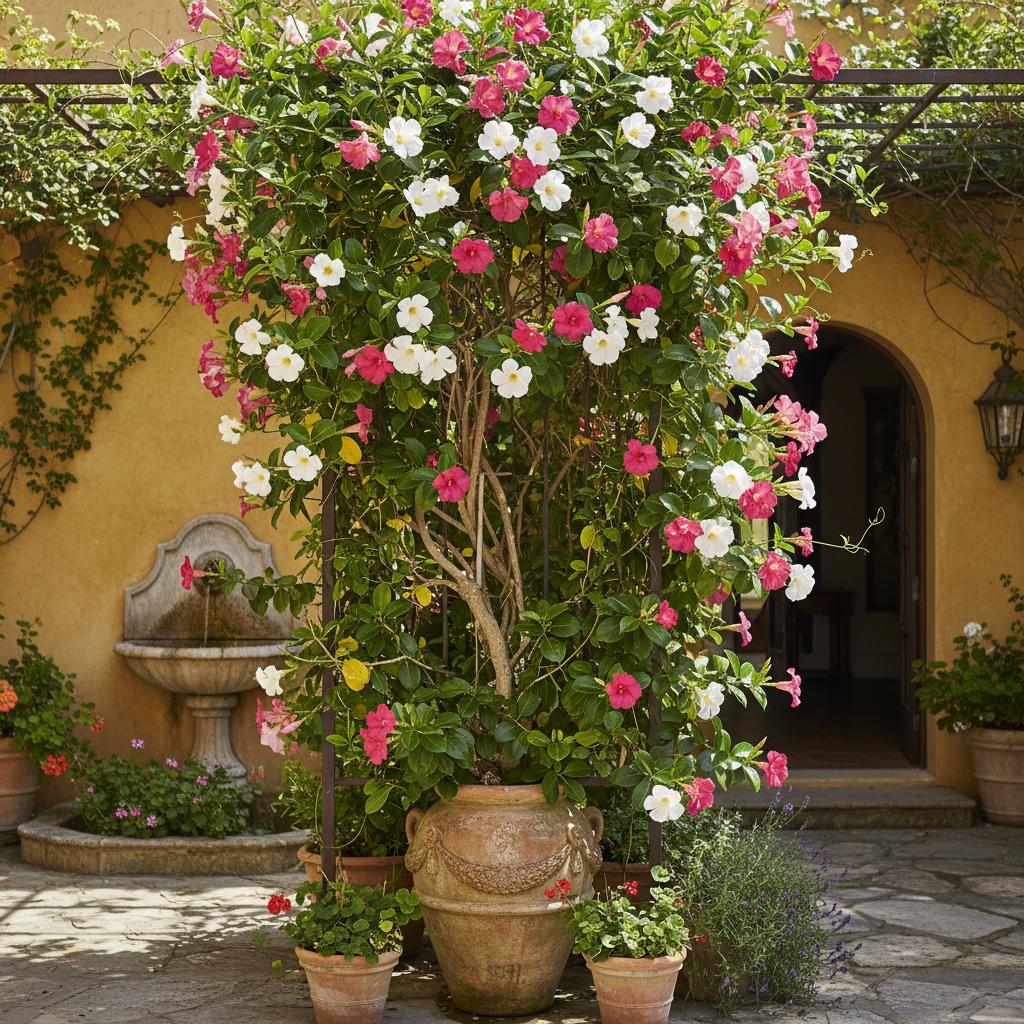
- Flowers: Trumpet-shaped, 8-10 cm across, typically pink with a darker rose or yellow throat, borne in racemes;
- Stems: Twining woody vines that exude a milky sap when broken or cut.
Care Guide
Watering
Water thoroughly when the top inch of soil feels dry.
Fertilization
Apply a balanced, water-soluble fertilizer to promote new growth.. Feed regularly during the active growing season, pausing entirely during winter dormancy.
Banana Peel Tea:Steep chopped banana peels in water for 24-48 hours, strain, and use the liquid to water the plant. This boosts potassium levels for better blooming. Discard peels in outdoor compost to avoid indoor fruit flies.Pruning
- Prune in late winter or early spring before new growth begins;
- Pinch back growing tips to encourage bushier growth and more flowers;
- Remove dead, damaged, or diseased vines promptly;
- Provide a sturdy trellis or support for the twining stems to climb.
Toxicity
Warning: this plant may be toxic.
Pets & Humans
Pets: Considered non-toxic to cats per ASPCA, though ingestion of any plant material may cause mild, self-limiting stomach upset.
Humans: The milky sap can cause mild skin irritation or dermatitis upon contact, and mild stomach upset if ingested.
Garden Uses & Culture
Culture: A staple in Victorian-era European conservatories, it remains a highly popular patio and balcony plant across the Americas and Europe for its instant tropical aesthetic.
Usage: Excellent for trellises, arbors, hanging baskets, and large patio containers.