 PlantFun
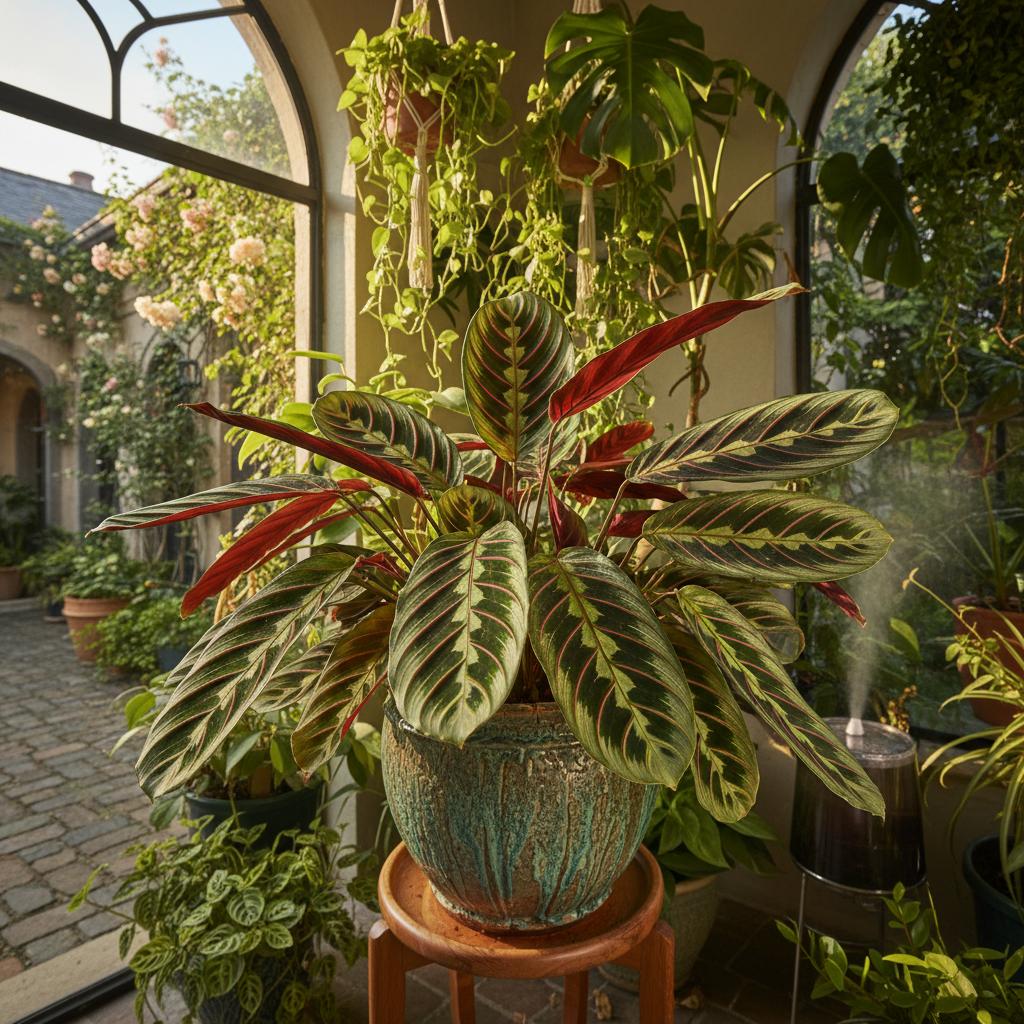
Plant Needs
Sunlight
Prefers bright, indirect light; direct sunlight will scorch the leaves and fade their vibrant patterns.
Watering
Requires consistently moist soil, but not waterlogged. Highly sensitive to hard water; use filtered or distilled water.
Temperature
Thrives in warm, stable temperatures; avoid cold drafts and temperatures below 15°C.
Characteristics
- Leaves: Broadly elliptic to oval, light grayish-green with prominent dark green to brown splotches on either side of the midrib resembling rabbit tracks; undersides are silvery-green.
- Stems: Short, branching, often trailing or spreading horizontally, with noticeable nodes.
- Flowers: Small, tubular, white with pale purple spots, borne on slender spikes, though rarely blooming indoors.
- Habit: Exhibits nyctinasty, where leaves fold upward at night like praying hands, driven by a specialized joint (pulvinus) at the base of the leaf.
Care Guide
Watering
Keep the soil evenly moist, watering when the top half-inch feels dry.
Fertilization
Apply a diluted, balanced fertilizer.. Do not fertilize during the winter dormancy period.
Aquarium Water or Banana Peel Tea:Use old aquarium water during water changes for a gentle nitrogen boost, or steep banana peels in water for 24 hours to provide potassium. Ensure the liquid is at room temperature to avoid shocking the roots.Pruning
- Maintenance: Trim away any yellow, brown, or dead leaves at the base of the stem using sterilized scissors.
- Shaping: Pinch back stems just above a leaf node to encourage bushier growth rather than leggy trailing.
- Cleaning: Wipe leaves gently with a damp cloth to remove dust and support photosynthesis.
Toxicity
Warning: this plant may be toxic.
Pets & Humans
Pets: Non-toxic to cats (per ASPCA).
Humans: Non-toxic to humans.
Garden Uses & Culture
Culture: In Western houseplant culture, the "Prayer Plant" is often gifted as a symbol of gratitude, reflection, and mindfulness, inspired by its daily ritual of folding its leaves at dusk as if in evening prayer.
Usage: Highly valued as an ornamental indoor plant, perfect for tabletops, hanging baskets, or terrariums where its trailing habit and striking foliage can be showcased.