 PlantFun
Plant Needs
Sunlight
Bright, indirect light; avoid direct sunlight which can scorch the leaves and fade the patterns.
Watering
Keep soil consistently moist but not waterlogged; requires high humidity.
Temperature
Thrives in warm household temperatures; avoid cold drafts below 15°C.
Characteristics
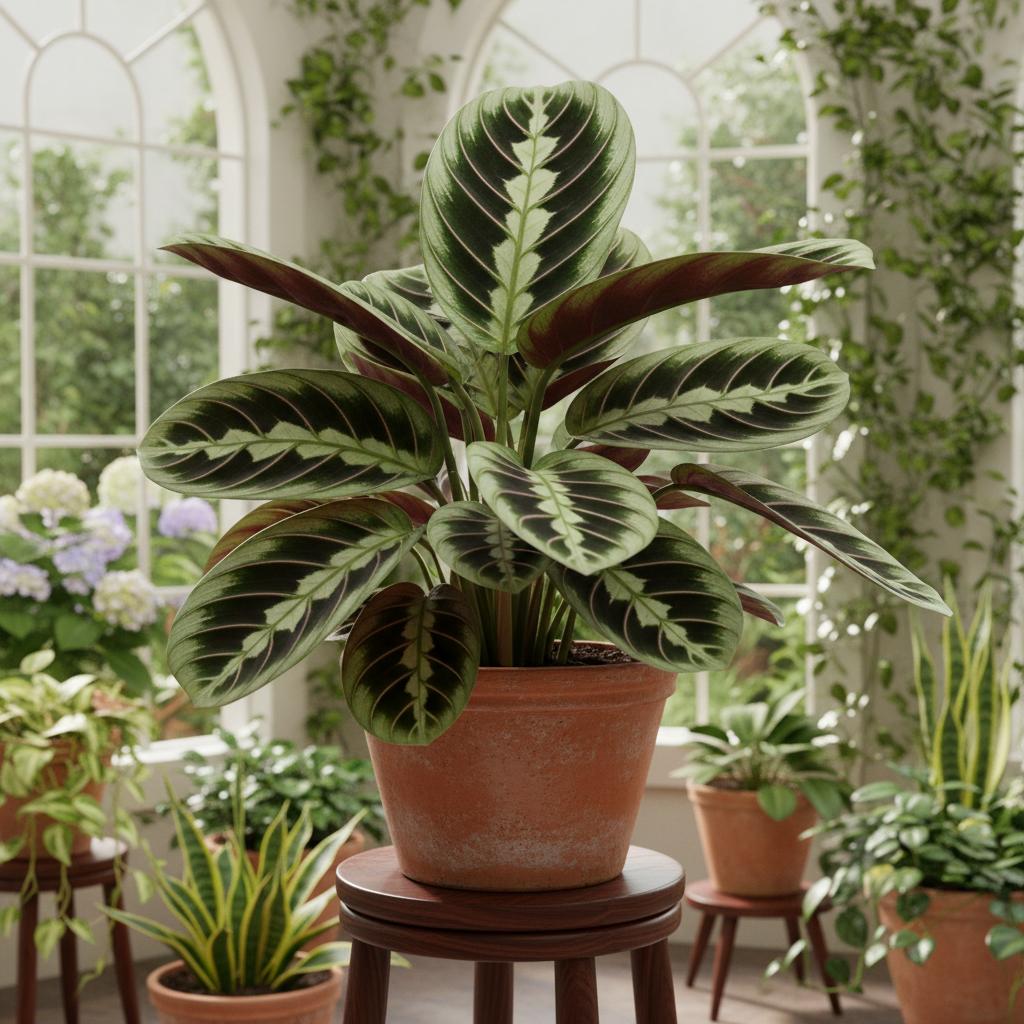
- Leaves: Broad, oval-shaped, dark green with striking white or silvery-pink lateral veins and a lighter green central pattern; exhibits nyctinasty (folding upward at night).
- Stems: Short, clumping, with a slightly trailing or spreading habit.
- Flowers: Small, tubular, white to pale purple, borne on slender spikes, though rarely the main attraction.
- Roots: Shallow, fibrous root system with small rhizomes.
Care Guide
Watering
Keep soil consistently moist, watering when the top inch feels dry.
Fertilization
Apply a balanced liquid fertilizer diluted to half strength.. Do not fertilize in winter when growth slows down.
Banana Peel Tea:Soak chopped banana peels in water for 24-48 hours. Strain and dilute 1:1 with water to boost root health and foliage vibrancy. Avoid leaving solid peels on the soil to prevent fungus gnats.Pruning
- Trim away any brown or yellowing leaves at the base to encourage new growth.
- Prune leggy stems just above a leaf node to promote a bushier appearance.
- Remove spent flower spikes to redirect energy to foliage production.
Toxicity
Warning: this plant may be toxic.
Pets & Humans
Pets: Non-toxic to cats per ASPCA.
Humans: Non-toxic to humans.
Garden Uses & Culture
Culture: Popularized in Victorian times as a parlor plant, it is cherished in Western indoor gardening for its dynamic "praying" movement, often symbolizing gratitude, reflection, and daily devotion.
Usage: - Excellent as a tabletop or hanging basket houseplant. - Frequently used in terrariums due to its love for high humidity and compact growth.