 PlantFun
Plant Needs
Characteristics
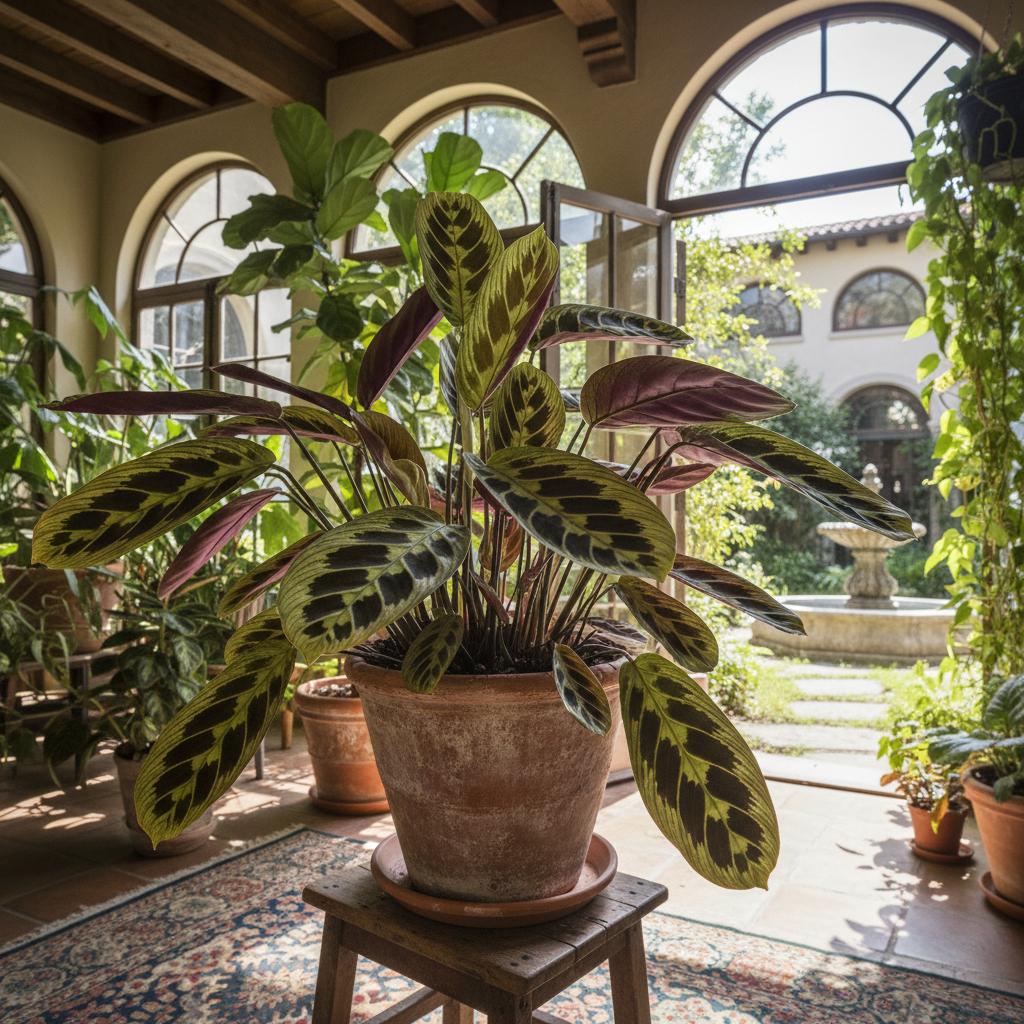
- Leaves: Broadly elliptic to oval, light green background with dark green or brownish blotches on either side of the midrib (resembling rabbit tracks), heavily splashed and mottled with irregular white or cream variegation; leaves fold upward at night.
- Stems: Short, creeping or trailing, often forming clumps.
- Flowers: Small, tubular, white with pale purple spots, borne on slender stalks, though rarely the primary ornamental feature.
- Roots: Fine, fibrous root system, sometimes forming small rhizomes.
Care Guide
Water thoroughly when the top inch of soil feels dry, maintaining even moisture.
Apply a diluted, balanced liquid fertilizer to support new variegated growth.. Do not fertilize during the winter dormancy period.
Aquarium Water:Use leftover water from freshwater aquarium changes. It provides gentle, natural nitrogen and trace minerals without the risk of chemical burn. Ensure the water is at room temperature and free of added aquarium salts or medications.- Remove dead, yellowing, or entirely brown leaves at the base of the stem using sterilized scissors.
- Prune back leggy stems just above a leaf node to encourage bushier, more compact growth.
- Wipe leaves gently with a damp cloth to remove dust and support efficient photosynthesis.
Toxicity
Warning: this plant may be toxic.
Pets: Non-toxic to cats per ASPCA.
Humans: Non-toxic to humans; safe to handle.
Garden Uses & Culture
Culture: Known widely in Western horticulture as the "Prayer Plant" due to its daily nyctinastic movements, where leaves fold upward at night resembling hands in prayer. It has become a symbol of gratitude and reflection in indoor gardening communities.
Usage: - Highly prized as an indoor ornamental foliage plant. - Excellent for hanging baskets where its trailing habit can be displayed. - Suitable for terrariums or greenhouses due to its love for high humidity.