 PlantFun
Plant Needs
Sunlight
Requires bright, indirect light; direct sun will scorch the delicate variegated leaves and fade their colors.
Watering
Keep soil consistently moist but not soggy; requires high ambient humidity to prevent crispy leaf edges.
Temperature
Thrives in warm household temperatures; highly sensitive to cold drafts and sudden temperature drops.
Characteristics
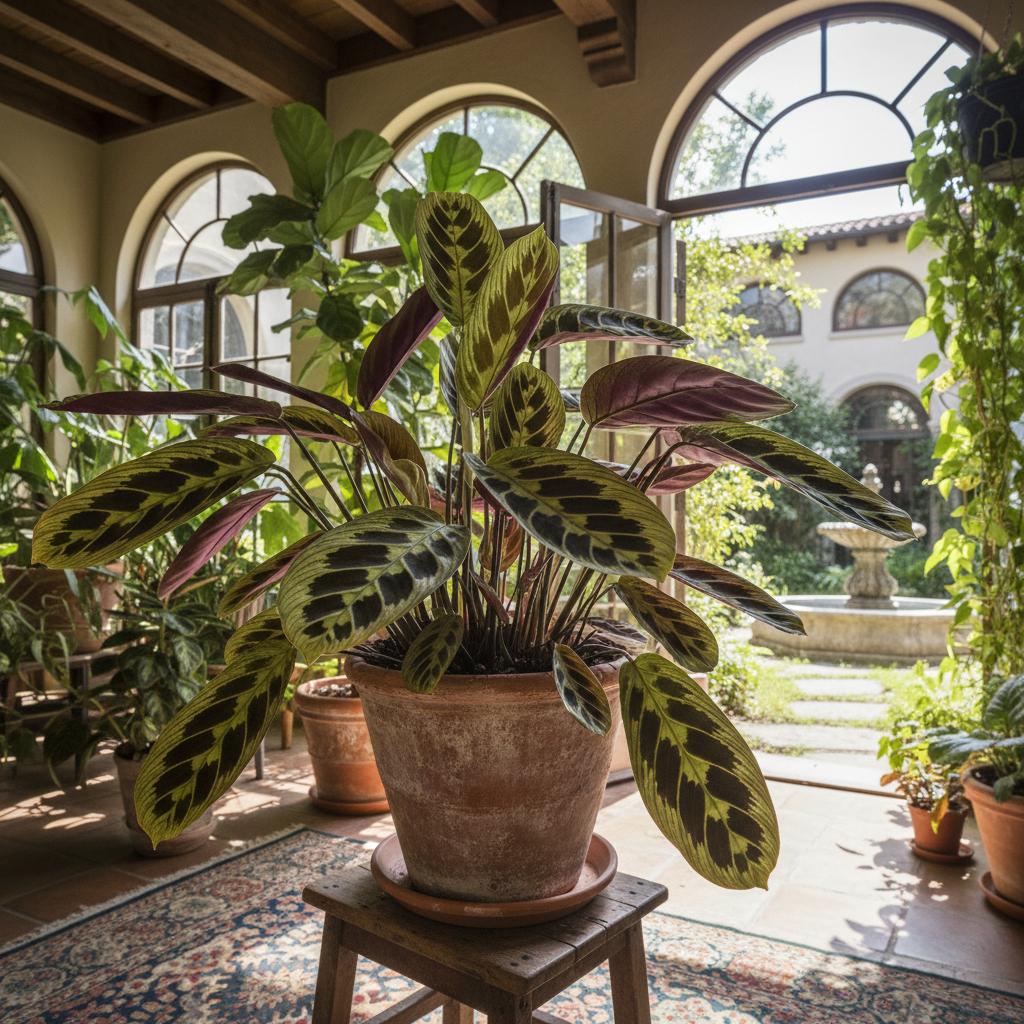
- Leaves: Broadly elliptic to oval, light green background with dark green to brown rabbit-track spots, heavily splashed with irregular white or cream variegation; exhibits nyctinasty (folding upward at night).
- Stems: Spreading, low-growing, jointed stems that tend to trail as the plant matures.
- Flowers: Small, asymmetrical, white to pale purple tubular flowers borne on slender stalks, though rarely blooming indoors.
Care Guide
Watering
Water thoroughly when the top inch of soil feels dry.
Fertilization
Apply a diluted balanced liquid fertilizer.. Do not fertilize in winter when plant growth naturally slows down.
Banana Peel Tea:Soak chopped banana peels in water for 24-48 hours, strain, and dilute 1:1 with fresh water. Avoid leaving raw organic matter on the soil surface to prevent fungus gnats and mold.Pruning
- Remove yellowed or crispy leaves at the base of the stem using sterilized scissors.
- Pinch back leggy stems just above a leaf node to encourage bushier growth.
- Trim away any completely reverted (solid green) shoots if you wish to maintain the highly variegated appearance.
Toxicity
Warning: this plant may be toxic.
Pets & Humans
Pets: Non-toxic to cats per ASPCA.
Humans: Non-toxic to humans.
Garden Uses & Culture
Culture: Known universally as the "Prayer Plant" in Western households, its daily leaf movements have made it a symbol of gratitude, reflection, and the rhythmic cycles of nature.
Usage: Popular as a tabletop specimen or in hanging baskets where its trailing habit and striking variegated foliage can be fully appreciated.