 PlantFun
Plant Needs
Sunlight
Requires plenty of bright light, thriving best in full sun to partial shade.
Watering
Water deeply but allow the topsoil to dry out slightly between waterings.
Temperature
Prefers warm, frost-free climates and may die back in freezing temperatures.
Characteristics
- Leaves: Opposite, simple, ovate to elliptic, with entire margins and a smooth texture;
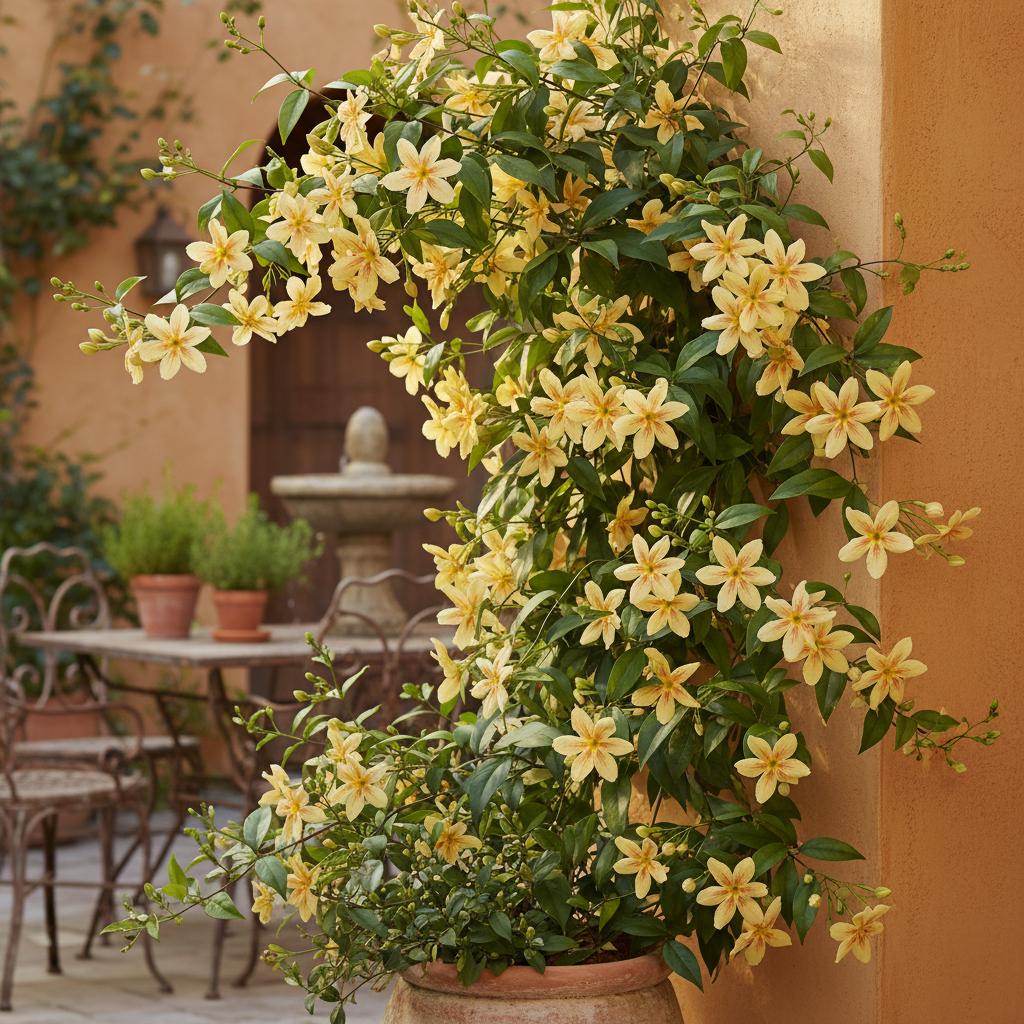
- Flowers: Five-petaled, often yellow or lilac, with distinctly clawed petals characteristic of the family;
- Fruit: A distinctive samara with papery wings, resembling a butterfly in shape, transitioning from green to tan;
- Stem: Woody climbing vine with a twining habit, requiring support to ascend.
Care Guide
Watering
Water regularly, about once a week, increasing frequency during extreme heat.
Fertilization
Apply a balanced slow-release fertilizer at the start of the growing season.. Avoid over-fertilizing, which can promote excessive foliage at the expense of flowers.
Banana Peel Tea:Steep chopped banana peels in water for 24 hours. Dilute 1:1 with water and apply to the base to promote blooming. Discard the solid peels in a compost bin to avoid attracting pests.Pruning
- Prune in late winter or early spring to control size and shape before new growth begins;
- Remove dead, damaged, or crossing vines to encourage healthy airflow;
- Train young vines onto a sturdy trellis or arbor to establish a strong climbing framework.
Toxicity
Warning: this plant may be toxic.
Pets & Humans
Pets: Non-toxic to cats; no adverse effects expected from incidental nibbling.
Humans: No known toxicity; generally considered safe for humans.
Garden Uses & Culture
Culture: In Western horticulture and crafts, the papery, butterfly-like seed pods are highly valued and frequently collected for use in rustic dried floral arrangements and autumn wreaths.
Usage: Widely used as an ornamental vine for covering trellises, arbors, and chain-link fences; seed pods are used in dried floristry.