 PlantFun
Plant Needs
Characteristics
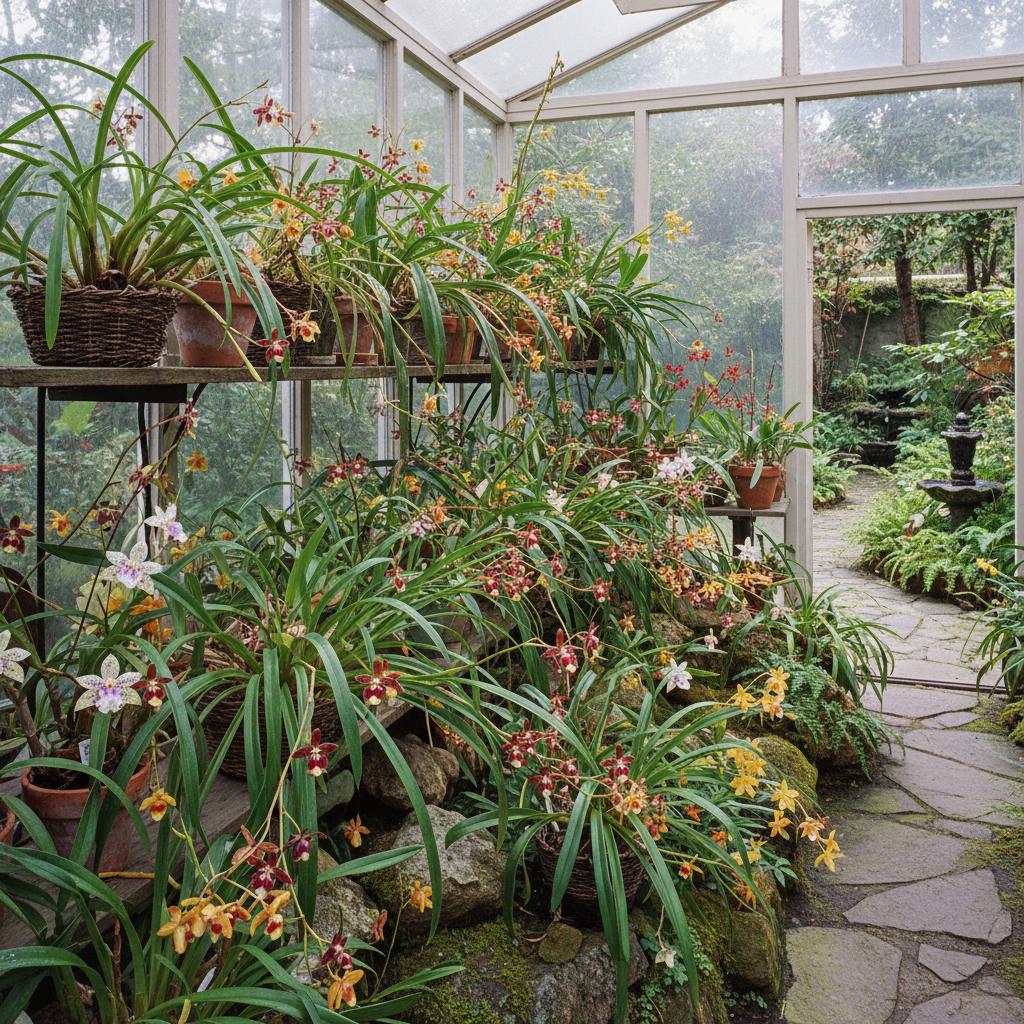
- Leaves: Long, linear, grass-like leaves emerging singly from the apex of each pseudobulb, reaching up to 35 cm in length;
- Flowers: Solitary flowers borne on short stalks from the base of the pseudobulbs, typically dark red to maroon with yellow mottling on the lip, emitting a strong roasted coconut fragrance;
- Pseudobulbs: Compressed, somewhat flattened and ovate, growing in an ascending or climbing habit along a stout rhizome;
- Roots: Thick, white velamen-covered aerial roots adapted for clinging to tree bark and absorbing atmospheric moisture.
Care Guide
Water thoroughly when the top inch of the medium approaches dryness, usually 1-2 times a week.
Apply a balanced, water-soluble orchid fertilizer diluted to 1/4 strength every two weeks.. Flush the pot with plain water once a month to prevent the buildup of fertilizer salts.
Banana Peel Tea:Steep chopped banana peels in water for 24 hours. Strain the liquid and dilute 1:1 with fresh water. Use this to water the orchid bark mix to encourage blooming. Discard the solid peels in the compost; do not leave raw peels in the pot to prevent mold and fungus gnats.- Remove spent flowers by snipping the short floral stalk near the base;
- Trim away completely dead, brown, and papery leaves using sterilized shears;
- Leave old, leafless pseudobulbs intact as they store water and nutrients for the plant;
- Repot and divide only when the plant has outgrown its container or the bark medium has broken down (every 2-3 years).
Toxicity
Warning: this plant may be toxic.
Pets: Non-toxic to cats per ASPCA guidelines for the Orchidaceae family.
Humans: Generally recognized as safe and non-toxic to humans.
Garden Uses & Culture
Culture: Highly prized in Western orchid collections and botanical conservatories since the 19th century for its unique, intense culinary fragrance, often evoking tropical nostalgia.
Usage: Cultivated primarily as an ornamental houseplant, greenhouse specimen, or mounted epiphyte in terrariums and orchidariums.