 PlantFun
Plant Needs
Characteristics
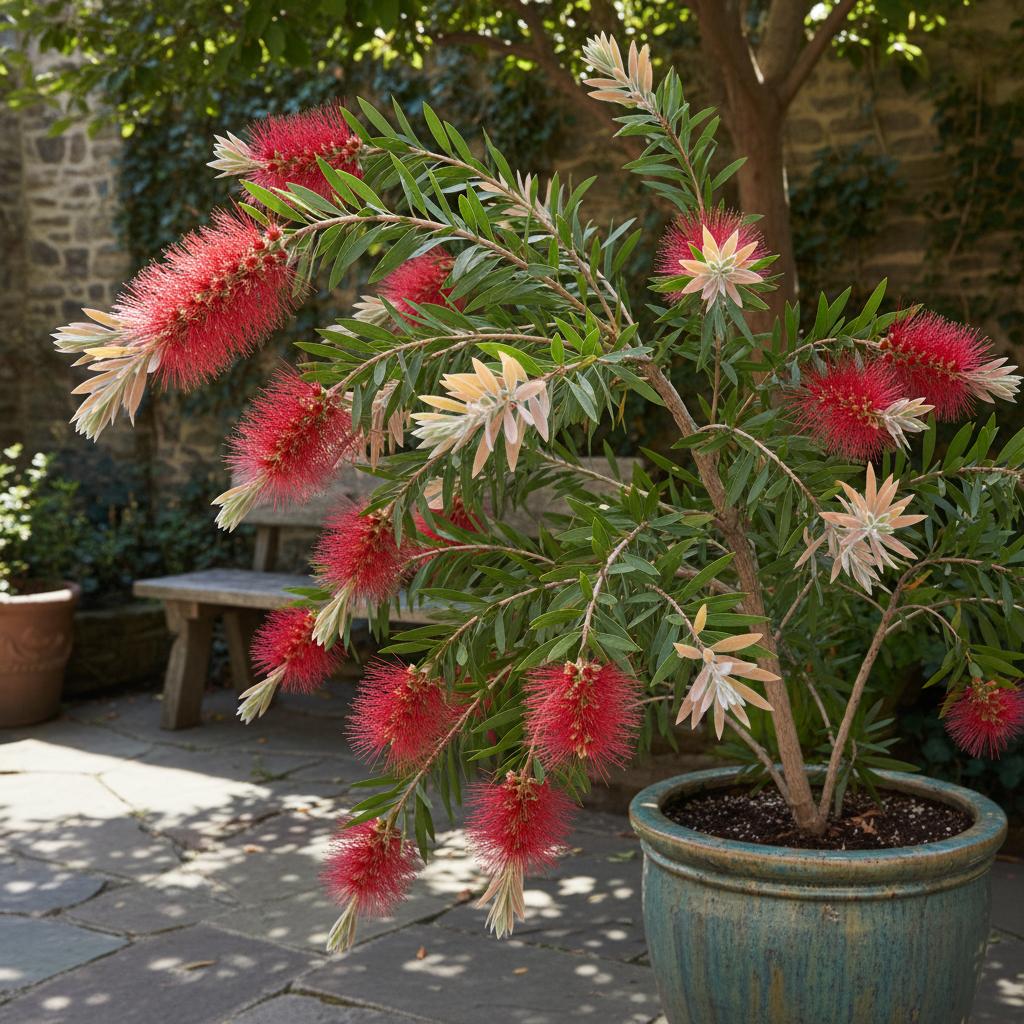
- Leaves: Small, alternate, linear to narrow-elliptic, glabrous, typically 4-10 mm long;
- Flowers: White to cream, arranged in small terminal heads or short spikes, featuring prominent stamens;
- Bark: Rough, corky or papery on older stems, typical of many paperbarks;
- Stems: Slender, branching densely to form a compact, rounded shrub.
Care Guide
Water deeply once a week during active growth and extreme heat, allowing the soil to dry out between waterings.
Apply a low-phosphorus, slow-release fertilizer formulated for native plants.. Melaleucas are adapted to nutrient-poor soils and require minimal feeding.
Banana Peel Tea:Soak chopped banana peels in water for 24-48 hours. Dilute 1:1 with water and apply to the base to encourage blooming. Avoid high salts and ensure peels are fully decomposed or strained to prevent pests and odors.- Prune lightly just behind the spent flowers after blooming to maintain a compact shape;
- Avoid cutting into old, leafless wood as it may not regenerate well;
- Remove any dead, damaged, or crossing branches in late winter to improve airflow.
Toxicity
Warning: this plant may be toxic.
Pets: Mildly toxic if ingested in large quantities due to the presence of essential oils common in Myrtaceae.
Humans: Generally considered non-toxic to humans under normal contact, though ingestion of large amounts of foliage is not recommended.
Garden Uses & Culture
Culture: In Western water-wise landscaping, Melaleuca species are highly valued for their drought tolerance, low maintenance, and ability to attract beneficial pollinators to the garden.
Usage: - Excellent as a low windbreak or screening plant; - Ornamental garden shrub for dry borders and rockeries; - Habitat and nectar source for birds and bees.