 PlantFun
Plant Needs
Characteristics
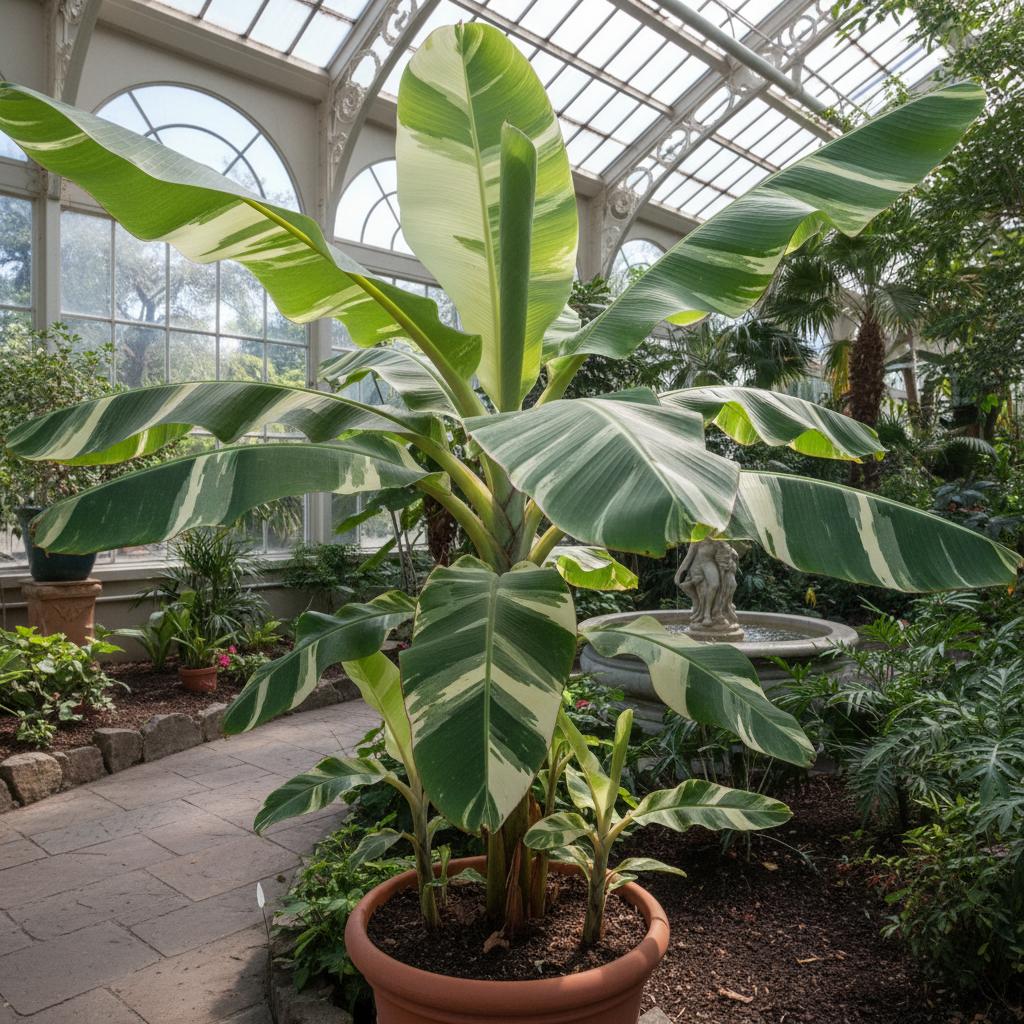
- Leaves: Large, paddle-shaped leaves up to 2 meters long, featuring spectacular variegation with alternating bands of dark green, pale green, and stark white or cream;
- Flowers: Inflorescence emerges from the center of the pseudostem, featuring large reddish-purple to pinkish bracts that roll back to reveal rows of small, tubular, pale yellow flowers;
- Fruits: Elongated berries (bananas) that exhibit the same striking green and white longitudinal stripes as the leaves, eventually turning yellow when fully ripe;
- Stem: A robust pseudostem formed by tightly overlapping leaf sheaths, prominently striped with white and green.
Care Guide
Water deeply and frequently to maintain even soil moisture, never allowing the root ball to dry out completely.
Apply a balanced, slow-release fertilizer rich in nitrogen and potassium to support rapid vegetative growth.. Heavy feeder during the active growing season; ensure adequate potassium for strong pseudostem development.
Banana Peel and Coffee Ground Mix:Steep chopped banana peels in water for 24 hours to extract potassium, and mix with a small amount of used coffee grounds for a gentle nitrogen boost. Dilute the liquid 1:1 with water and apply to the soil. Discard solid remnants in an outdoor compost bin to avoid attracting fruit flies or rodents.- Remove dead, tattered, or severely scorched leaves at the base of the petiole to maintain aesthetic appeal and airflow;
- After the main pseudostem produces fruit and the harvest is complete, cut it down to the ground, as it will not fruit again;
- Allow healthy basal pups (suckers) to grow to replace the spent mother plant.
Toxicity
Warning: this plant may be toxic.
Pets: Non-toxic per ASPCA guidelines.
Humans: Non-toxic; the fruits are edible and leaves are harmless upon contact.
Garden Uses & Culture
Culture: Highly prized in Western botanical gardens and private tropical conservatories as a holy grail of variegated plants. Historically in Hawaii, this specific cultivar was considered sacred and its consumption was strictly reserved for royalty (Ali'i), with severe penalties for commoners who grew or ate it.
Usage: Cultivated primarily as a high-value ornamental landscape specimen for its dramatic foliage, though it also produces edible, sweet tasting bananas.