 PlantFun
Plant Needs
Characteristics
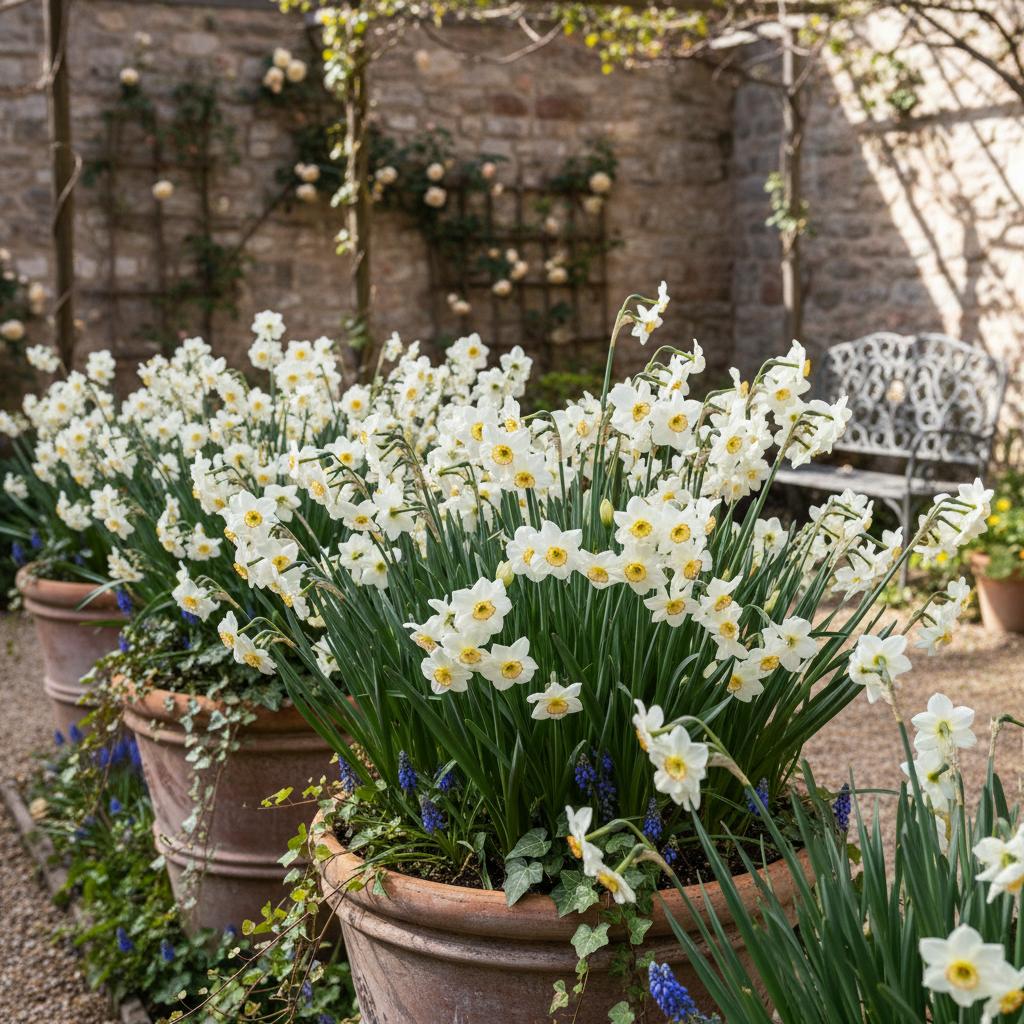
- Leaves: Basal, strap-shaped, glaucous green, up to 40 cm long and 2 cm wide, emerging from a tunicated bulb;
- Flowers: Umbel-like inflorescence with 4 to 8 fragrant flowers per stem, featuring white perianth segments and a shallow, cup-shaped yellow corona;
- Stem: Leafless, smooth, hollow scape supporting the flower cluster;
- Bulb: Ovoid, tunicated bulb with a dark brown papery outer layer.
Care Guide
Water regularly in spring while growing and blooming; stop watering entirely in summer when foliage dies back and bulbs go dormant.
Apply a balanced organic fertilizer when shoots emerge and again after flowering to replenish the bulb.. Feed only during active foliage growth to ensure energy is stored for next year's blooms.
Banana Peel Tea:Soak chopped banana peels in water for 24-48 hours. Dilute 1:1 with water and apply to the soil around the bulbs after blooming to help store energy for next year. Avoid applying directly on the bulb crown to prevent rot.- Deadhead spent flowers to prevent seed formation and direct energy back to the bulb;
- Crucial: Allow foliage to yellow and die back naturally (usually 6 weeks after blooming) before removing it;
- Do not tie or braid the leaves, as this reduces photosynthesis.
Toxicity
Warning: this plant may be toxic.
Pets: Toxic per ASPCA. Causes vomiting, hypersalivation, and diarrhea. Large ingestions can lead to convulsions, tremors, low blood pressure, and cardiac arrhythmias.
Humans: Ingestion causes nausea, vomiting, and diarrhea; sap may cause contact dermatitis.
Garden Uses & Culture
Culture: In Greek mythology, Narcissus was a hunter known for his beauty who fell in love with his own reflection in a pool. The flower is widely recognized in Western culture as a symbol of rebirth, renewal, and the arrival of spring.
Usage: Widely used in ornamental spring gardens, borders, containers, and as cut flowers. Frequently forced indoors for winter blooms.