 PlantFun
Plant Needs
Characteristics
- Leaves: Basal, linear to strap-shaped, glaucous green, emerging directly from the bulb;
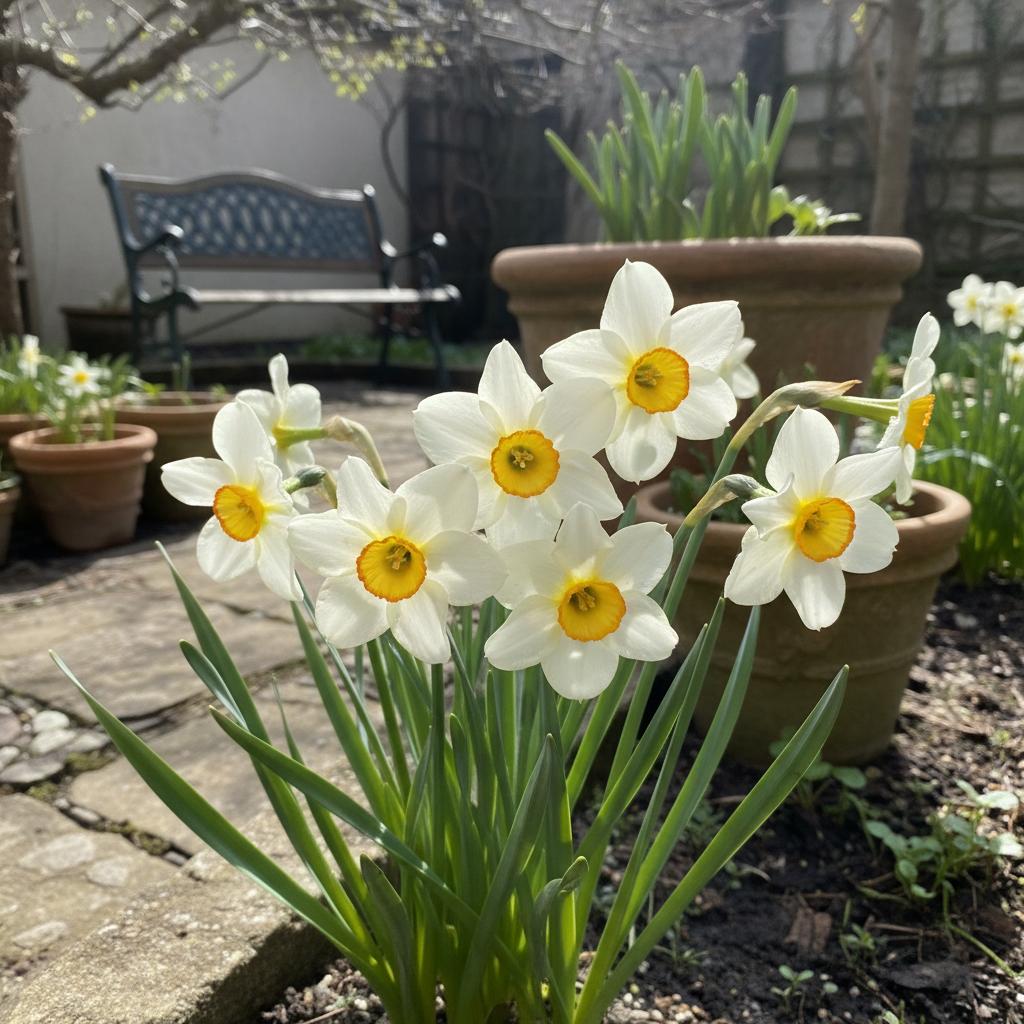
- Flowers: Solitary on a leafless hollow scape, featuring a central trumpet-shaped corona surrounded by a ring of six pale yellow floral leaves (tepals);
- Stem: Leafless, hollow, fleshy scape;
- Bulb: Tunicated bulb, storing nutrients for early spring growth and summer dormancy.
Care Guide
Water regularly during active growth and blooming; allow to dry out as foliage dies back in summer.
Apply a low-nitrogen, high-potassium fertilizer just as shoots emerge, and again after flowering.. Feed the bulbs while the foliage is green to store energy for the following year.
Banana Peel Tea:Steep chopped banana peels in water for 24 hours, strain, and dilute 1:1 with water. Apply to the soil around the base after blooming to help the bulb store energy. Discard peels in compost to avoid attracting pests.- Deadhead spent flowers by snipping the stem behind the seed pod to direct energy back into the bulb;
- CRITICAL: Do not cut back, tie, or braid the green foliage. Allow it to die back and turn completely yellow naturally (usually 6 weeks post-bloom);
- Remove dried, dead foliage gently by pulling or cutting at the base in early summer.
Toxicity
Warning: this plant may be toxic.
Pets: Toxic to cats per ASPCA. Ingestion can cause severe vomiting, hypersalivation, diarrhea, convulsions, low blood pressure, tremors, and cardiac arrhythmias.
Humans: All parts, especially the bulbs, contain lycorine and other alkaloids. Ingestion causes severe gastrointestinal distress and can be confused with onions.
Garden Uses & Culture
Culture: In Greek mythology, Narcissus was a hunter renowned for his beauty who fell in love with his own reflection in a pool of water. Unable to leave his reflection, he died, and the narcissus flower sprang up where he perished.
Usage: Widely used in spring borders, woodland gardens, naturalized in lawns, and as cut flowers or forced indoor winter blooms.