 PlantFun
Plant Needs
Sunlight
Prefers bright, indirect light but highly tolerant of low-light conditions; avoid direct sunlight which can scorch leaves.
Watering
Water when the top inch of soil feels dry; sensitive to overwatering and root rot.
Temperature
Thrives in average room temperatures; protect from cold drafts below 10°C.
Characteristics
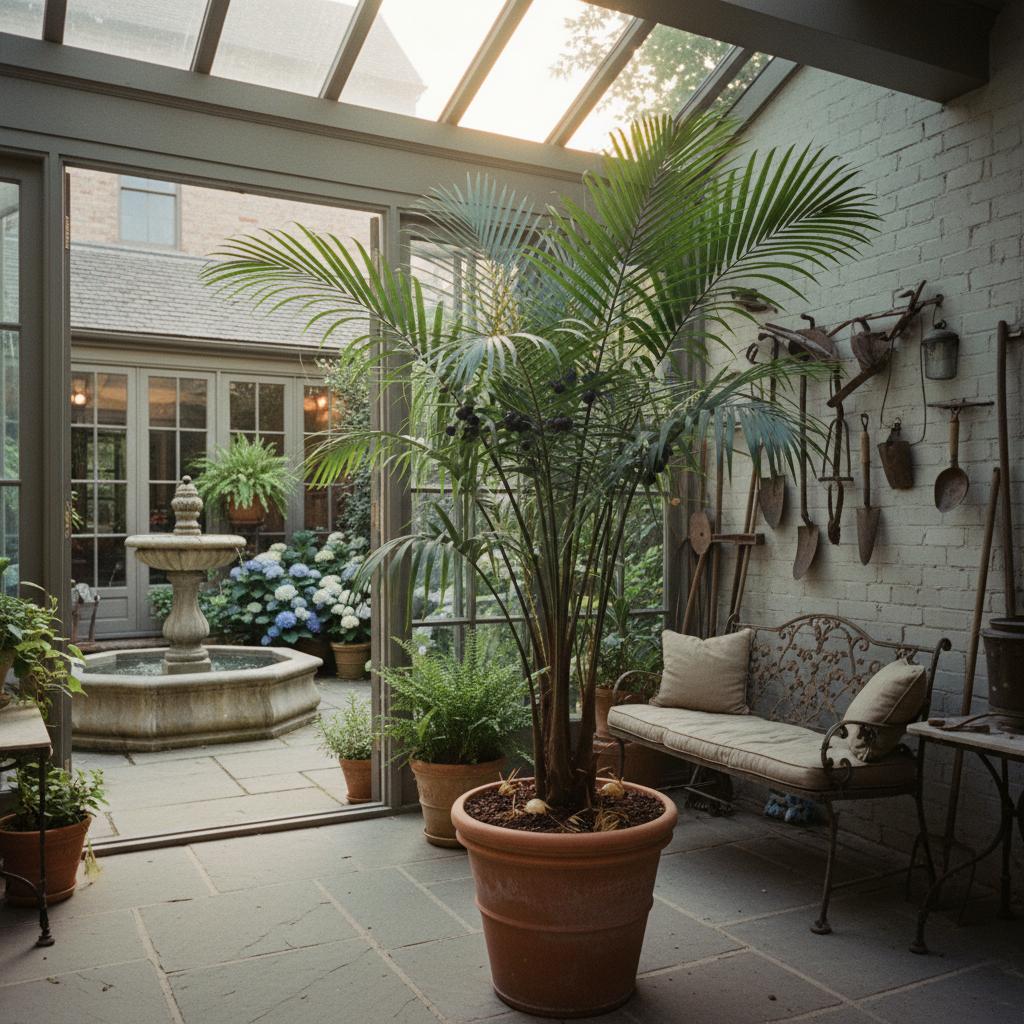
- Leaves: Pinnately compound, arching fronds, light to deep green, with narrow lanceolate leaflets;
- Stems: Slender, green, ringed stems resembling bamboo, growing in clusters;
- Flowers: Small, globular, yellow flowers borne on branching panicles (dioecious), though rarely blooming indoors;
- Fruits: Small, spherical, black berries measuring about 0.5 cm in diameter (produced only if pollinated).
Care Guide
Watering
Water thoroughly when the top inch of soil is dry, keeping it lightly moist but not soggy.
Fertilization
Apply a weak, diluted liquid fertilizer.. Do not fertilize during the autumn and winter months when growth slows.
Aquarium Water Fertilizer:Use old aquarium water when doing routine tank changes; it provides gentle, natural nitrogen. Avoid using if the water contains fish medications or added salts.Pruning
- Remove dead, brown, or yellowing fronds at the base of the stem using sterile shears;
- Do not top-prune or cut the growing tip, as palms grow from a terminal bud and cutting it will stop growth;
- Wipe leaves occasionally with a damp cloth to remove dust and prevent spider mites.
Toxicity
Warning: this plant may be toxic.
Pets & Humans
Pets: Non-toxic to cats (per ASPCA).
Humans: Non-toxic to humans.
Garden Uses & Culture
Culture: Highly popularized during the Victorian era in Europe and North America, it became a staple of parlor rooms due to its remarkable ability to survive in the low light and dry air of heated homes.
Usage: Widely used as an indoor ornamental houseplant and valued for its air-purifying qualities.