 PlantFun
Plant Needs
Characteristics
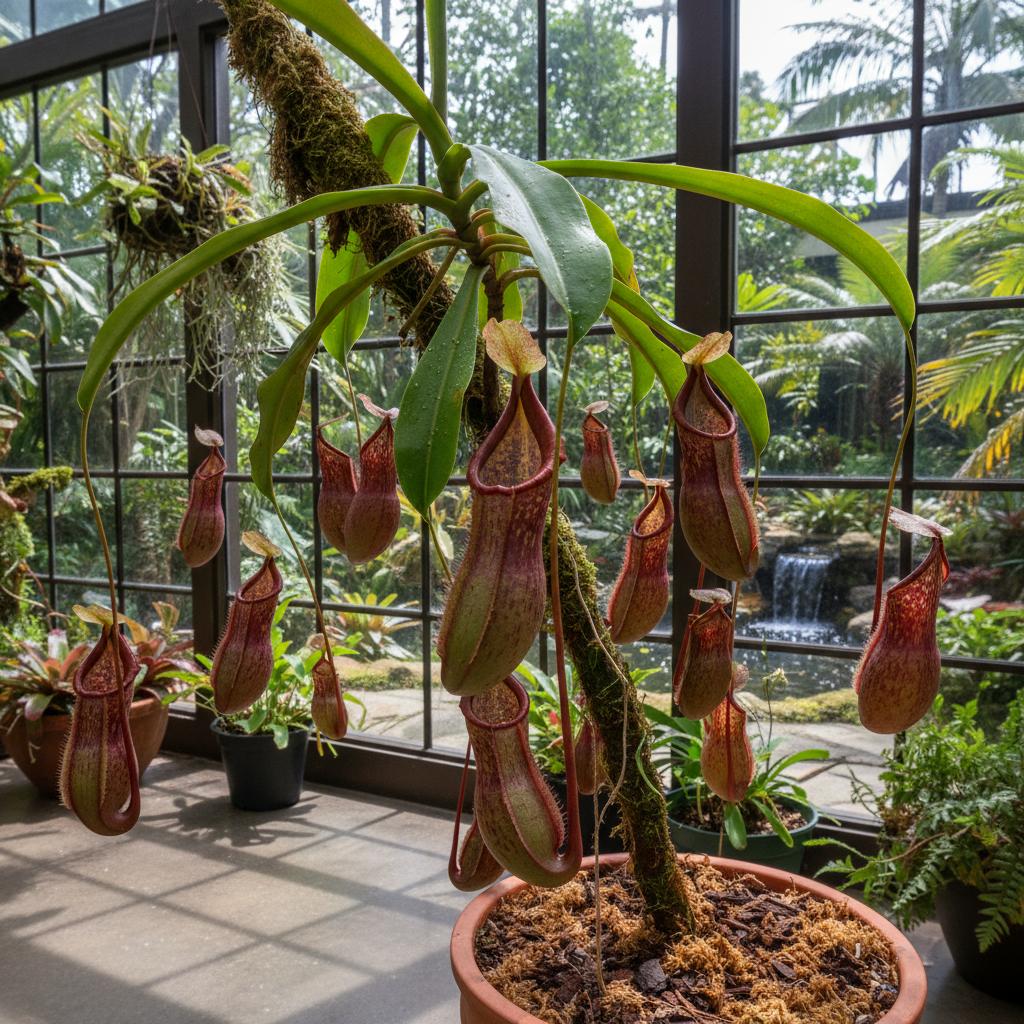
- Leaves: Alternate, lanceolate to elliptic, green, with a prominent midrib that extends into a long tendril supporting the pitcher trap;
- Pitchers: Bulbous at the base and cylindrical above, pale green to reddish, featuring a ribbed peristome (lip) and an operculum (lid) to shield the digestive fluid from rain;
- Flowers: Dioecious, borne on racemes, small and inconspicuous with greenish-brown tepals, lacking true petals;
- Stem: Climbing or scrambling, cylindrical, becoming woody at the base with age.
Care Guide
Keep the medium consistently moist but not waterlogged; mist frequently if humidity is low.
Do not apply traditional soil fertilizers; allow the plant to catch its own insects.. Avoid root fertilization entirely; nutrient absorption occurs primarily through the pitcher traps.
Aquarium Water & Insect Feed:Use highly diluted aquarium change water applied sparingly to the soil, or simply drop a single dried bloodworm or dead household fly into one or two mature pitchers. Avoid overfeeding, raw meat, or high-salt items, which will cause the pitcher to rot.- Trim off dead or browning pitchers at the tendril base to maintain aesthetics and prevent mold;
- Prune excessively long climbing stems to encourage bushy basal growth;
- Remove any dried or yellowing leaves near the base of the plant using sterilized shears.
Toxicity
Warning: this plant may be toxic.
Pets: Non-toxic to cats per ASPCA guidelines.
Humans: Non-toxic to humans; the fluid inside the pitchers is generally harmless if accidentally touched, though ingestion is not recommended.
Garden Uses & Culture
Culture: In Victorian England, tropical pitcher plants became the ultimate status symbol among wealthy botanical collectors, sparking a "carnivorous plant craze" in heated glass conservatories.
Usage: Cultivated primarily as an exotic ornamental houseplant and a natural biological control for small flying insects like fungus gnats and fruit flies.