 PlantFun
Plant Needs
Sunlight
Requires bright, direct sunlight for optimal spine coloration and flowering, though it appreciates light afternoon shade in extreme summer heat.
Watering
Highly drought-tolerant. Water only when the soil volume is completely dry.
Temperature
Prefers warm temperatures during the growing season and a cool, dry resting period in winter to encourage blooming.
Characteristics
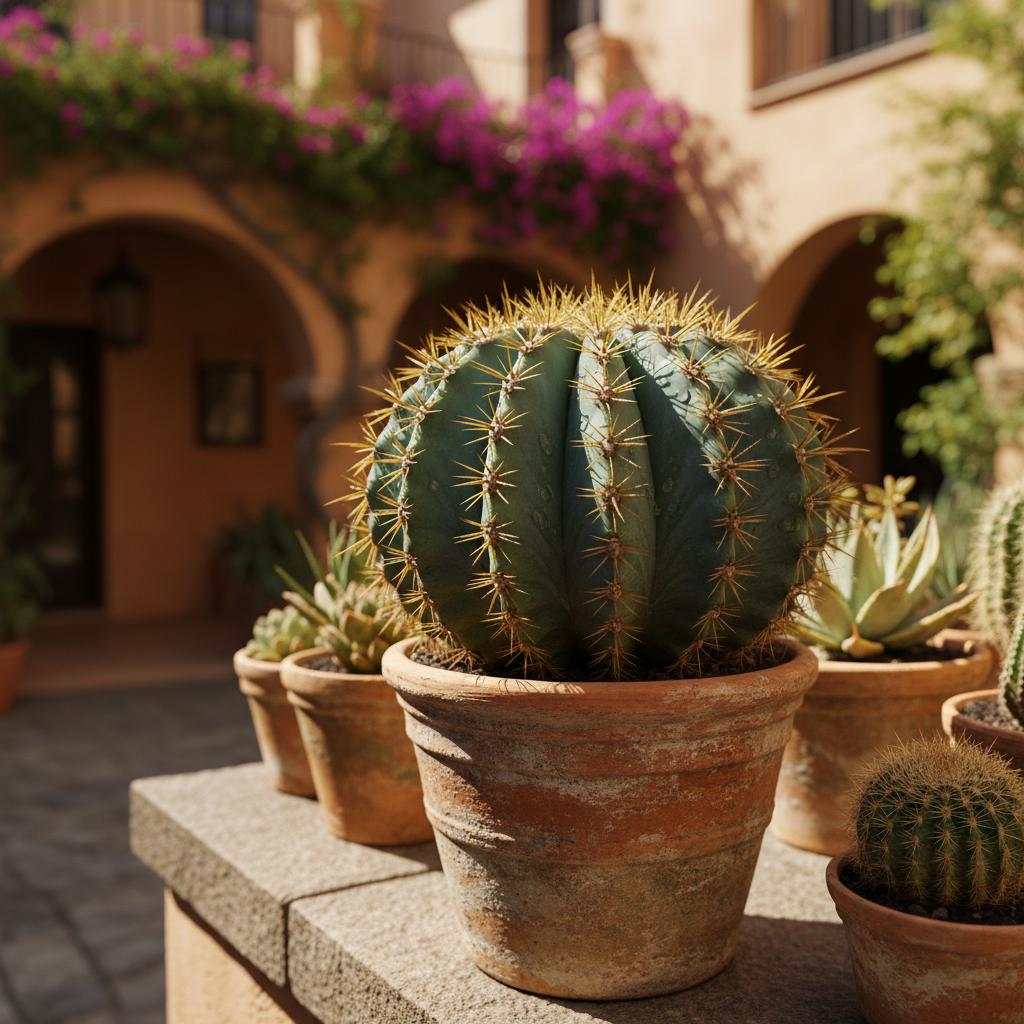
- Stem: Globose to short cylindrical, glaucous blue-green, reaching up to 45 cm in height and 15 cm in diameter;
- Ribs: 11 to 15 prominent, acute, straight ribs lined with continuous white woolly areoles;
- Spines: Dense, bristle-like, golden-yellow spines that glow brightly in sunlight, arranged closely along the ribs;
- Flowers: Apical, funnel-shaped, sulfur-yellow blooms up to 5 cm across, appearing in clusters at the crown.
Care Guide
Watering
Water deeply but infrequently, allowing the soil to dry completely between waterings.
Fertilization
Apply a diluted, low-nitrogen cactus fertilizer to promote healthy new growth.. Do not fertilize during the autumn and winter dormancy period.
Banana Peel Tea:Steep chopped banana peels in water for 24 hours, strain, and dilute 1:1 with water. High potassium supports strong cellular structure and blooming. Avoid leaving solid residue on the soil to prevent fungal gnats.Pruning
- No traditional pruning is required for this solitary or slowly clumping cactus;
- Carefully remove spent flowers with long tweezers to maintain a tidy appearance and prevent fungal growth;
- Never cut the main stem, as it will scar permanently and ruin the plant's symmetry.
Toxicity
Warning: this plant may be toxic.
Pets & Humans
Pets: Non-toxic per ASPCA, but spines can cause physical trauma.
Humans: Non-toxic, but poses a risk of mechanical injury from sharp spines.
Garden Uses & Culture
Culture: Highly prized in Western succulent collections and botanical gardens for its striking geometric symmetry and the beautiful contrast between its blue-green skin and golden spines.
Usage: - Ornamental container specimen; - Desert and rock gardens in USDA zones 9b-11; - Sunny windowsill houseplant.