 PlantFun
Plant Needs
Sunlight
Requires bright, direct sunlight for optimal growth and flowering, though light afternoon shade prevents scorching in extreme heat.
Watering
Highly drought-tolerant; allow the soil to dry out completely between waterings.
Temperature
Thrives in warm temperatures; protect from frost and prolonged exposure to temperatures below 5°C.
Characteristics
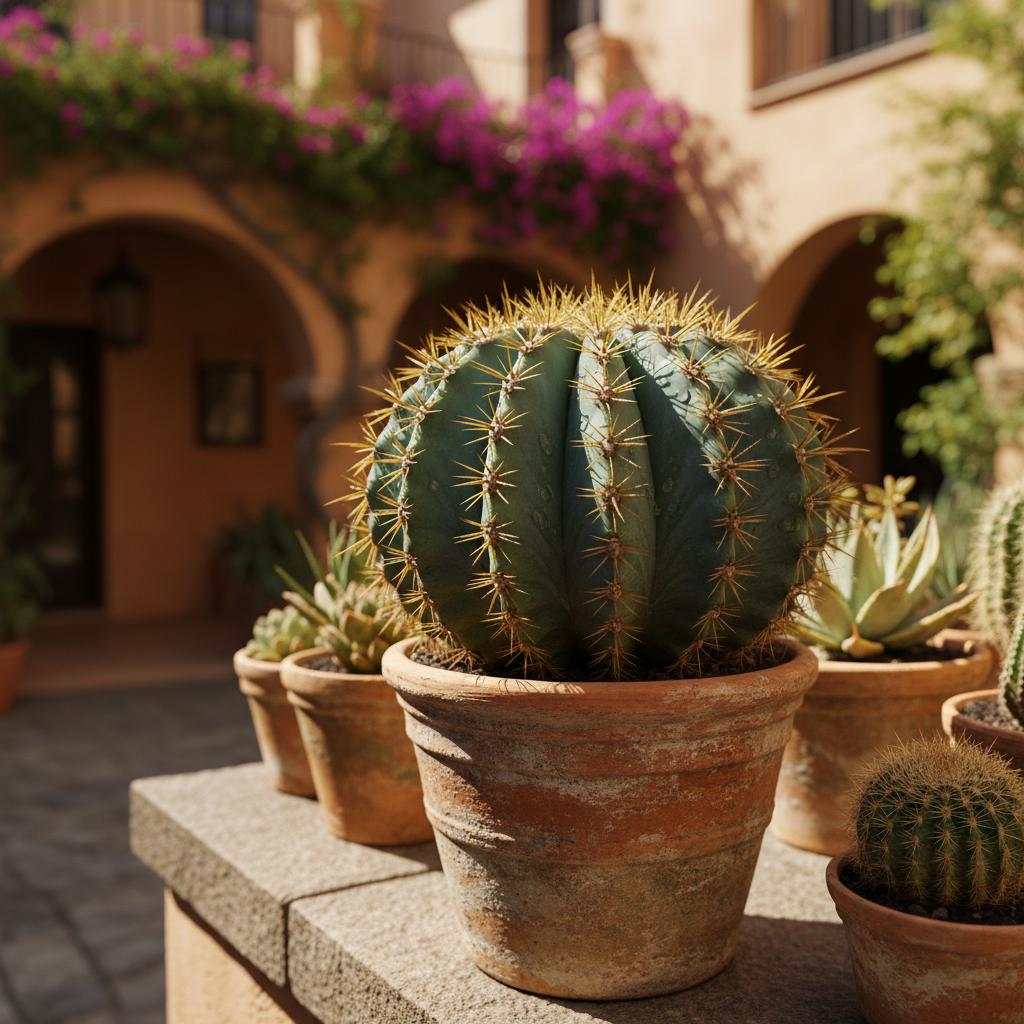
- Stems: Globose to short cylindrical, glaucous blue-green, featuring 11 to 15 deeply furrowed, acute ribs.
- Spines: Areoles are closely set along the ribs, bearing bristle-like, golden-yellow spines that turn white or gray with age.
- Flowers: Apical, funnel-shaped, bright sulfur-yellow, up to 5 cm in diameter, with woolly and bristly floral tubes.
- Roots: Shallow, fibrous root system adapted to quickly absorb sporadic rainfall.
Care Guide
Watering
Water thoroughly when the potting medium is completely dry to the touch.
Fertilization
Apply a diluted, low-nitrogen cactus fertilizer once growth resumes.. Fertilization recommendations description
Banana Peel Tea:Steep dried banana peels in water for 24 hours. Dilute the liquid 1:1 with water before applying. This provides potassium for strong cellular structure and blooming without excess nitrogen that causes weak, etiolated growth. Avoid leaving solid peels on the soil to prevent mold.Pruning
- Pruning is generally not required for this solitary or slowly clumping cactus.
- Carefully remove spent flowers (deadheading) using long tweezers to prevent fungal rot.
- Do not cut the main stem; if rot occurs at the base, the healthy top can sometimes be propagated as a cutting.
Toxicity
Warning: this plant may be toxic.
Pets & Humans
Pets: Non-toxic per ASPCA; mechanical injury from spines is the primary risk.
Humans: No chemical toxicity; poses only a mechanical hazard due to sharp spines.
Garden Uses & Culture
Culture: Highly prized in Western indoor cultivation since the mid-20th century for its geometric perfection, striking blue-green epidermis, and ease of care on sunny windowsills.
Usage: Excellent as an ornamental container plant, in desert landscaping, or as a focal point in rock gardens.