 PlantFun
Plant Needs
Sunlight
Requires bright, indirect light; avoid harsh direct midday sun which can scorch the leaves.
Watering
Keep the growing medium evenly moist but not soggy; do not allow it to dry out completely between waterings.
Temperature
Thrives in cool to intermediate temperatures, requiring a noticeable day-night temperature drop to initiate blooming.
Characteristics
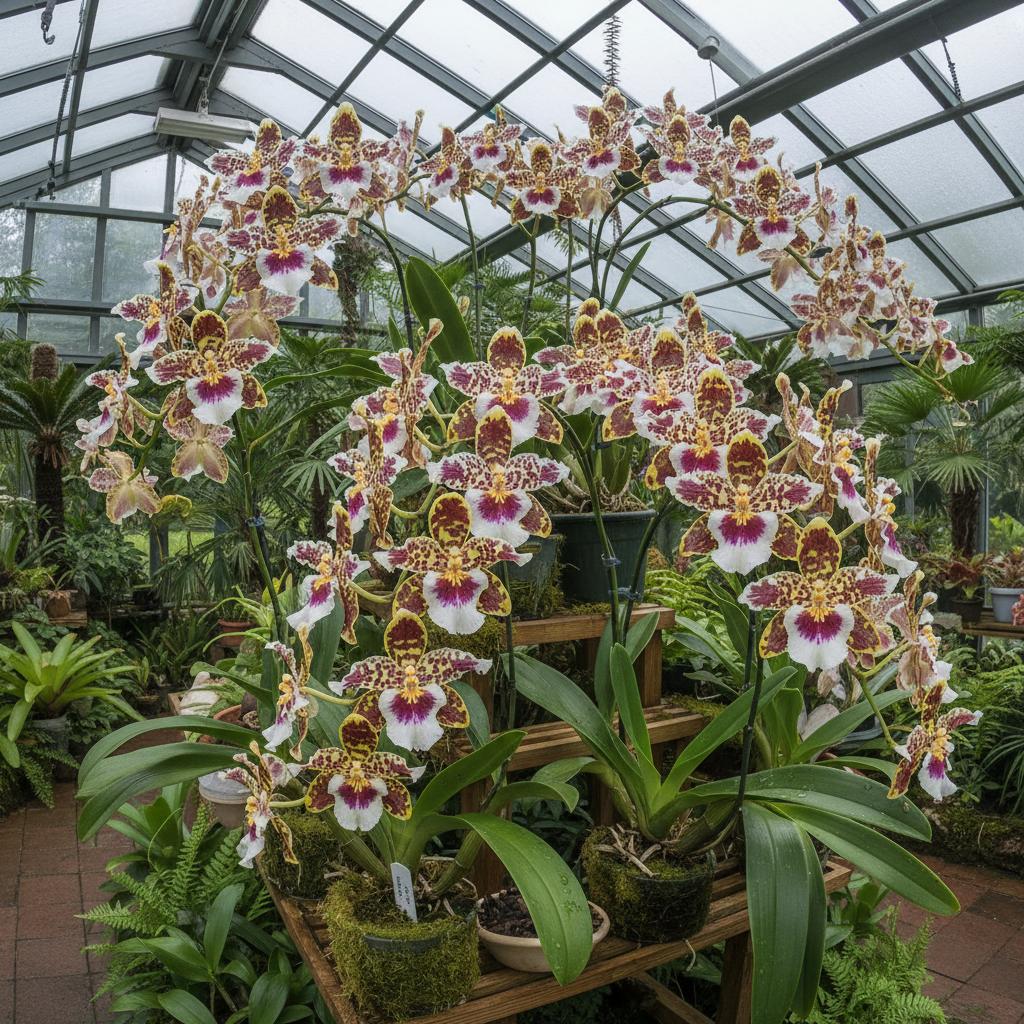
- Leaves: Lanceolate, leathery, pale green leaves emerging from the apex and base of flattened pseudobulbs;
- Flowers: Arching racemes bearing large, star-shaped flowers with ruffled edges, typically white with intricate reddish-brown or purple spotting and a yellow crest on the lip;
- Stem: Sympodial growth habit with prominent, laterally compressed pseudobulbs that store water and nutrients;
- Roots: Thick, white epiphytic roots adapted to cling to tree bark and absorb moisture from the air.
Care Guide
Watering
Water thoroughly when the top of the medium feels slightly dry, ensuring excellent drainage.
Fertilization
Apply a weak, balanced orchid fertilizer.. Use fertilizer at quarter-strength to avoid burning the sensitive epiphytic roots.
Banana Peel Tea:Steep chopped banana peels in water for 24 hours, strain, and dilute 1:1 with fresh water. Use this weak tea to water the orchid, providing gentle potassium for bloom support. Ensure no solid residue is left on the bark to prevent mold.Pruning
- Flower Spikes: Cut spent flower spikes down to the base with sterilized tools to redirect energy to new growth;
- Roots: During repotting, trim away any dead, hollow, or mushy brown roots, leaving only the firm white or green ones;
- Pseudobulbs: Leave old, leafless pseudobulbs intact as they continue to store energy and water for the plant.
Toxicity
Warning: this plant may be toxic.
Pets & Humans
Pets: Non-toxic to cats per ASPCA.
Humans: Non-toxic to humans; safe to handle.
Garden Uses & Culture
Culture: During the Victorian era in Europe, Odontoglossums were at the center of "orchidelirium," highly sought after by wealthy collectors for their spectacular, cool-growing blooms that thrived in unheated English greenhouses.
Usage: Cultivated primarily as a highly ornamental indoor or greenhouse plant for its striking floral displays.