 PlantFun
Plant Needs
Sunlight
Requires bright, indirect light; avoid harsh direct afternoon sun which can scorch the thin leaves.
Watering
Water thoroughly when the potting medium (usually bark or sphagnum moss) approaches dryness.
Temperature
Prefers intermediate to warm temperatures with a slight drop at night to encourage blooming.
Characteristics
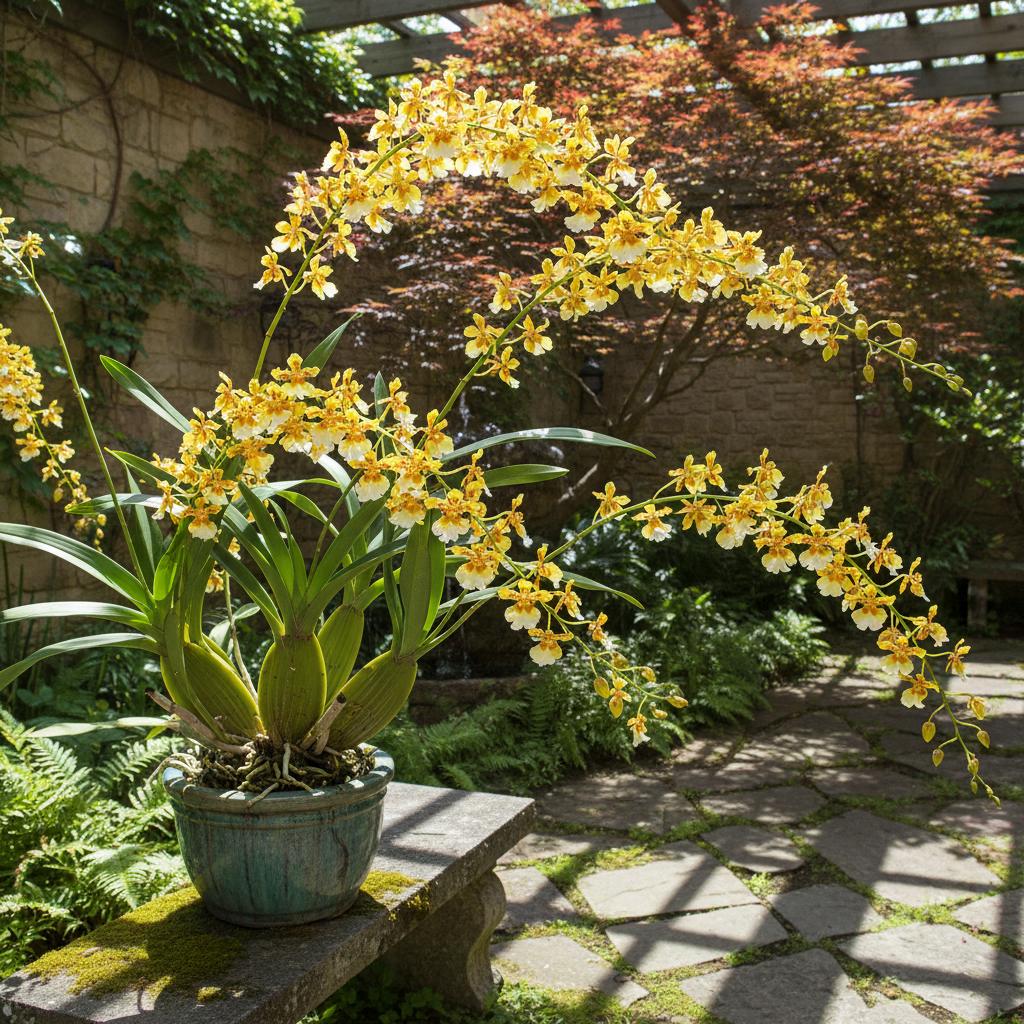
- Leaves: Thin, lanceolate, light green leaves emerging from small, clustered pseudobulbs;
- Flowers: Profuse, tiny white to cream flowers with a yellow or orange center on branching inflorescences, emitting a strong vanilla-like fragrance;
- Pseudobulbs: Small, oval, slightly compressed, serving as water storage organs;
- Roots: Fine, white epiphytic roots adapted to grasp bark and absorb moisture from the air.
Care Guide
Watering
Water thoroughly as the medium dries out, ensuring excellent drainage.
Fertilization
Apply a weak, balanced orchid fertilizer.. Fertilization recommendations description
Banana Peel Tea:Soak chopped banana peels in water for 24 hours, strain completely, and dilute the liquid 1:1 with water. Use this to water the orchid bark to encourage blooming. Caution: Do not leave solid peel pieces in the pot, as they will cause mold and rot in the orchid medium.Pruning
- Cut flower spikes down to the base after all blooms have faded and the stem turns brown;
- Remove any dried, yellowing, or dead leaves gently from the base;
- Trim dead, papery, or hollow roots during repotting using sterilized shears.
Toxicity
Warning: this plant may be toxic.
Pets & Humans
Pets: Non-toxic to cats per ASPCA guidelines.
Humans: Generally considered non-toxic to humans.
Garden Uses & Culture
Culture: In Western culture, orchids have long been associated with luxury, refinement, and delicate beauty, often featured in Victorian greenhouses as prized collector's items.
Usage: Highly valued as a compact indoor ornamental plant, perfect for windowsills and small spaces due to its miniature size and sweet fragrance.