 PlantFun
Plant Needs
Sunlight
Prefers bright, indirect sunlight; direct midday sun can scorch the leaves.
Watering
Water thoroughly when the potting medium is almost completely dry.
Temperature
Thrives in warm temperatures; protect from drafts and freezing conditions.
Characteristics
- Leaves: Leathery, strap-like or fleshy, arising from prominent pseudobulbs;
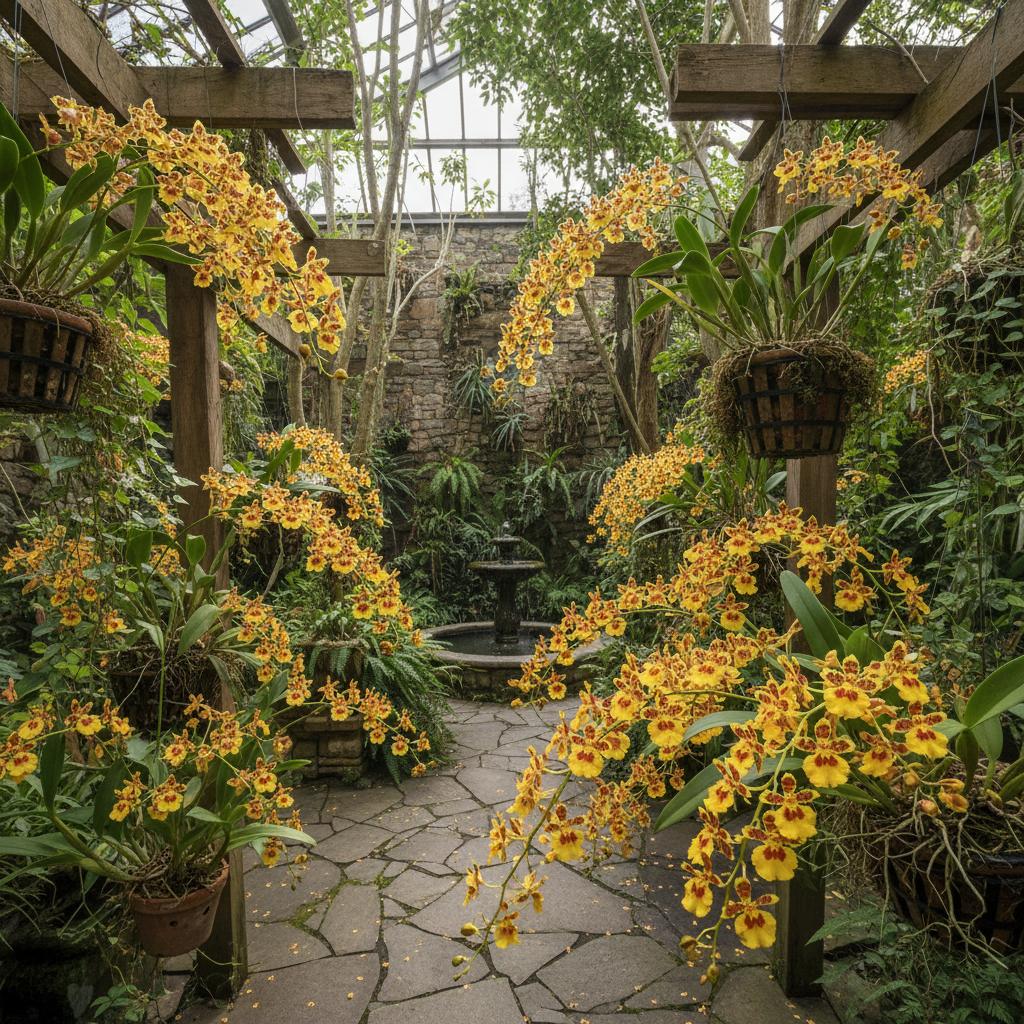
- Flowers: Borne on long, branching panicles, featuring a large, ruffled lip (labellum) resembling a dancer's skirt, predominantly yellow and brown;
- Roots: Thick, white aerial roots covered in a spongy velamen layer for moisture absorption;
- Stems: Modified into swollen pseudobulbs at the base to store water and nutrients.
Care Guide
Watering
Water thoroughly once a week, allowing the medium to dry slightly between waterings
Fertilization
Apply a balanced orchid fertilizer diluted to quarter strength. Flush the pot with plain water once a month to prevent salt buildup from fertilizers.
Banana Peel Tea:Steep chopped banana peels in water for 24 hours, strain, and dilute 1:1 with fresh water. Use to water the orchid to encourage blooming. Discard solids in compost to avoid fruit flies and odors.Pruning
- Remove spent flower spikes by cutting them near the base with sterilized tools;
- Trim away dead, papery, or mushy brown roots during repotting;
- Do not remove green, healthy pseudobulbs as they store energy and water.
Toxicity
Warning: this plant may be toxic.
Pets & Humans
Pets: Non-toxic to cats per ASPCA.
Humans: Non-toxic to humans.
Garden Uses & Culture
Culture: Highly prized in Western orchid collecting and Victorian hothouses for their spectacular, long-lasting floral displays and exotic appeal.
Usage: Popular as indoor ornamental houseplants, greenhouse specimens, and occasionally used in cut flower arrangements.