 PlantFun
Plant Needs
Sunlight
Requires bright, indirect light; direct midday sun can scorch the leaves, while too little light prevents blooming.
Watering
Water thoroughly when the potting medium is almost completely dry. Requires excellent drainage.
Temperature
Prefers warm daytime temperatures and a slight drop at night to trigger blooming.
Characteristics
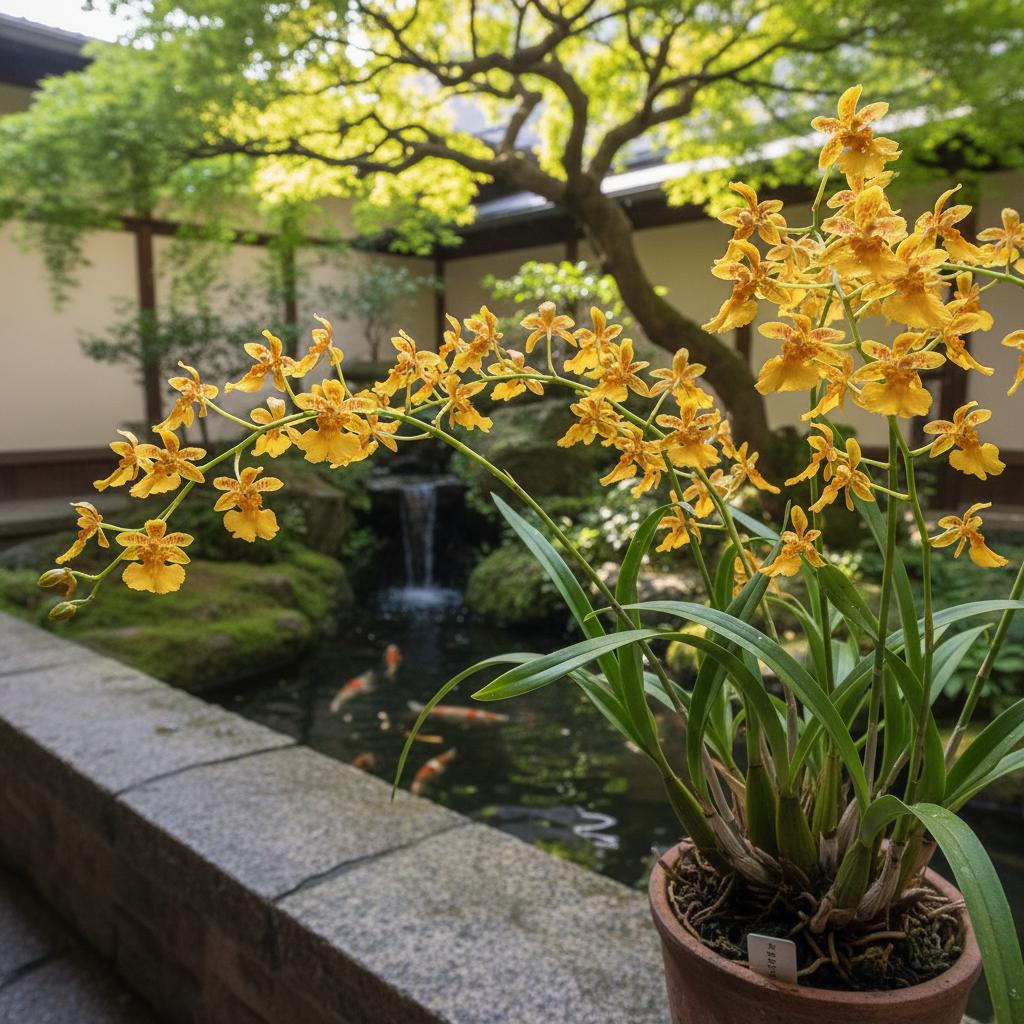
- Leaves: Thin, leathery, strap-like green leaves emerging from the apex of flattened pseudobulbs;
- Flowers: Large, branching panicles carrying numerous small, bright yellow flowers with reddish-brown barring at the base, featuring a prominent, ruffled lip (labellum) resembling a dancer's skirt;
- Stems/Roots: Prominent, clustered green pseudobulbs for water storage; thick, white aerial roots covered in spongy velamen to absorb atmospheric moisture.
Care Guide
Watering
Water thoroughly 1-2 times a week, allowing the medium to almost dry out between waterings.
Fertilization
Apply a balanced orchid fertilizer diluted to quarter strength weekly.. Fertilize weakly, weekly. Flush the pot with plain water once a month to remove salt buildup.
Banana Peel Tea:Soak chopped banana peels in water for 24 hours. Strain and dilute 1:1 with water. Use to water the orchid to promote blooming. Avoid leaving solid peels in the pot to prevent mold and pests.Pruning
- Flower Spikes: Cut flower spikes down to the base once all blooms have faded and the stem turns brown;
- Roots: Remove dead, mushy, or hollow roots with sterilized scissors during repotting;
- Pseudobulbs: Leave old, leafless pseudobulbs intact as they store energy, but peel away dried, papery sheaths to prevent pest hiding spots.
Toxicity
Warning: this plant may be toxic.
Pets & Humans
Pets: Non-toxic to cats (per ASPCA).
Humans: Non-toxic to humans; safe to handle.
Garden Uses & Culture
Culture: Highly prized during the Victorian era's "orchidelirium" in Europe, symbolizing exotic beauty, refinement, and luxury in elite glasshouses.
Usage: Popular ornamental houseplant, greenhouse specimen, and frequently used in high-end floral arrangements for its long-lasting sprays.