 PlantFun
Plant Needs
Sunlight
Bright, indirect light; avoid direct midday sun which can scorch leaves.
Watering
Water thoroughly when the potting medium dries out completely, typically once a week.
Temperature
Prefers warm temperatures and high humidity; avoid cold drafts below 15°C.
Characteristics
- Leaves: Broad, leathery, elliptical to obovate, dark green, arranged in a distichous rosette;
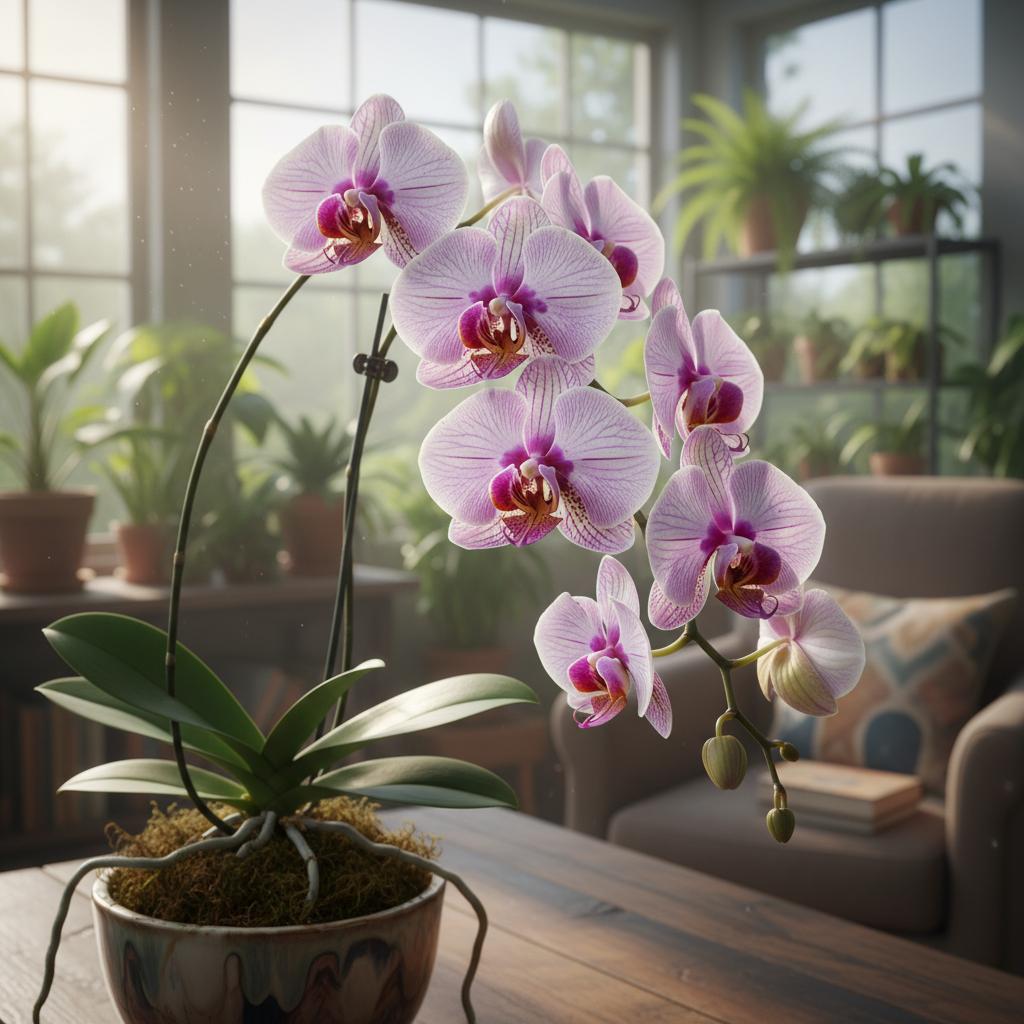
- Flowers: Showy, zygomorphic, typically white with a yellow and red-spotted lip, borne on a long arching raceme;
- Roots: Thick, fleshy, silvery-grey aerial roots covered in a spongy epidermis called velamen.
Care Guide
Watering
Water thoroughly once a week, allowing the medium to dry slightly between waterings.
Fertilization
Apply a balanced orchid fertilizer diluted to quarter strength weekly.. Fertilize "weakly, weekly" during active growth, flushing with plain water once a month to prevent salt buildup.
Banana Peel Tea:Steep chopped banana peels in water for 24 hours, strain, and dilute 1:1 with water. Use to water the orchid bark to promote blooming. Avoid leaving solid peels in the pot to prevent mold and odor.Pruning
- Cut the flower spike down to the base once all blooms have faded and the stem turns brown;
- Alternatively, cut above a node on a green spike to encourage a secondary, smaller bloom;
- Remove dead, mushy, or papery roots during repotting using sterilized shears.
Toxicity
Warning: this plant may be toxic.
Pets & Humans
Pets: Non-toxic to cats per ASPCA.
Humans: Non-toxic to humans.
Garden Uses & Culture
Culture: In Victorian England, orchids symbolized luxury, refinement, and exotic beauty, sparking a frenzy known as "orchidelirium" among wealthy collectors.
Usage: Widely cultivated as an indoor ornamental houseplant and frequently used in floral arrangements and corsages.