 PlantFun
Plant Needs
Characteristics
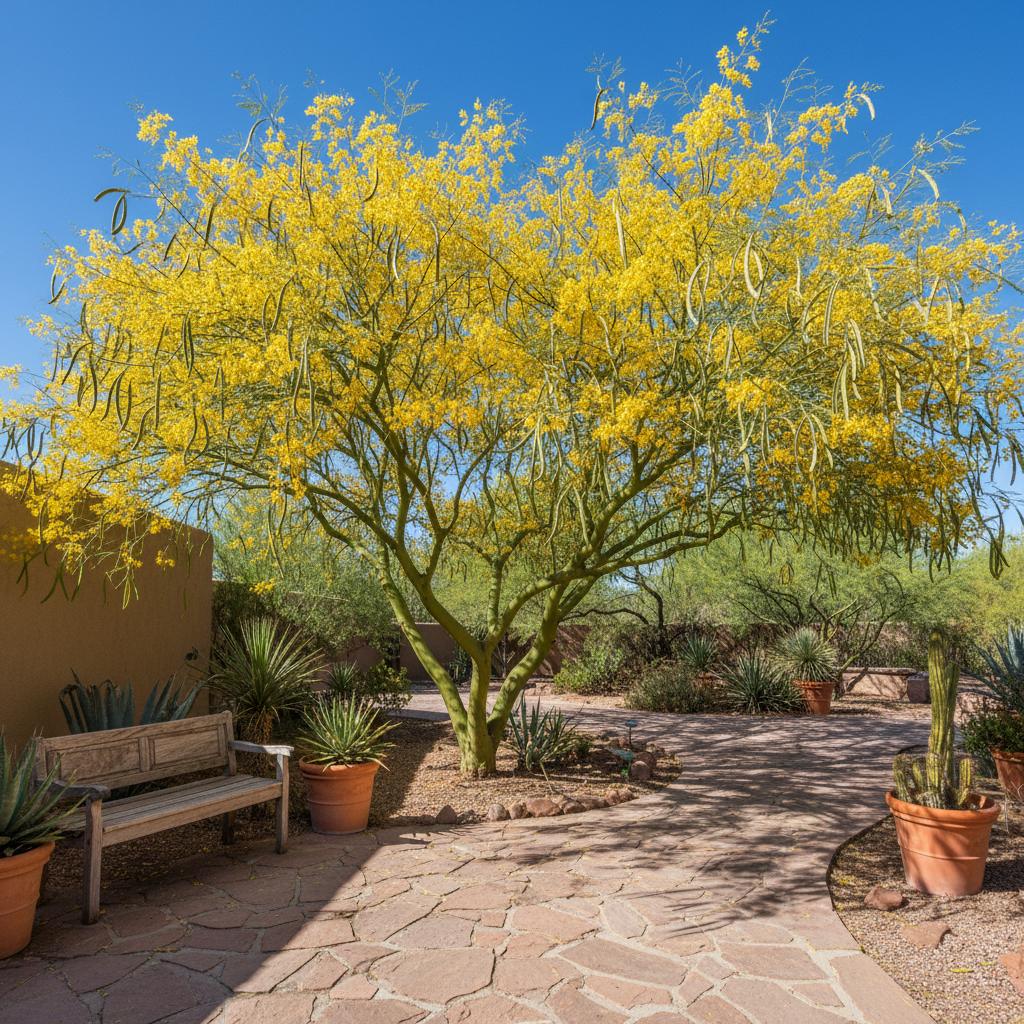
- Leaves: Bipinnately compound, very small, drought-deciduous, bluish-green in color;
- Flowers: Bright yellow, 5-petaled, with the top petal (banner) sometimes having small red spots, blooming in profusion;
- Bark: Smooth, blue-green, photosynthetic bark; branches armed with small thorns at the nodes;
- Fruit: Flattened seed pods, 5-8 cm long, maturing to tan or brown.
Care Guide
Deep, infrequent watering to encourage deep root systems
Generally not required for native soils. Native desert trees rarely need supplemental fertilizer; excess nitrogen can cause weak, rapid growth prone to wind damage.
Banana Peel Tea:Steep chopped banana peels in a bucket of water for 24-48 hours. Use the strained liquid to water the root zone in early spring to support blooming. Avoid high-nitrogen household scraps like coffee grounds, as this tree fixes its own nitrogen.- Prune in late summer or early fall to minimize stress and avoid disrupting the spring bloom;
- Remove dead, crossing, or damaged branches to maintain a strong scaffold;
- Raise the canopy gradually if clearance is needed, but avoid severe topping;
- Always use sterilized, sharp tools and wear thick gloves to protect against thorns.
Toxicity
Warning: this plant may be toxic.
Pets: Non-toxic to cats per ASPCA guidelines; thorns pose a physical puncture risk.
Humans: Non-toxic to humans; however, caution is advised around the sharp thorns which can cause mechanical injury.
Garden Uses & Culture
Culture: Designated as the official state tree of Arizona in 1954 (alongside the Foothill Palo Verde), it is a celebrated symbol of the American Southwest and desert resilience.
Usage: Widely used in xeriscape landscaping, as a shade tree in arid regions, and as a crucial habitat and nectar source for desert pollinators.