 PlantFun
Plant Needs
Sunlight
Requires bright, indirect light to full sun for optimal growth and flowering.
Watering
Allow soil to dry out completely between waterings; highly drought-tolerant.
Temperature
Prefers warm temperatures; protect from frost and freezing conditions.
Characteristics
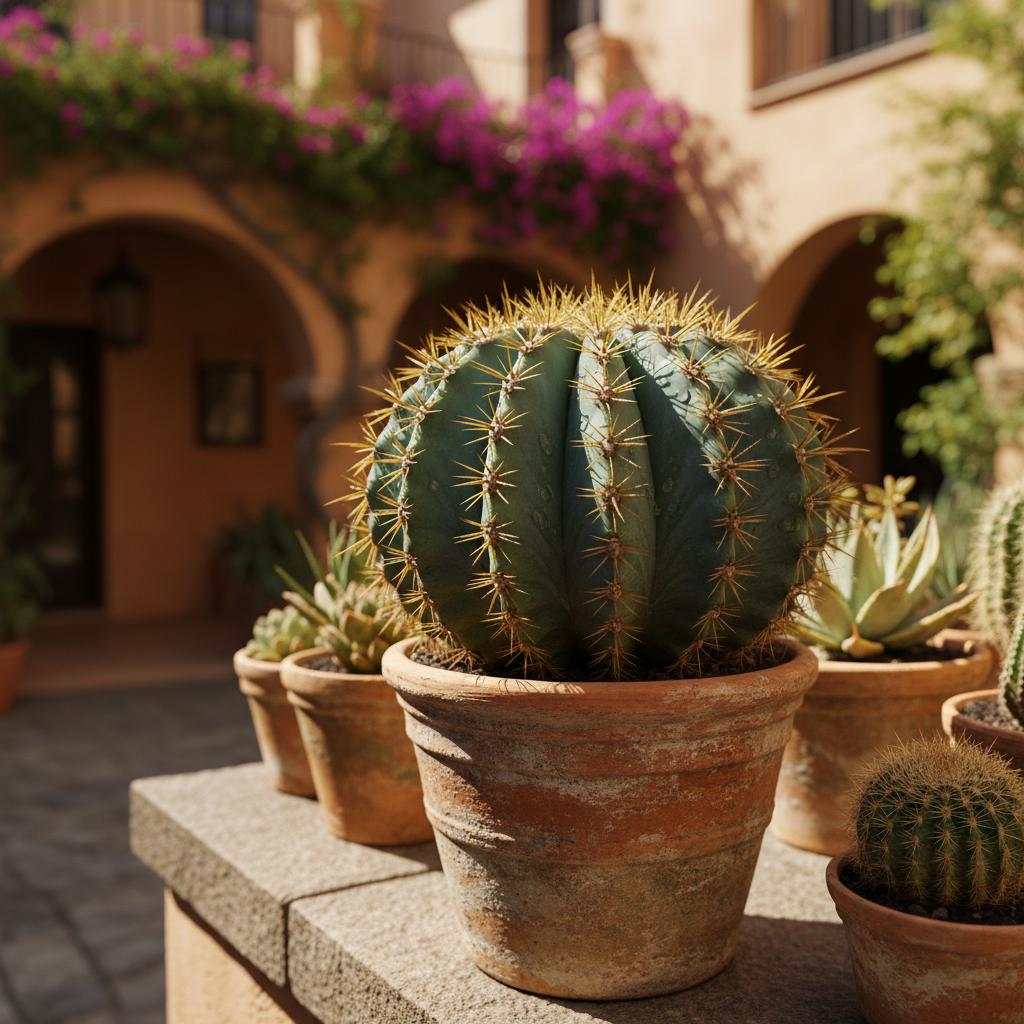
- Stem: Globose to short cylindrical, deeply ribbed, green to blue-green, covered in woolly areoles;
- Spines: Dense, bristle-like or stiff spines emerging from areoles, varying in color from golden yellow to brown or white;
- Flowers: Funnel-shaped, bright yellow, orange, or pink, blooming at the apex (crown) of the plant, often featuring a distinct red or purple stigma;
- Roots: Shallow, fibrous root system adapted for rapid water absorption during rare rainfall.
Care Guide
Watering
Water thoroughly when the soil is completely dry.
Fertilization
Apply a diluted, low-nitrogen cactus fertilizer once a month.. Fertilize once a month during the active growing season.
Banana Peel Tea:Soak dried banana peels in water for 48 hours, dilute 1:1, and use during the growing season to encourage blooming. Avoid using raw peels on the soil to prevent mold and pests.Pruning
- Pruning is generally not required for this globose cactus;
- Remove dead flowers (deadheading) gently with tweezers to maintain appearance;
- If offsets (pups) form, they can be carefully separated at the base for propagation.
Toxicity
Warning: this plant may be toxic.
Pets & Humans
Pets: Non-toxic per ASPCA, but sharp spines can cause physical injury to eyes or mouth.
Humans: Non-toxic chemically, but sharp spines pose a mechanical injury risk.
Garden Uses & Culture
Culture: In Western indoor gardening, ball cacti are celebrated as symbols of endurance and minimalist beauty, often featured in mid-century modern decor.
Usage: Popular as an ornamental houseplant, in desert landscaping, and in rock gardens.