 PlantFun
Plant Needs
Characteristics
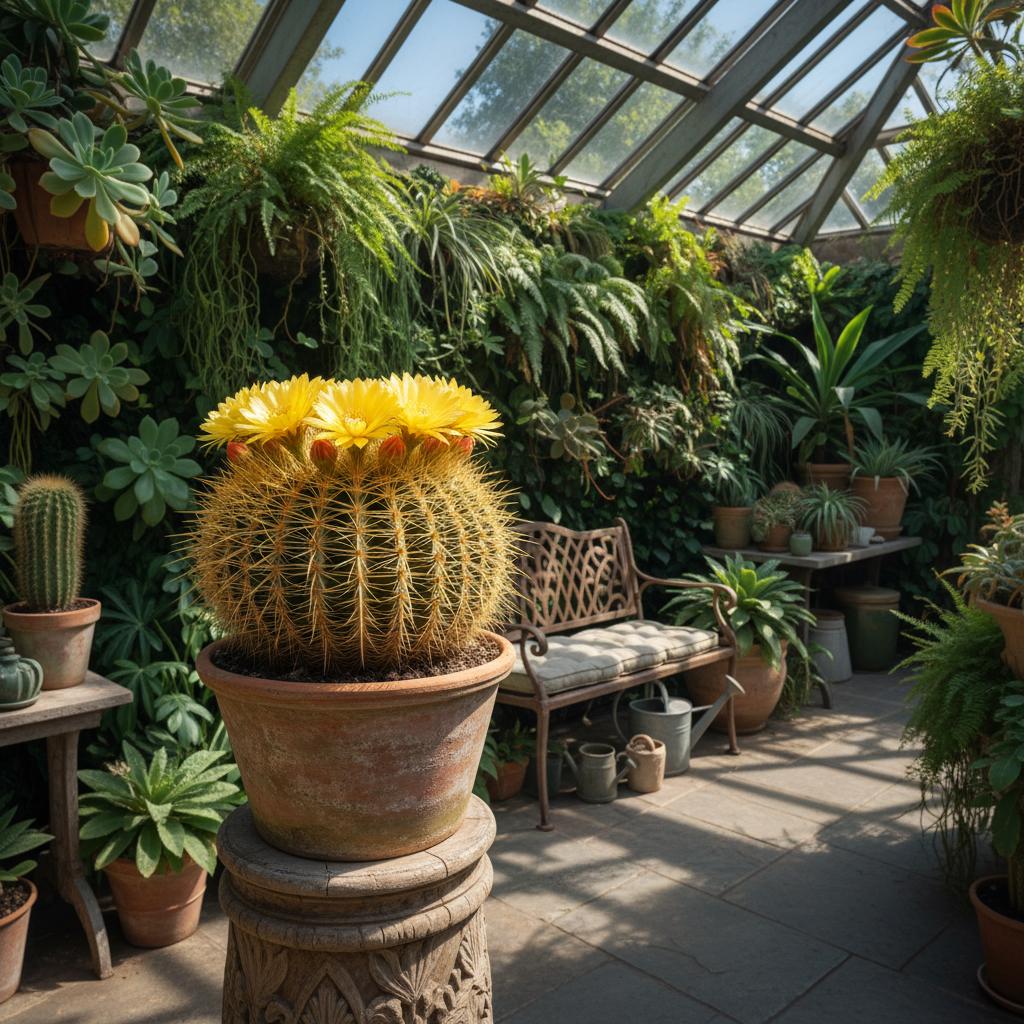
- Stem: Dark green, globose when young becoming short columnar with age, up to 50 cm tall and 15 cm in diameter;
- Ribs: 15 to 16 prominent, straight ribs, triangular in cross-section;
- Spines: Golden-yellow to brownish, bristle-like and flexible, 15-20 per areole, up to 2 cm long;
- Flowers: Apical, funnelform, bright glossy yellow, up to 6 cm in diameter, with slightly fringed petal margins;
- Fruit: Small, spherical, containing numerous tiny black seeds.
Care Guide
Water thoroughly when the soil is completely dry, allowing excess water to drain away.
Begin feeding with a diluted, low-nitrogen cactus fertilizer as new growth starts.. Use a fertilizer high in potassium and phosphorus to promote strong roots and vibrant flowers.
Banana Peel Tea:Steep chopped banana peels in water for 24 hours, strain, and use the liquid to water the cactus. This provides a gentle potassium boost for blooming. Avoid leaving solid peels on the soil to prevent mold.- Pruning is generally not required for this solitary or slowly clumping cactus;
- Carefully remove spent flowers (deadheading) with long tweezers to maintain a tidy appearance;
- If rot appears at the base, the healthy top can sometimes be cut, callused, and re-rooted, though this is an advanced rescue technique.
Toxicity
Warning: this plant may be toxic.
Pets: Non-toxic to cats per ASPCA guidelines for typical cacti, but spines pose a physical hazard.
Humans: Non-toxic to humans, though spines can cause mechanical injury.
Garden Uses & Culture
Culture: Highly prized in Western cactus collections and botanical gardens for its architectural, deeply ribbed form and striking golden-yellow apical blooms.
Usage: Excellent as a potted specimen for patios, sunny windowsills, or planted directly in rock gardens and xeriscapes in warm, dry climates.