 PlantFun
Plant Needs
Characteristics
- Leaves: Bipinnately compound, large and fern-like, with numerous small, oblong, dark green leaflets that create a feathery texture;
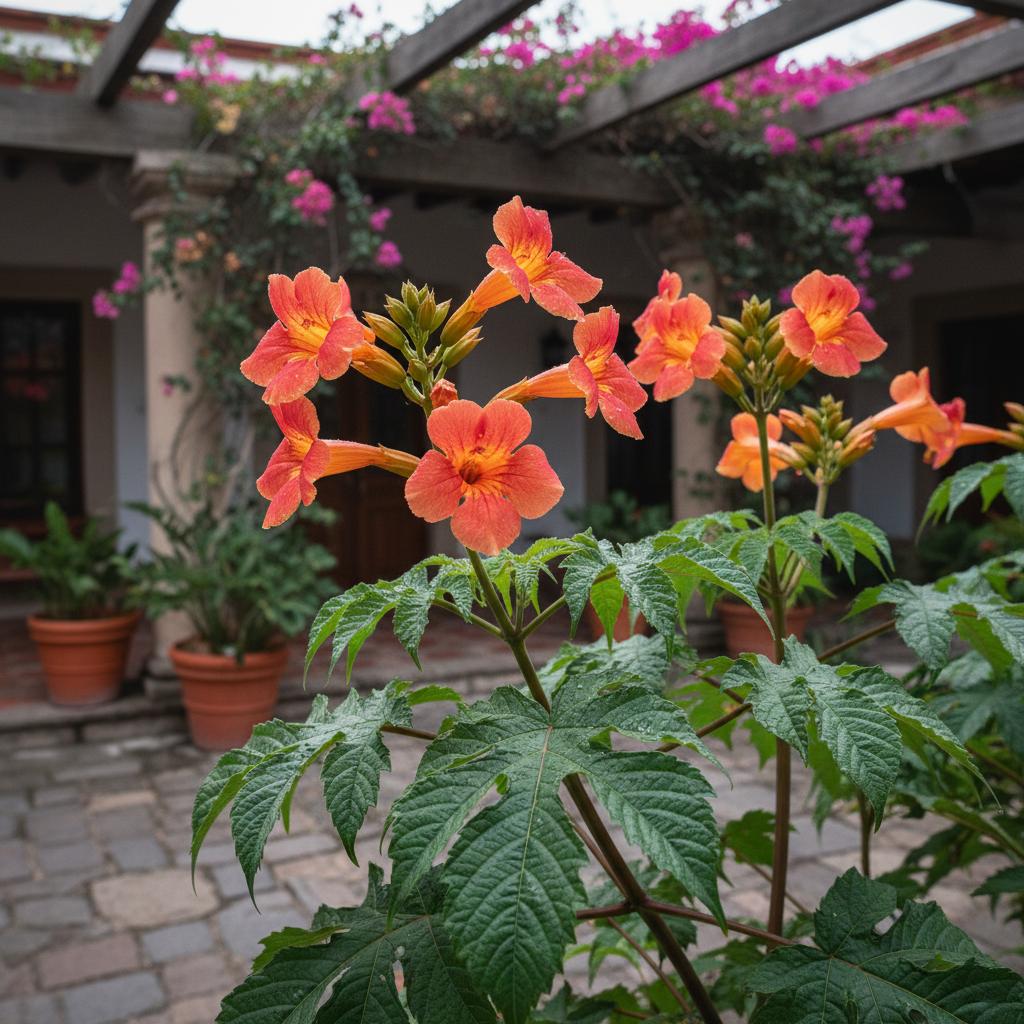
- Flowers: Bright yellow, arranged in large, showy terminal panicles, with crinkled petals and prominent stamens;
- Fruit: Flat, winged, indehiscent pods (samaroid) that are initially green, turning a distinctive copper-brown or dark brown as they mature;
- Bark: Grayish-brown, relatively smooth when young but becoming rough and longitudinally fissured with age.
Care Guide
Water deeply once a week, allowing the top few inches of soil to dry out between waterings.
Apply a balanced, slow-release fertilizer at the base of the drip line to support new foliage and upcoming blooms.. Mature trees rarely require supplemental fertilization if planted in reasonably fertile soil.
Banana Peel Tea:Steep chopped banana peels in water for 24-48 hours. Dilute the liquid 1:1 with water and pour around the drip line of young trees to encourage strong root development and vibrant yellow blooms. Discard the solid peels in a compost bin to avoid attracting pests.- Structural Pruning: Prune young trees to establish a strong, single central leader and remove co-dominant stems;
- Canopy Raising: Remove lower branches gradually as the tree grows to provide clearance for pedestrians or vehicles if used as a street tree;
- Maintenance: Remove dead, diseased, or crossing branches in late winter before the spring growth flush;
- Wind Preparation: Thin the canopy slightly in hurricane-prone areas to allow wind to pass through, reducing the risk of uprooting.
Toxicity
Warning: this plant may be toxic.
Pets: Non-toxic to cats.
Humans: Generally considered non-toxic to humans.
Garden Uses & Culture
Culture: In South America, particularly in Uruguay, it is famously known as the "Árbol de Artigas" (Tree of Artigas). It is deeply associated with the Uruguayan national hero, José Gervasio Artigas, who spent his final years of exile in Paraguay living under the shade of a massive Ibirapitá tree.
Usage: Widely planted as a spectacular ornamental shade tree in parks, large gardens, and along wide avenues. Its hard, heavy, and durable wood is also valued in its native range for construction, cabinetry, and boat building.