 PlantFun
Plant Needs
Sunlight
Prefers bright, indirect light; avoid harsh direct afternoon sun which can scorch the leaves.
Watering
Allow the top 2-3 inches of soil to dry out completely between waterings.
Temperature
Thrives in average room temperatures; protect from cold drafts below 10°C.
Characteristics
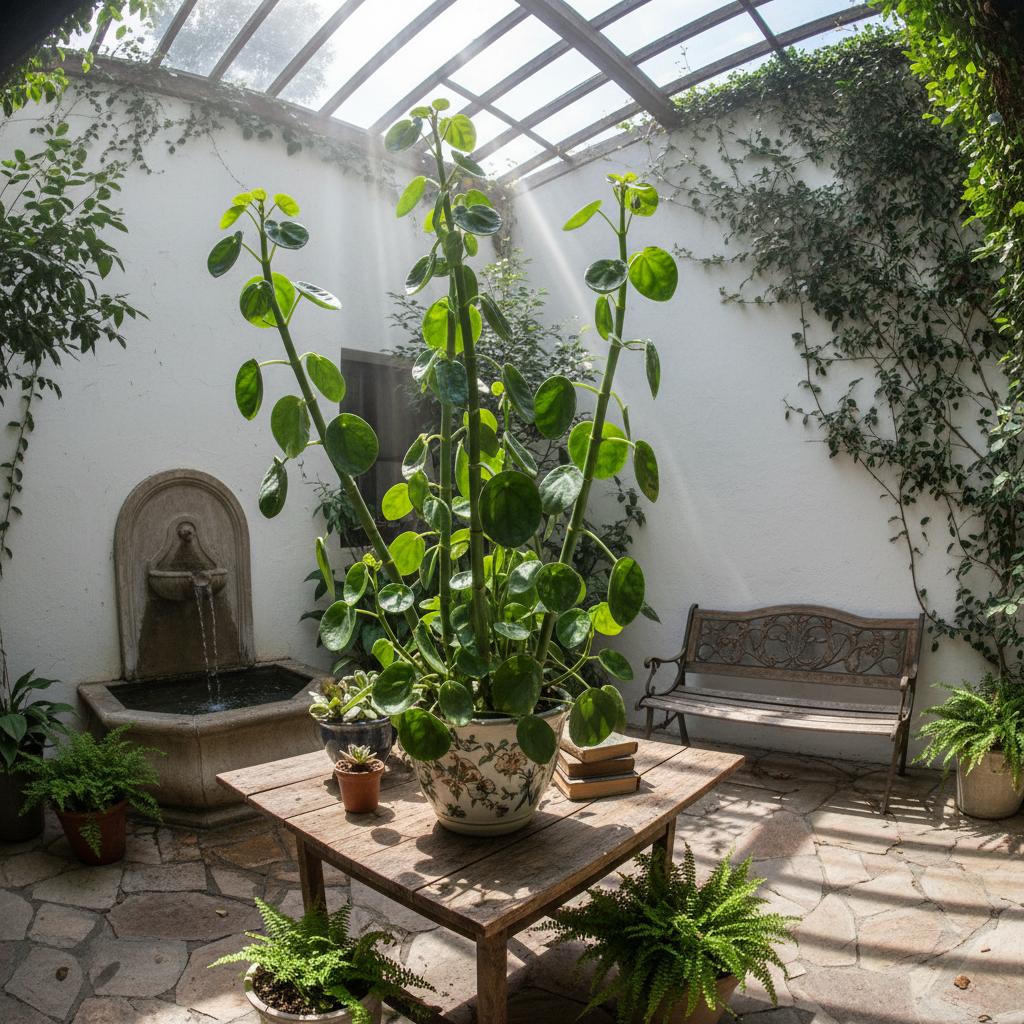
- Leaves: Lanceolate to narrowly elliptic, slightly fleshy, green, arranged alternately or in whorls along the stem;
- Stems: Upright, jointed with distinct nodes, resembling miniature bamboo stalks, reddish-brown to green;
- Flowers: Slender, greenish-white spadix-like spikes typical of the genus, lacking true petals;
- Roots: Fine, shallow root system adapted to epiphytic or terrestrial growth in well-aerated soils.
Care Guide
Watering
Water thoroughly when the top half of the soil is dry.
Fertilization
Apply a diluted, balanced fertilizer.. Fertilize sparingly during the growing season; do not fertilize in winter.
Banana Peel Tea:Steep chopped banana peels in water for 24-48 hours, strain, and use the liquid to water the plant. This provides gentle potassium to support strong, bamboo-like stems. Discard peels in compost to avoid attracting gnats.Pruning
- Pinching: Pinch back the growing tips in spring to encourage bushier growth;
- Maintenance: Remove any yellowing or dead leaves at the base;
- Propagation: Stem cuttings can be taken during pruning and easily rooted in water or moist soil.
Toxicity
Warning: this plant may be toxic.
Pets & Humans
Pets: Non-toxic to cats (per ASPCA guidelines for the Peperomia genus).
Humans: Non-toxic to humans; safe to handle.
Garden Uses & Culture
Culture: Highly valued in modern Western indoor gardening for its unique architectural form, offering a structural contrast to the more common trailing or rosette-forming houseplants.
Usage: - **Ornamental**: Excellent structural plant for desks, shelves, and terrariums; - **Companion Planting**: Pairs well with other semi-succulent tropicals in indoor arrangements.