 PlantFun
Plant Needs
Sunlight
Prefers bright, indirect light to maintain vibrant variegation; direct afternoon sun can scorch the leaves.
Watering
Allow the top 50% of the soil to dry out completely between waterings, as the succulent leaves store water.
Temperature
Thrives in warm household temperatures; protect from cold drafts and temperatures below 10°C (50°F).
Characteristics
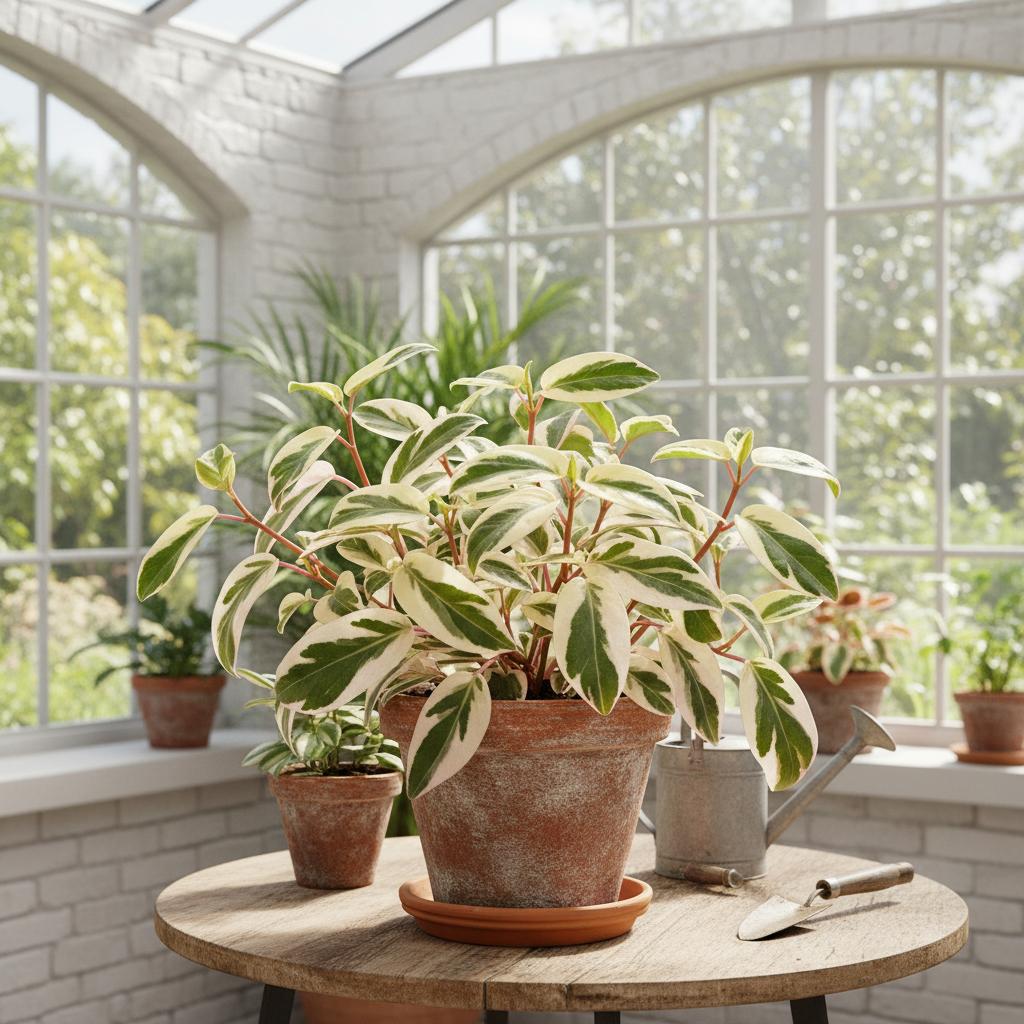
- Leaves: Thick, fleshy, obovate to spatulate leaves, highly variegated with dark green centers, creamy white margins, and bright pink to red edges;
- Stems: Thick, succulent-like, often reddish or purplish, upright when young but trailing with age;
- Flowers: Slender, rat-tail-like greenish-white spikes (spadices) lacking showy petals, rising above the foliage;
- Roots: Fine, shallow root system typical of epiphytic or semi-epiphytic tropical plants.
Care Guide
Watering
Water thoroughly when the top half of the soil is dry.
Fertilization
Apply a diluted balanced fertilizer.. Fertilize only during the active growing season; do not fertilize in winter.
Banana Peel Tea:Soak chopped banana peels in water for 24-48 hours, strain, and dilute 1:1 with fresh water. Use this to water the plant to support stem strength and overall health. Discard the peels in compost to avoid attracting pests.Pruning
- Pinch back: Pinch off the tips of leggy stems to encourage a bushier, more compact growth habit;
- Maintenance: Remove any dead, damaged, or entirely green leaves (if reverting) at the base of the stem;
- Propagation: Save healthy pruned stem or leaf cuttings to propagate in water or moist soil.
Toxicity
Warning: this plant may be toxic.
Pets & Humans
Pets: Non-toxic to cats (per ASPCA).
Humans: Non-toxic to humans, though ingestion is not recommended.
Garden Uses & Culture
Culture: Highly prized in Western houseplant communities for its compact size and striking tricolor foliage, making it a popular choice for desktop gardens, terrariums, and modern interior decor.
Usage: Indoor ornamental plant, terrarium specimen, desktop plant.