 PlantFun
Plant Needs
Sunlight
Prefers bright, indirect light to maintain its variegation; direct afternoon sun can scorch the delicate leaves.
Watering
Allow the top 50% of the soil to dry out completely before watering; highly susceptible to root rot if overwatered.
Temperature
Thrives in warm household temperatures; protect from cold drafts and temperatures below 10°C (50°F).
Characteristics
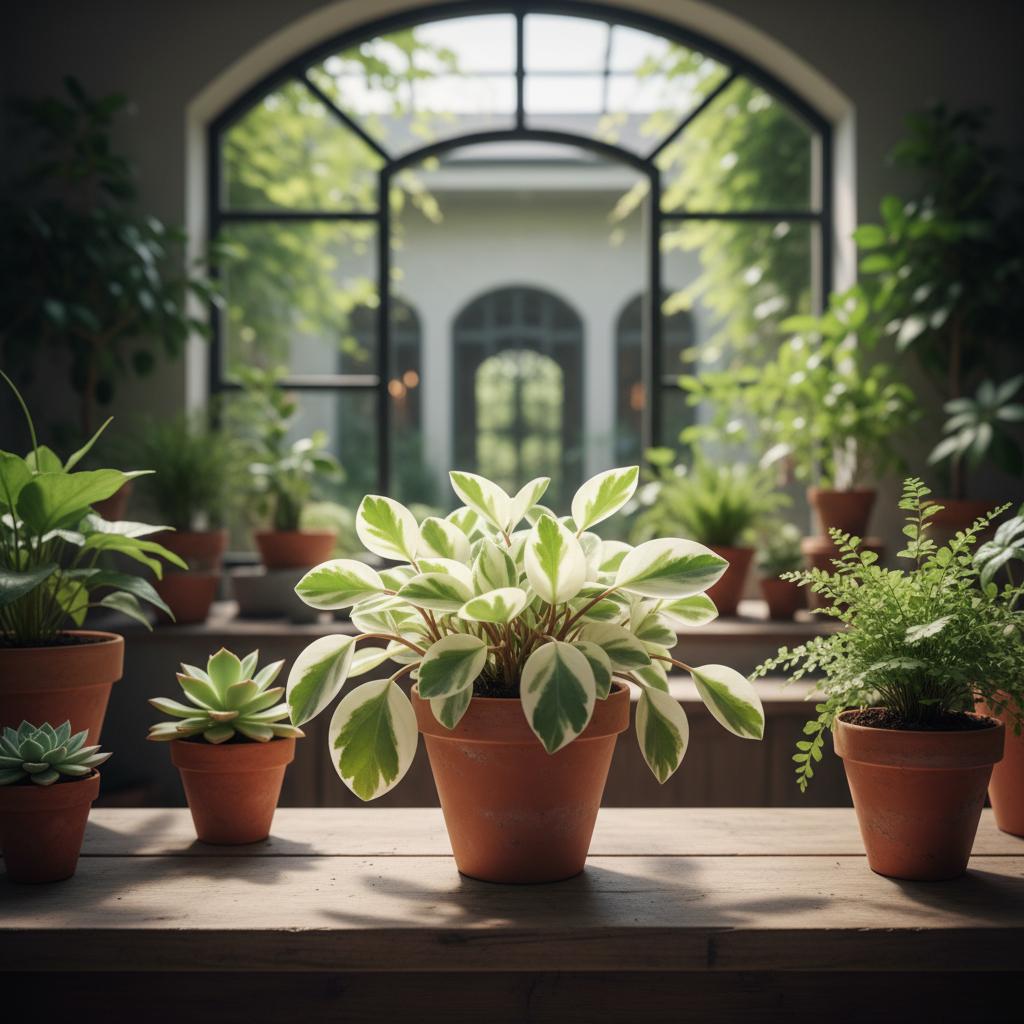
- Leaves: Small, fleshy, ovate to nearly round, arranged oppositely or in whorls; features a green center with irregular creamy-white to pale yellow margins.
- Stems: Slender, trailing or creeping, often reddish or pale green, rooting readily at the nodes.
- Flowers: Slender, greenish-white, spike-like spadices (often called "rat tails") that rise above the foliage, lacking true petals.
- Roots: Shallow, fine, and epiphytic in nature, adapted to growing on trees or rocks in its native habitat.
Care Guide
Watering
Water thoroughly when the top half of the soil feels dry, allowing excess water to drain completely.
Fertilization
Apply a diluted, balanced liquid fertilizer to encourage new variegated growth.. Epiphytes require very little fertilizer; over-fertilizing can burn the shallow roots.
Aquarium Water:Use dirty water from routine freshwater aquarium changes. It provides a gentle, low-dose source of nitrogen perfect for sensitive epiphytic roots. Ensure the water contains no added aquarium salts or medications.Pruning
- Pinch back the growing tips in spring to encourage a bushier, more compact growth habit.
- Trim excessively long or leggy trailing stems using sterilized scissors.
- Remove any entirely green (reverted) leaves or stems to preserve the plant's variegated appearance.
- Propagate healthy stem cuttings in water or moist sphagnum moss.
Toxicity
Warning: this plant may be toxic.
Pets & Humans
Pets: Non-toxic to cats per ASPCA guidelines.
Humans: Non-toxic to humans; safe to handle and cultivate indoors.
Garden Uses & Culture
Culture: In Western interior design, trailing Peperomias have become highly sought-after for hanging baskets and macramé planters, prized for their space-saving vertical growth and pet-safe qualities.
Usage: Excellent for hanging baskets, elevated shelves, terrariums, and mixed indoor container gardens.