 PlantFun
Plant Needs
Characteristics
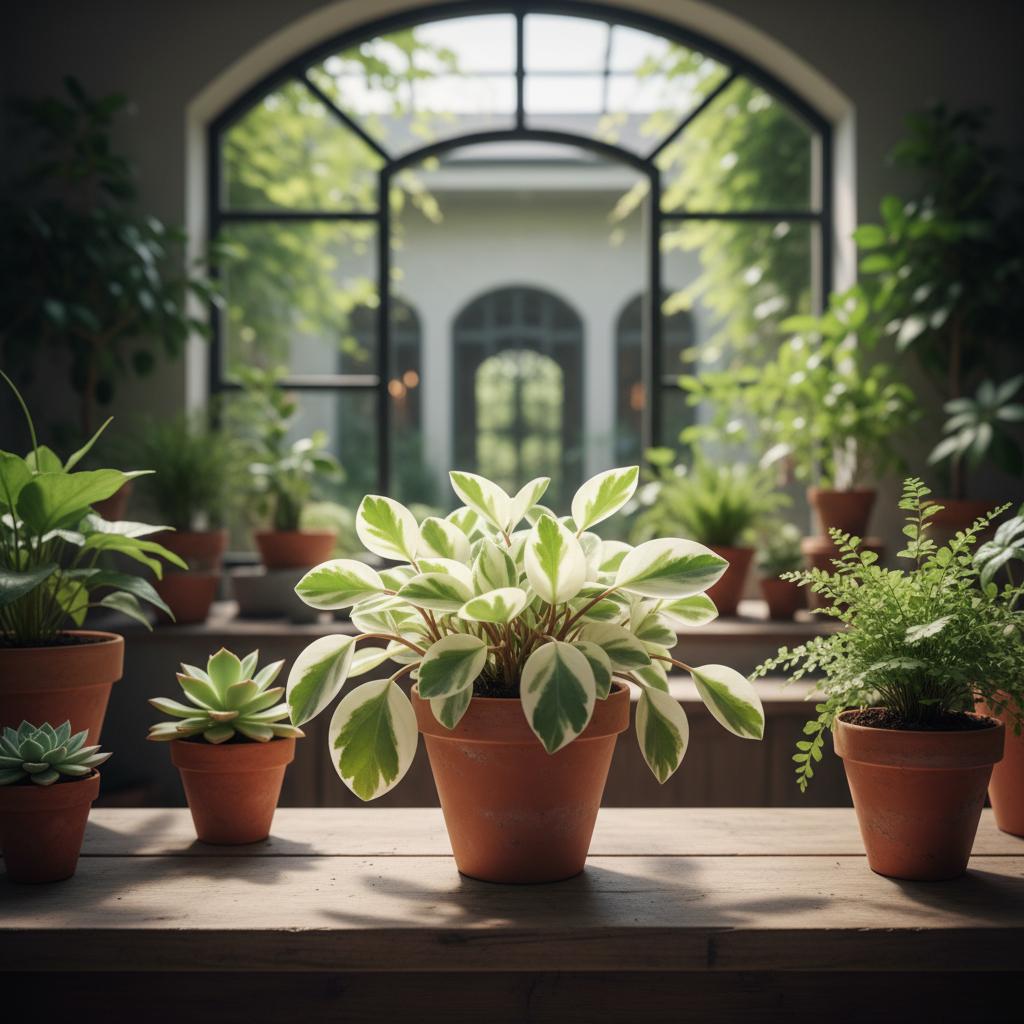
- Leaves: Small, fleshy, round to slightly oval leaves arranged alternately on trailing stems; features a distinct reticulated pattern resembling a turtle shell, with striking variegation of cream, white, or pale pink alongside dark and light green.
- Stems: Thin, delicate, trailing stems that are reddish to brownish-green, rooting readily at the nodes when in contact with soil or moisture.
- Flowers: Insignificant, tiny, greenish-white, rat-tail-like spikes (spadices) that lack petals, typical of the Piperaceae family, rising above the foliage.
- Roots: Shallow, fine root system adapted to an epiphytic or semi-epiphytic lifestyle in native habitats.
Care Guide
Water thoroughly when the top half of the soil is dry, ensuring excess water drains away.
Apply a diluted, balanced fertilizer once a month to support active growth.. Do not fertilize in autumn and winter when the plant's growth naturally slows down.
Banana Peel Tea:Steep chopped banana peels in water for 24-48 hours, strain, and use the liquid to water the plant. This provides gentle potassium for strong stems and root health. Avoid leaving raw peels on the soil surface to prevent attracting fungus gnats.- Pinch back: Pinch off the tips of the vines to encourage branching and a fuller, bushier appearance at the top of the pot.
- Remove dead foliage: Carefully snip away any yellowing, dried, or rotting leaves and stems to maintain plant hygiene.
- Propagation: Save healthy pruned stems (at least 2-3 inches long) to propagate in moist sphagnum moss or well-draining soil.
Toxicity
Warning: this plant may be toxic.
Pets: Non-toxic to cats per ASPCA guidelines.
Humans: Non-toxic to humans; safe to handle, though not intended for consumption.
Garden Uses & Culture
Culture: Highly prized in Western houseplant communities and terrarium building for its whimsical, miniature foliage. It is often shared among collectors as a symbol of patience and slow, steady growth, much like the turtle it is named after.
Usage: Excellent for hanging baskets, small decorative pots, and high-humidity glass terrariums or vivariums.