 PlantFun
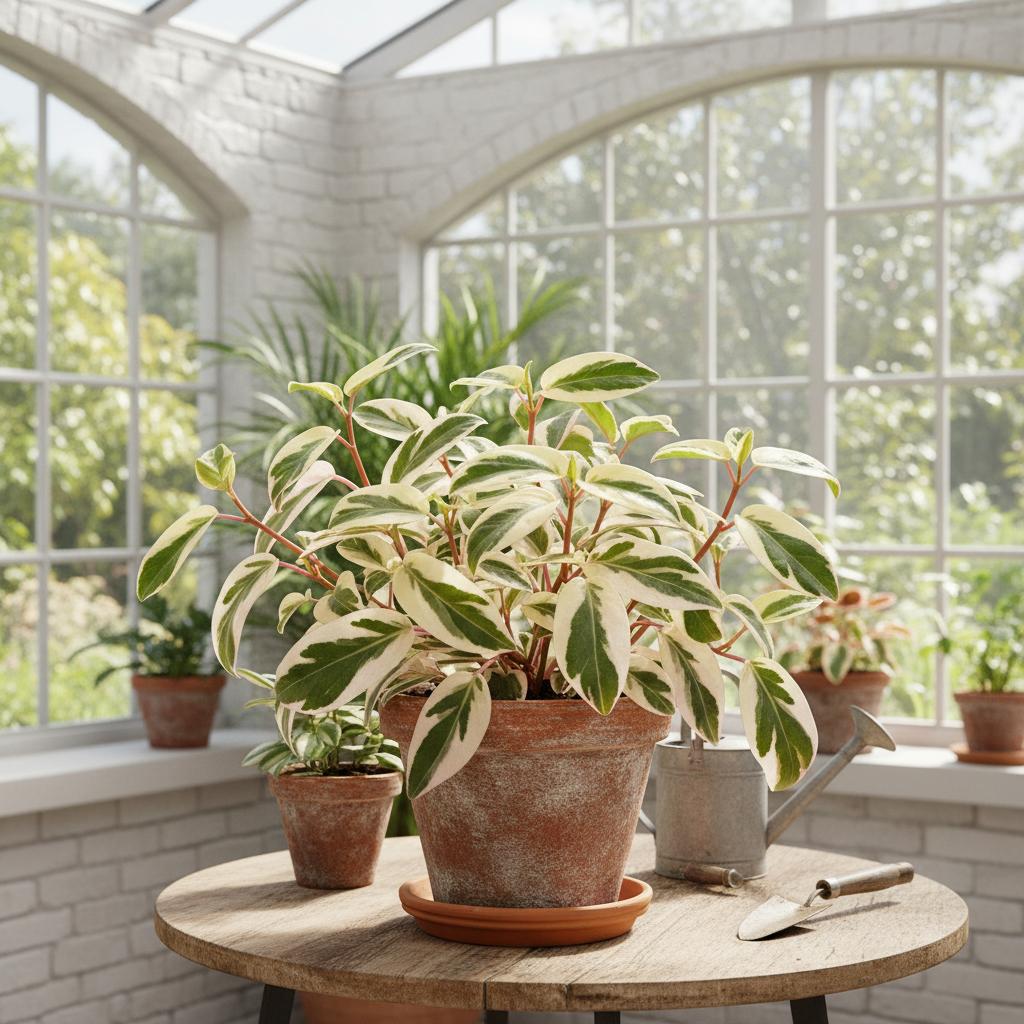
Plant Needs
Sunlight
Prefers bright, indirect light to maintain its vibrant pink and cream variegation; avoid harsh direct afternoon sun which can scorch the leaves.
Watering
Allow the top 50% of the soil to dry out completely before watering, as its succulent leaves store water.
Temperature
Thrives in warm household temperatures; protect from cold drafts and temperatures below 10°C (50°F).
Characteristics
- Leaves: Fleshy, obovate to spatulate leaves featuring a green center, creamy-white to yellow variegation, and bright pink or red margins;
- Stems: Thick, succulent-like stems, often tinged with red or pink, growing in an upright but compact habit;
- Flowers: Slender, greenish-white spadix (rat-tail like) lacking showy petals, typical of the Piperaceae family;
- Roots: Fine, shallow root system adapted to epiphytic or semi-epiphytic growth in its native habitat.
Care Guide
Watering
Water thoroughly when the top half of the soil feels dry.
Fertilization
Apply a balanced, diluted fertilizer to support new growth.. Fertilization recommendations: Feed sparingly, as Peperomias are light feeders. Flush the soil occasionally to prevent salt buildup.
Banana Peel Tea:Steep chopped banana peels in water for 24-48 hours, strain, and use the liquid to water the plant. This provides gentle potassium for root and stem health without the risk of chemical burn. Discard the peels in compost to avoid attracting gnats.Pruning
- Pinch back leggy stems just above a leaf node to encourage a bushier, more compact growth habit;
- Remove any yellowing, dead, or damaged leaves at the base of the stem to maintain plant hygiene;
- Save healthy pruned stem cuttings, as they can be easily propagated in water or moist soil.
Toxicity
Warning: this plant may be toxic.
Pets & Humans
Pets: Non-toxic to cats per ASPCA guidelines.
Humans: Non-toxic to humans; safe to handle and keep indoors.
Garden Uses & Culture
Culture: In Western indoor gardening, Peperomias are highly valued for their compact nature and non-toxic properties, making them a staple in pet-friendly households and modern apartment decor.
Usage: Excellent for desktops, terrariums, dish gardens, and small indoor spaces due to its slow growth and compact size.