 PlantFun
Plant Needs
Sunlight
Full sun to partial shade.
Watering
Moderate watering, drought-tolerant once established.
Temperature
Prefers Mediterranean climate; frost sensitive.
Characteristics
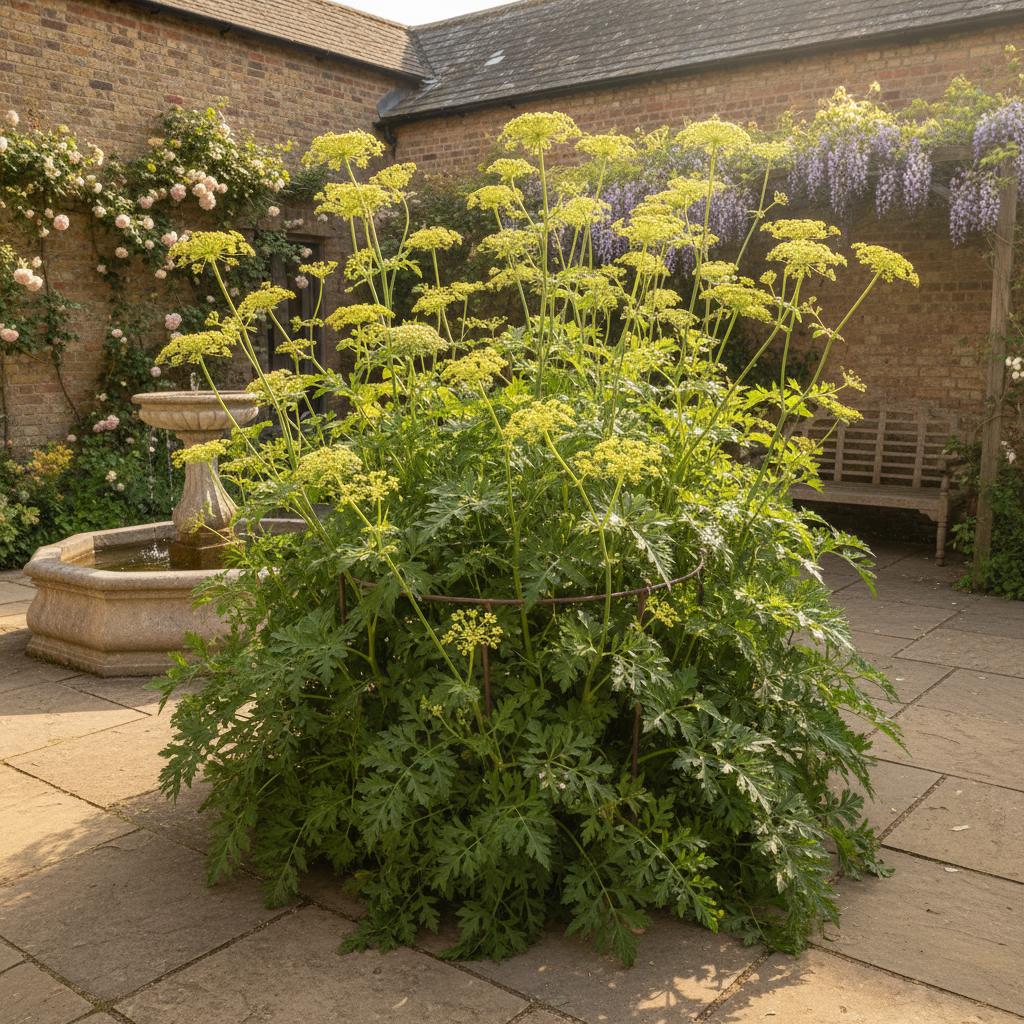
- Leaves: Evergreen, pinnately compound, leaflets rhomboid to wedge-shaped with coarsely toothed margins, yellowish-green and glabrous;
- Flowers: Small, yellow, arranged in large, flat-topped compound umbels typical of the Apiaceae family;
- Stem: Woody at the base, branching, smooth and green when young, turning brownish-grey with age.
Care Guide
Watering
Water moderately, allowing soil to dry out between waterings.
Fertilization
Apply a light, balanced organic compost.. Requires very little fertilization in its native-like habitat.
Compost Tea:Steep a small amount of garden compost in water for 24 hours, strain, and use as a mild soil drench. Avoid high salts.Pruning
- WARNING: Wear heavy protective clothing, thick gloves, and face protection before attempting to prune;
- Prune only to remove dead or diseased wood;
- Do not prune on sunny days to minimize the risk of UV-activated sap burns;
- Safely dispose of cuttings without burning them, as smoke can also be an irritant.
Toxicity
Warning: this plant may be toxic.
Pets & Humans
Pets: Toxic upon contact or ingestion; furanocoumarins cause severe dermal reactions on exposed skin.
Humans: Highly toxic upon skin contact combined with sunlight (phytophotodermatitis) due to furanocoumarins.
Garden Uses & Culture
Culture: Documented by early European botanists exploring the Cape of Good Hope, it became infamous among Western explorers for its severe blistering effects.
Usage: Historically noted in early colonial medicinal texts for rheumatism, but highly discouraged today due to extreme toxicity.