 PlantFun
Plant Needs
Characteristics
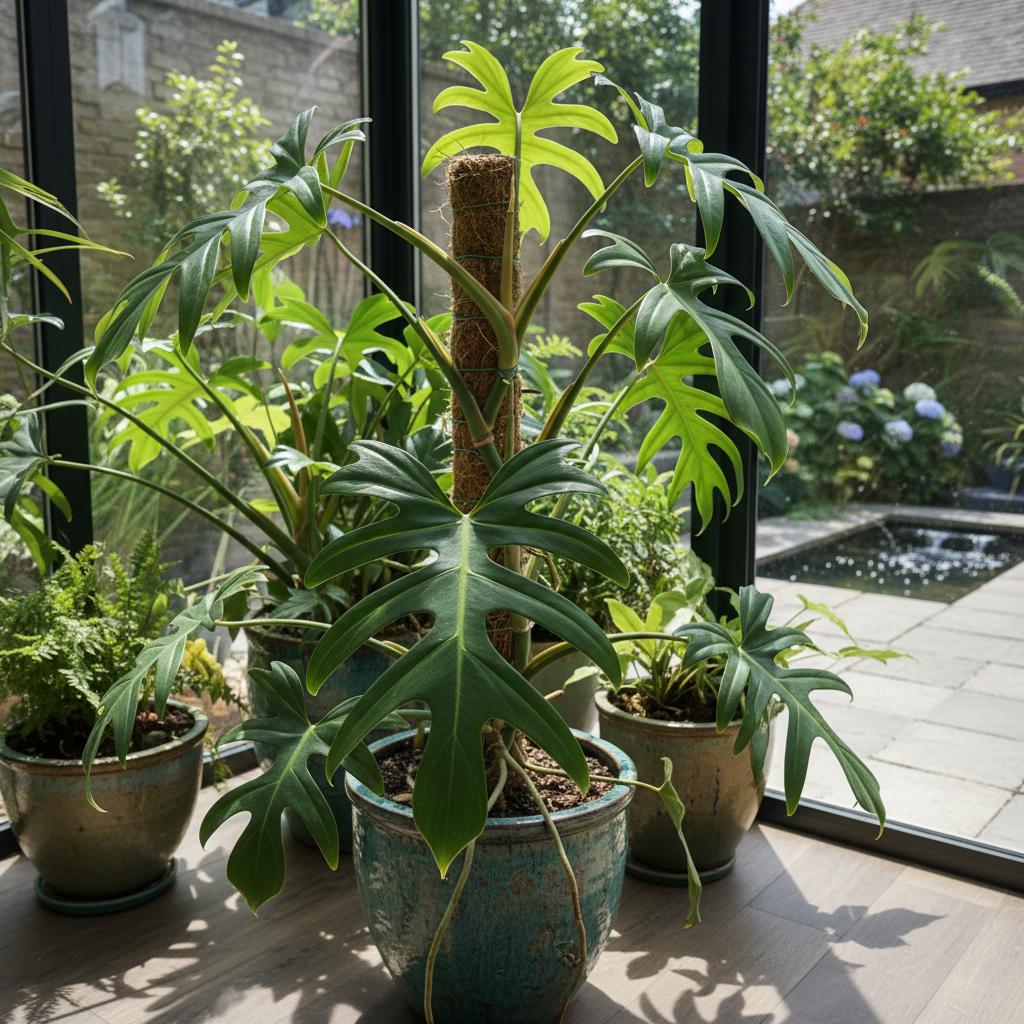
- Leaves: Large, deeply lobed (pinnatifid), glossy dark green, up to 90 cm long, with wavy margins and a leathery texture;
- Stems: Thick, woody trunk that develops distinct, eye-like leaf scars as the lower leaves naturally shed over time;
- Roots: Long, robust aerial roots extending from the stem to the ground to anchor the plant and absorb ambient moisture;
- Flowers: Apetalous small flowers densely packed on a spadix, enclosed by a greenish-white, boat-shaped spathe.
Care Guide
Water thoroughly when the topsoil dries out, keeping the root ball slightly moist but never waterlogged.
Apply a balanced liquid fertilizer diluted to half strength to support new foliage growth.. Do not fertilize during the winter dormancy period.
Banana Peel Tea:Steep chopped banana peels in a jar of water for 24-48 hours. Strain the liquid and dilute 1:1 with fresh water to use as a gentle potassium boost. Discard the peels in an outdoor compost bin to prevent fungus gnats or odors indoors.- Remove yellowing, dead, or damaged leaves by cutting cleanly at the base of the stem;
- Wipe the large leaves regularly with a damp cloth to remove dust and support photosynthesis;
- Aerial roots can be guided into the soil or left to hang; avoid cutting them off entirely as they support the plant's structure.
Toxicity
Warning: this plant may be toxic.
Pets: Toxic per ASPCA. Chewing leaves releases calcium oxalate crystals causing intense oral irritation and gastrointestinal upset.
Humans: Contains insoluble calcium oxalate crystals; chewing or ingesting can cause painful irritation of the mouth and throat, and sap may cause skin irritation.
Garden Uses & Culture
Culture: Highly prized in mid-century modern Western interior design, this plant became a staple in the 1950s and 60s for bringing bold, architectural, and tropical aesthetics into suburban homes.
Usage: Cultivated as a dramatic specimen houseplant for large rooms, offices, and atriums, or as a landscape shrub in frost-free subtropical regions.