 PlantFun
Plant Needs
Characteristics
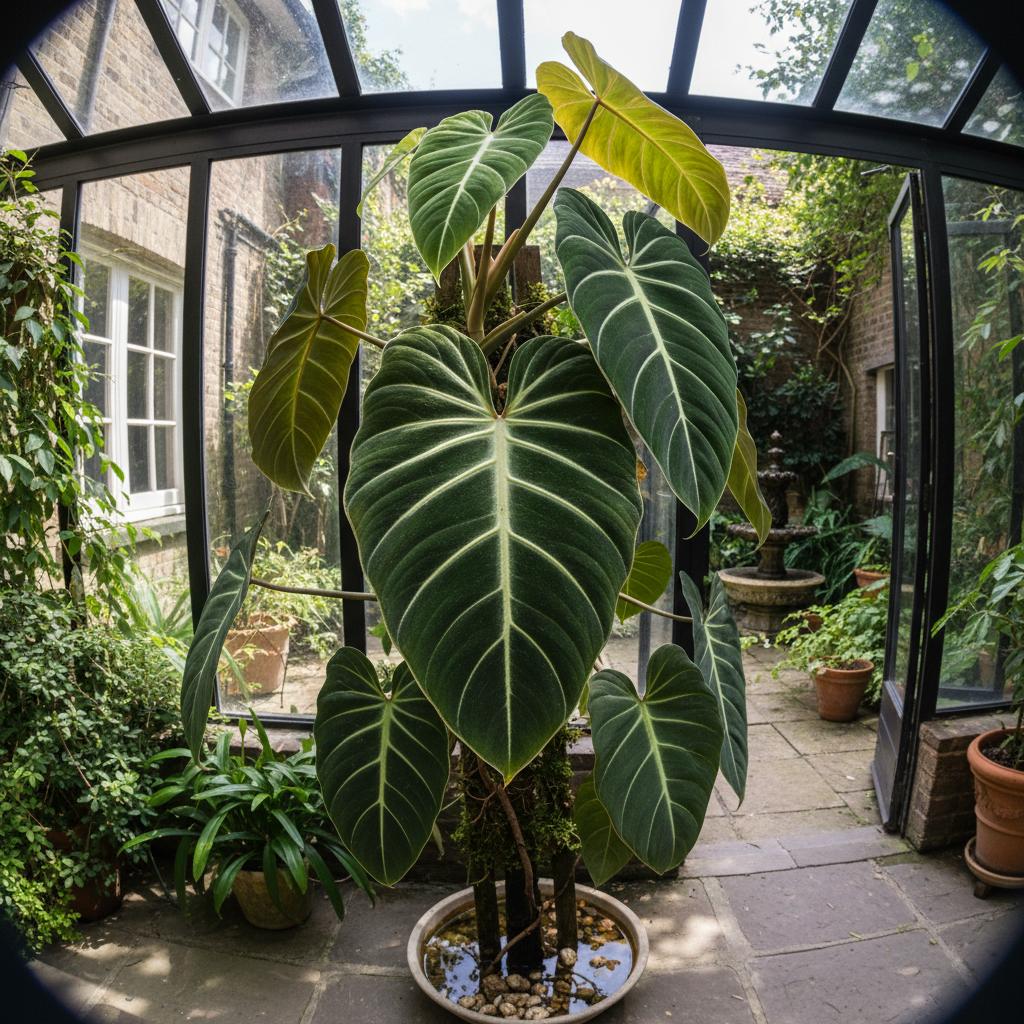
- Leaves: Large, cordate (heart-shaped), velvety dark green leaves with prominent pale green to white venation and pale margins;
- Stem: Terete to slightly flattened, exhibiting a mix of creeping and climbing habits, with distinct internodes and aerial roots;
- Petioles: D-shaped or slightly flattened on the upper side, often featuring reddish or pinkish margins near the sheath;
- Flowers: Typical aroid inflorescence with a green to white spathe and a white spadix, though rarely produced in indoor cultivation.
Care Guide
Water thoroughly when the top third of the soil is dry.
Apply a balanced liquid fertilizer diluted to half strength.. Feed regularly during the active growing season, pausing in winter.
Aquarium Water Fertilizer:Use dirty aquarium change water to water the plant. It provides gentle, natural nitrogen and beneficial microbes. Ensure the aquarium water does not contain added salts or harsh fish medications.- Remove older, yellowing leaves at the base of the petiole using sterilized shears;
- Prune the top growth if the plant outgrows its moss pole to encourage branching;
- Take stem cuttings with at least one node and an aerial root for propagation.
Toxicity
Warning: this plant may be toxic.
Pets: Toxic per ASPCA. Ingestion causes oral irritation, pain and swelling of mouth, tongue and lips, excessive drooling, vomiting, and difficulty swallowing.
Humans: Contains insoluble calcium oxalate crystals which can cause oral and skin irritation upon contact or ingestion.
Garden Uses & Culture
Culture: Highly prized in the Western houseplant community, this hybrid is celebrated for its luxurious velvety foliage and is a staple in modern indoor jungle aesthetics.
Usage: Cultivated primarily as an indoor ornamental foliage plant or greenhouse specimen.