 PlantFun
Plant Needs
Characteristics
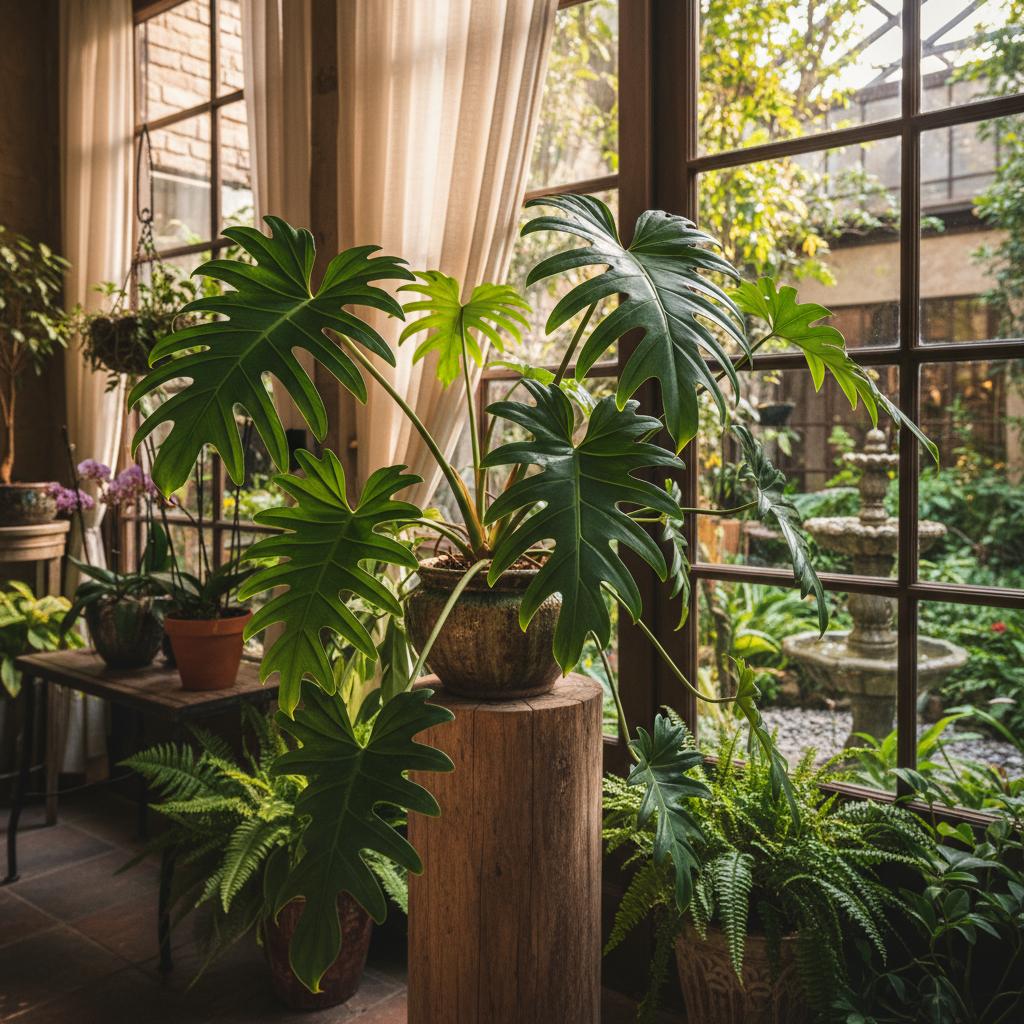
- Leaves: Large, deeply lobed (pinnatifid), glossy dark green, leathery texture, reaching up to 18 inches in length;
- Stems: Sturdy, green, producing aerial roots for climbing or anchoring to supports;
- Flowers: Typical aroid inflorescence with a green to white spathe and white spadix, though rarely seen in indoor cultivation;
- Roots: Extensive underground root system complemented by thick, fleshy aerial roots.
Care Guide
Water thoroughly once the top third of the soil dries out.
Apply a balanced liquid fertilizer diluted to half strength.. Feed regularly during the growing season, pausing entirely in winter when growth slows.
Aquarium Water Fertilizer:Use dirty aquarium water during routine water changes to water the plant. It provides a gentle, natural source of nitrogen. Ensure the water has no added salts or chemical medications.- Remove any yellowing, damaged, or dead leaves at the base of the petiole;
- Prune back leggy growth to encourage a bushier, more compact shape;
- Provide a moss pole or trellis to support climbing growth and encourage larger mature leaves;
- Use clean, sterilized shears to prevent the spread of bacterial or fungal infections.
Toxicity
Warning: this plant may be toxic.
Pets: Toxic per ASPCA. Causes oral irritation, intense burning of mouth, tongue and lips, excessive drooling, vomiting, and difficulty swallowing.
Humans: Contains insoluble calcium oxalate crystals causing oral irritation, burning, and swelling if ingested.
Garden Uses & Culture
Culture: Philodendrons became highly sought-after in mid-20th century Western interior design, symbolizing the modern integration of tropical nature into urban living spaces.
Usage: - **Ornamental**: Popular floor plant or climbing specimen for homes, offices, and commercial atriums; - **Air Purification**: Known to help filter indoor air pollutants like formaldehyde and benzene.