 PlantFun
Plant Needs
Characteristics
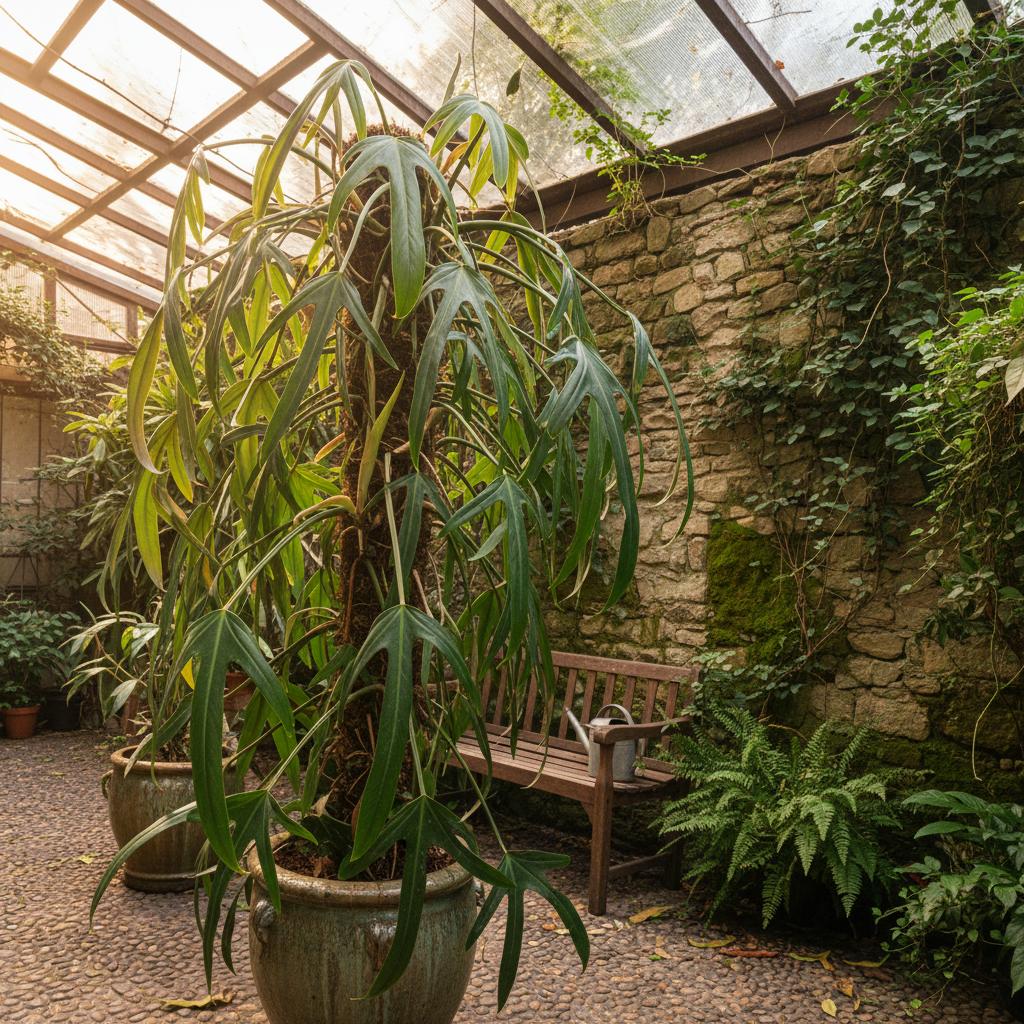
- Leaves: Elongated, strap-like to lanceolate, leathery, glossy deep green, with a prominent midrib and entire margins;
- Stems: Climbing or trailing vines, green to brownish with age, producing aerial roots at the nodes;
- Flowers: Typical aroid inflorescence consisting of a greenish-white spathe surrounding a central spadix, rarely produced in cultivation;
- Roots: Fibrous subterranean roots supplemented by thick, grasping aerial roots used for climbing host trees.
Care Guide
Water thoroughly when the top inch of soil feels dry, ensuring excess water drains away.
Apply a balanced, diluted liquid fertilizer to support new foliage growth.. Feed monthly during the active growing season; pause fertilization during winter dormancy.
Aquarium Water Fertilizer:Use dirty water from routine freshwater aquarium changes to water the plant. It provides a gentle, natural source of nitrogen and beneficial microbes. Ensure the aquarium water does not contain added salts or medications.- Maintenance: Remove any yellowing, dead, or damaged leaves at the base of the petiole to maintain appearance and hygiene;
- Size Control: Trim excessively long or leggy vines just above a node to encourage bushier growth;
- Propagation: Stem cuttings containing at least one node and an aerial root can be easily propagated in water or sphagnum moss.
Toxicity
Warning: this plant may be toxic.
Pets: Toxic to cats per ASPCA. Ingestion of calcium oxalate crystals causes intense oral irritation and gastrointestinal distress.
Humans: Contains insoluble calcium oxalate crystals. Chewing or biting into the plant releases these crystals, causing tissue penetration and irritation of the mouth and GI tract.
Garden Uses & Culture
Culture: Philodendrons became a staple of mid-century modern interior design in the West, prized for their ability to bring a touch of the exotic jungle into urban apartments with minimal effort.
Usage: Excellent as a trailing plant in hanging baskets, or trained to climb upwards on a moss pole or trellis to encourage larger, more mature foliage.