 PlantFun
Plant Needs
Sunlight
Prefers bright, indirect sunlight; avoid harsh direct sun which can scorch the leaves.
Watering
Water thoroughly when the top 2 to 3 inches of soil feel dry to the touch.
Temperature
Thrives in warm household temperatures; protect from cold drafts below 15°C.
Characteristics
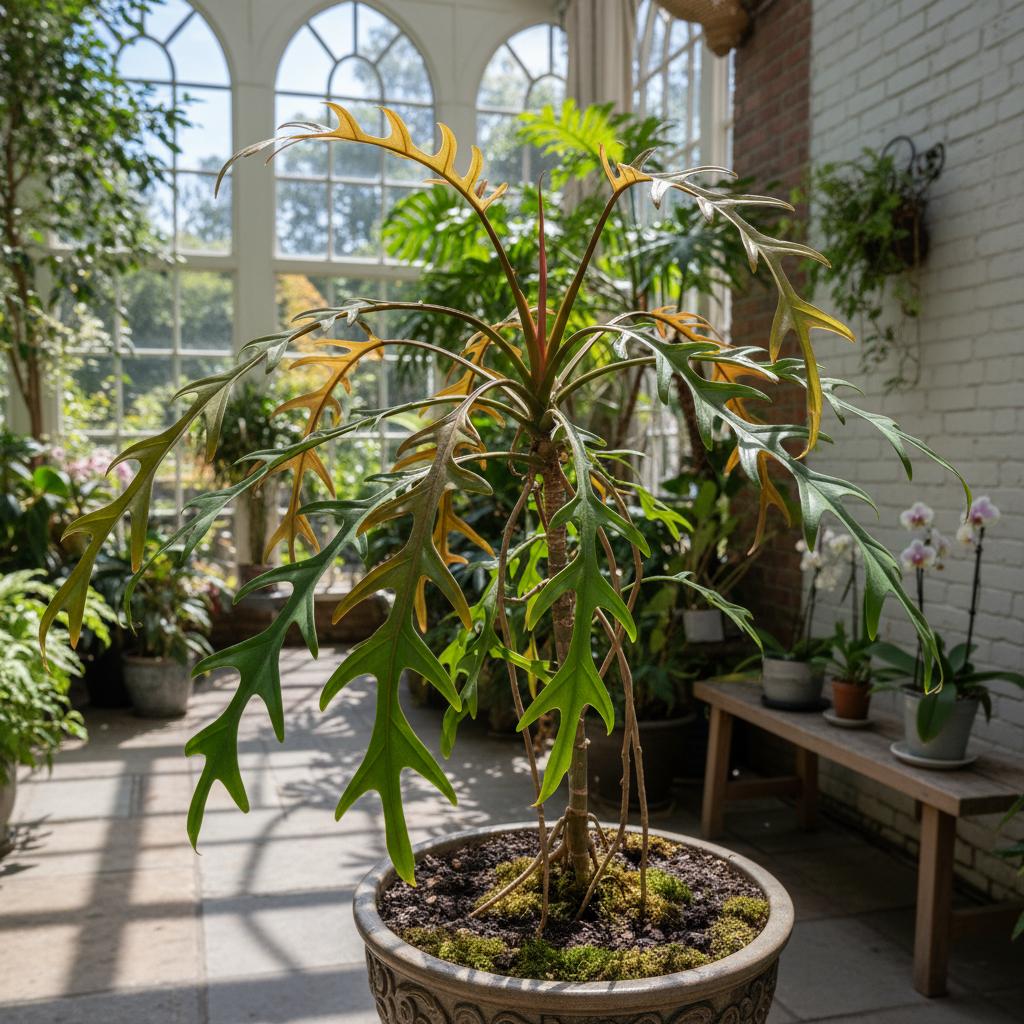
- Leaves: Elongated, narrow, dark green leaves with deeply serrated or jagged margins resembling tiger teeth, growing up to 60 cm long.
- Stems: Sturdy, self-heading to slowly climbing growth habit, producing thick aerial roots at the nodes.
- Flowers: Typical aroid inflorescence with a green to reddish spathe and white spadix, though extremely rare in indoor cultivation.
Care Guide
Watering
Water thoroughly when the top few inches of soil dry out.
Fertilization
Apply a balanced, diluted fertilizer to support active growth.. Do not fertilize during the winter dormancy period.
Aquarium Water:Use leftover water from a freshwater aquarium during routine water changes. It provides a gentle, natural source of nitrogen perfect for foliage plants. Ensure the water has no added aquarium salts or medications.Pruning
- Remove any yellowing or dead basal leaves with sterilized shears.
- Trim excessively long aerial roots if they become unruly, or guide them back into the soil.
- Wipe the large leaves regularly with a damp cloth to remove dust and support photosynthesis.
Toxicity
Warning: this plant may be toxic.
Pets & Humans
Pets: Toxic to cats per ASPCA. Ingestion causes intense burning of the mouth, tongue, and lips, excessive drooling, and vomiting.
Humans: Contains insoluble calcium oxalate crystals; chewing or ingesting can cause oral irritation and swelling.
Garden Uses & Culture
Culture: Popularized in Western houseplant culture during the late 20th-century tropical plant boom, valued for its architectural, highly textured foliage that fits modern interior design.
Usage: Excellent indoor specimen plant, floor plant, and natural air purifier.