 PlantFun
Plant Needs
Characteristics
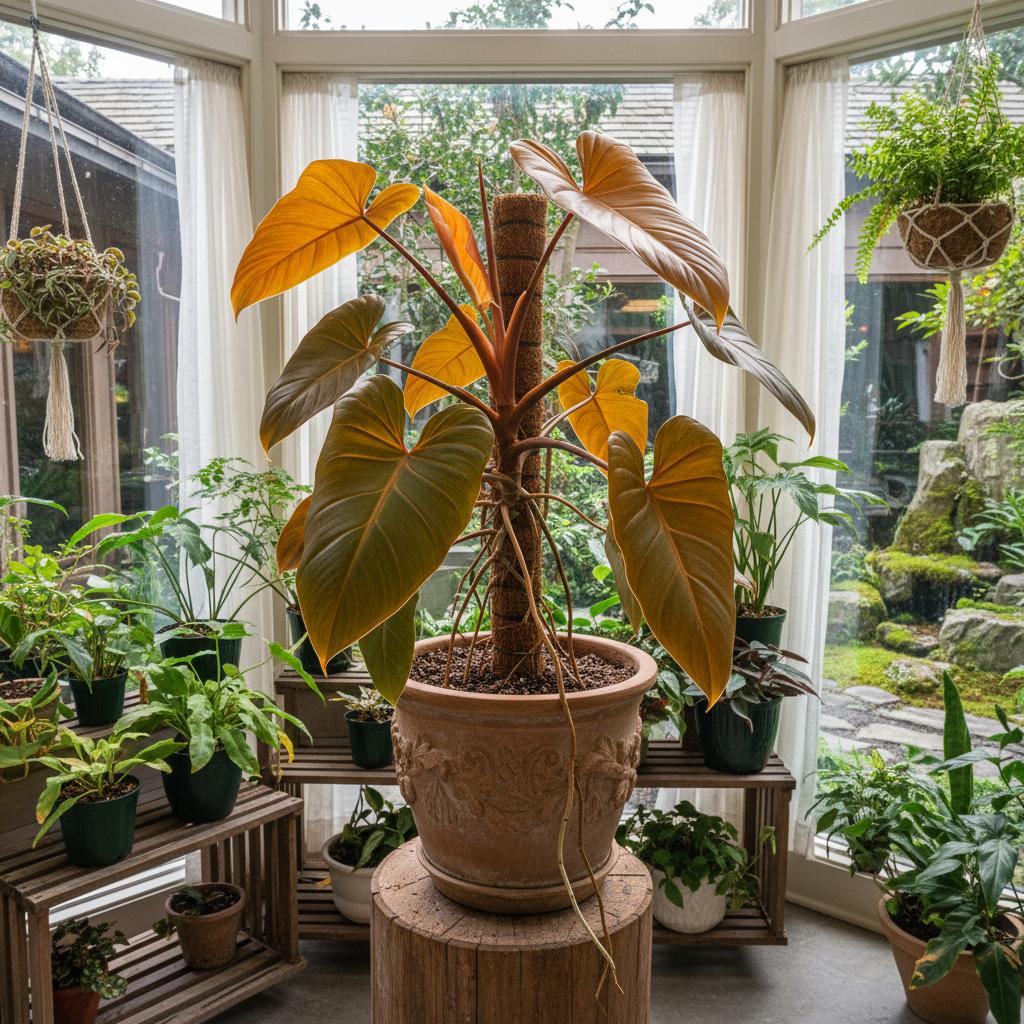
- Leaves: Ovate to lanceolate, emerging bright orange or copper, transitioning to pale green and finally dark green as they mature, with a glossy surface;
- Stems: Short, self-heading (non-vining) growth habit, with reddish or pale green petioles;
- Flowers: Spathe and spadix typical of Araceae, though extremely rare in indoor cultivation;
- Roots: Fleshy aerial and subterranean roots adapted for epiphytic or hemiepiphytic growth.
Care Guide
Water thoroughly when the topsoil dries out, allowing excess water to drain completely.
Apply a balanced liquid fertilizer diluted to half strength.. Fertilize only during the active growing season; pause during winter.
Aquarium Water:Use old aquarium water during routine tank changes to water the plant. Ensure the water is at room temperature and free of any fish medications or added salts.- Remove older, yellowing, or damaged leaves at the base of the petiole using sterilized shears;
- Wipe leaves regularly with a damp cloth to remove dust and support photosynthesis;
- No structural pruning is necessary due to its self-heading growth habit.
Toxicity
Warning: this plant may be toxic.
Pets: Toxic to cats per ASPCA. Ingestion causes oral irritation, pain and swelling of mouth, tongue and lips, excessive drooling, vomiting, and difficulty swallowing.
Humans: Contains calcium oxalate crystals which can cause oral and gastrointestinal irritation if ingested.
Garden Uses & Culture
Culture: Highly prized in Western houseplant communities for its compact, self-heading nature and autumnal color palette, making it a popular alternative to vining Philodendrons.
Usage: Excellent as a tabletop specimen, office plant, or colorful accent in a mixed tropical indoor garden.