 PlantFun
Plant Needs
Sunlight
Requires bright, indirect light to maintain variegation; direct sun will scorch the delicate white leaf sections.
Watering
Water when the top 2-3 inches of soil feel dry. Ensure excellent drainage to prevent root rot.
Temperature
Prefers warm household temperatures and high humidity (60%+).
Characteristics
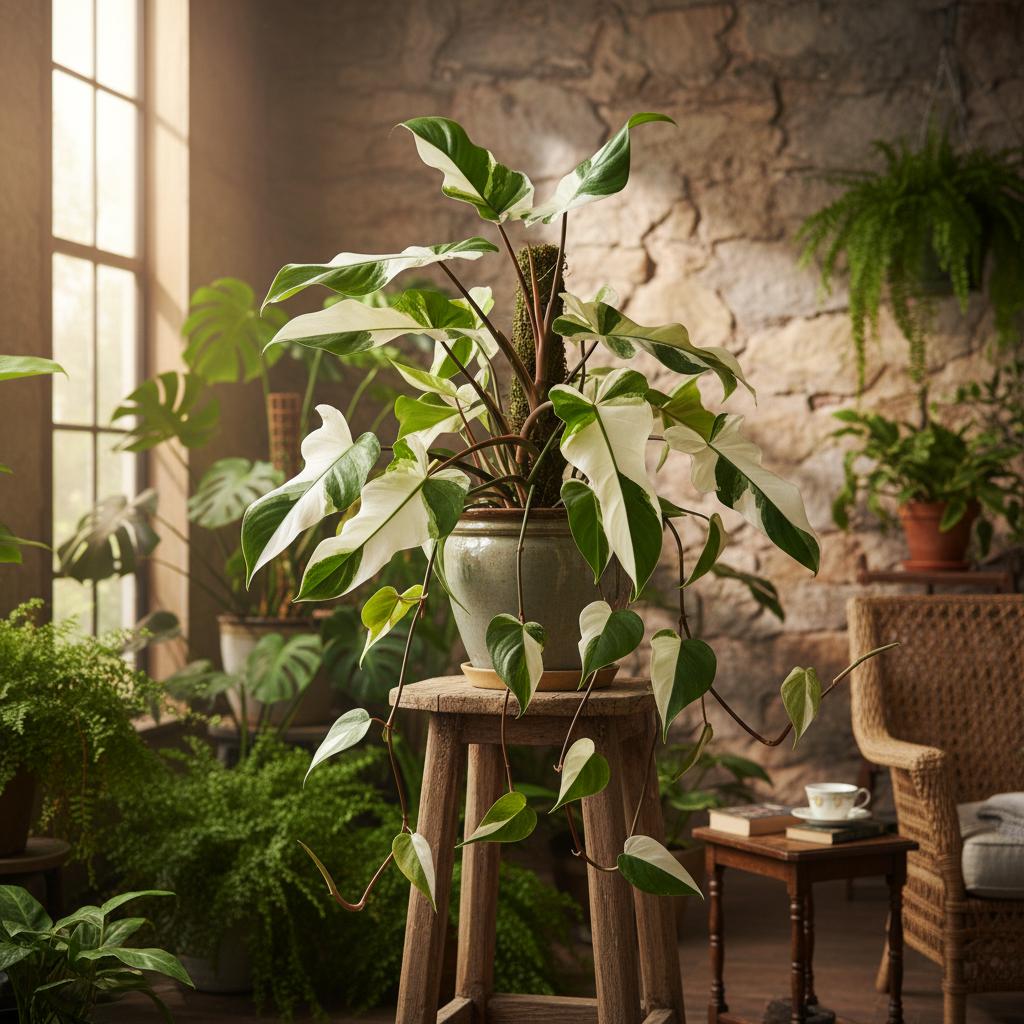
- Leaves: Ovate to cordate, dark green with striking white and occasionally mint-green blocky or splashed variegation;
- Stems: Distinctive dark burgundy to brownish-red stems with white edging along the cataphylls, which distinguishes it from similar cultivars;
- Growth Habit: Climbing vine that develops aerial roots and significantly larger leaves when provided with a moss pole or trellis.
Care Guide
Watering
Water thoroughly when the top third of the soil is dry.
Fertilization
Apply a balanced liquid fertilizer diluted to half strength.. Feed monthly during the growing season; pause entirely in winter when growth slows.
Aquarium Water Fertilizer:Use dirty aquarium water from routine tank changes to water the plant. It provides gentle, natural nitrogen without the risk of chemical burn. Ensure the water is room temperature and free of aquarium salt or medications.Pruning
- Prune stems just above a node to encourage branching if the plant becomes leggy;
- Remove fully reverted (all-green) leaves to encourage the plant to produce more variegated foliage;
- Trim away any browned or scorched white patches for aesthetic purposes using sterilized shears.
Toxicity
Warning: this plant may be toxic.
Pets & Humans
Pets: Toxic per ASPCA. Chewing causes oral irritation, pain and swelling of mouth, tongue and lips, excessive drooling, vomiting, and difficulty swallowing.
Humans: Contains insoluble calcium oxalate crystals causing oral irritation, burning sensation, and swelling if chewed.
Garden Uses & Culture
Culture: Highly prized in the Western houseplant collector community, often traded and showcased as a rare statement piece in indoor jungles.
Usage: Cultivated primarily as an ornamental indoor foliage plant and collector's specimen.