 PlantFun
Plant Needs
Characteristics
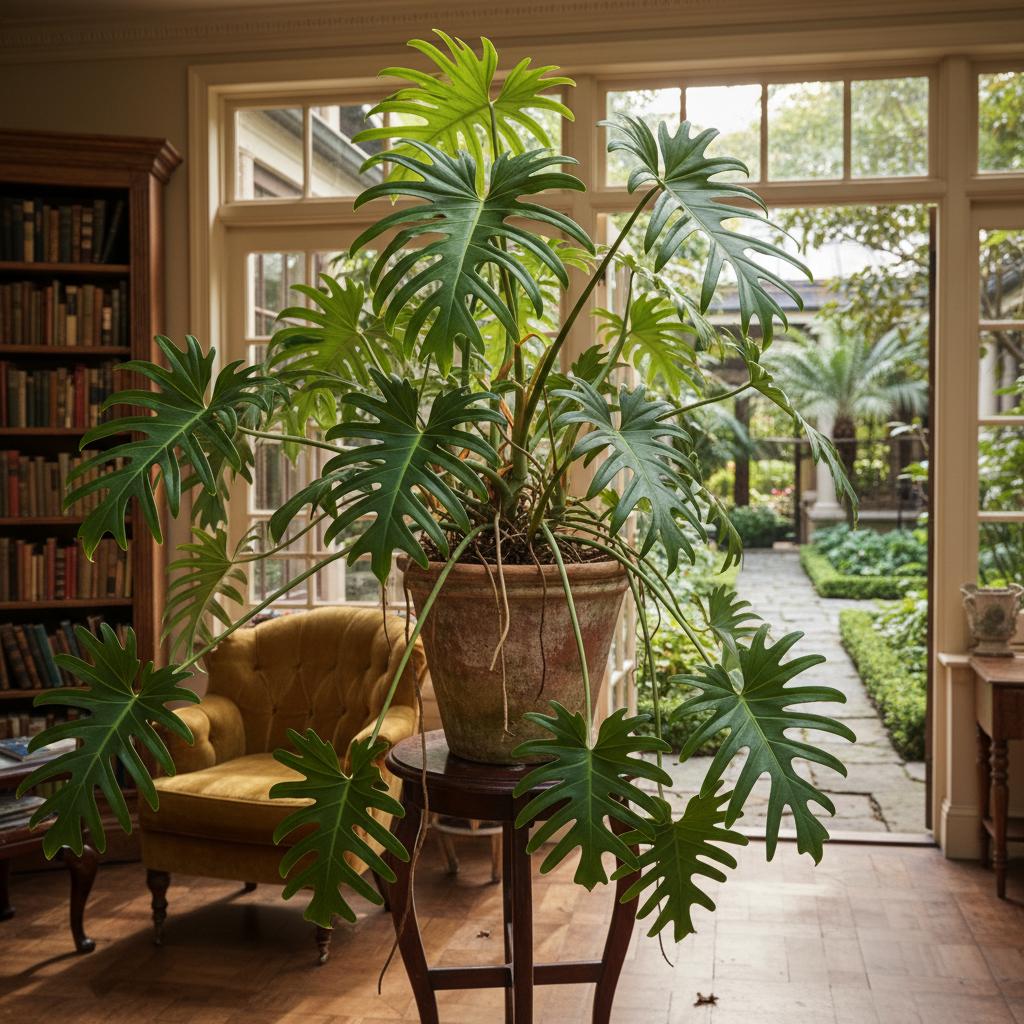
- Leaves: Evergreen, glossy, heart-shaped (cordate) leaves, typically 5-10 cm long indoors, arranged alternately on the stem;
- Stems: Slender, flexible, trailing or climbing vines that readily produce aerial roots at the nodes;
- Flowers: Greenish-white spathe surrounding a white to yellowish spadix, though extremely rare in indoor cultivation;
- Roots: Fibrous subterranean roots with prominent adventitious aerial roots for climbing.
Care Guide
Water thoroughly when the top inch of soil feels dry to the touch.
Apply a balanced liquid houseplant fertilizer diluted to half strength.. Do not fertilize during the winter dormancy period.
Aquarium Water:Use discarded water from freshwater aquarium changes. It provides a gentle, natural source of nitrogen. Ensure the water has no added aquarium salts or medications.- Pinching: Pinch back the growing tips regularly to encourage a bushier, fuller plant rather than a single long vine;
- Maintenance: Remove any yellowed, damaged, or dead leaves at the base of the petiole;
- Propagation: Cut healthy vines just below a node (where aerial roots form) to easily propagate in water.
Toxicity
Warning: this plant may be toxic.
Pets: Toxic per ASPCA. Ingestion causes intense burning and irritation of the mouth, tongue, and lips, excessive drooling, vomiting, and difficulty swallowing.
Humans: Contains insoluble calcium oxalates which can cause oral irritation, swelling, and gastrointestinal discomfort if ingested.
Garden Uses & Culture
Culture: A staple of mid-century modern interior design in the Americas, often gifted as a symbol of enduring affection and love due to its heart-shaped leaves.
Usage: Widely used as an indoor ornamental plant in hanging baskets, trailing from shelves, or trained to climb moss poles. Known for its air-purifying qualities.