 PlantFun
Plant Needs
Sunlight
Prefers full sun for the deepest foliage color, but tolerates partial shade.
Watering
Moderate water requirements; quite drought-tolerant once established.
Temperature
Extremely cold hardy, thriving in USDA zones 3-7.
Characteristics
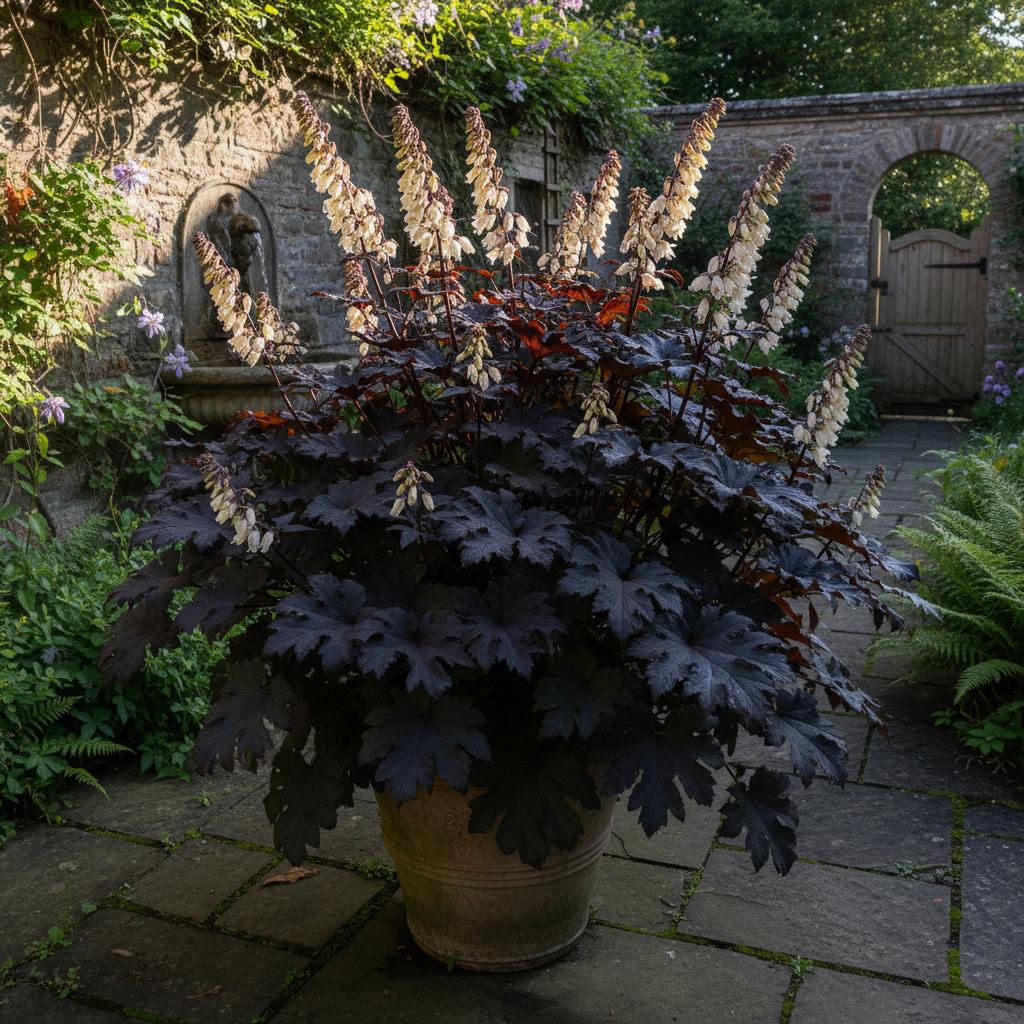
- Leaves: Ovate, 3 to 5-lobed with serrated margins; emerges deep purple and matures to a striking near-black hue.
- Flowers: Dense, rounded corymbs of small, cup-shaped white to pale pink flowers with prominent stamens, contrasting sharply with the dark foliage.
- Bark: Older stems feature exfoliating bark that peels back in thin, papery strips to reveal reddish-brown inner layers.
- Fruit: Drooping clusters of inflated, reddish papery capsules that persist into the winter months.
Care Guide
Watering
Water deeply once a week during active growth and dry spells.
Fertilization
Apply a balanced organic layer of compost or mild fertilizer as new growth appears.. Ninebark is not a heavy feeder; excessive nitrogen can lead to leggy growth and reduced foliage color.
Coffee Ground Compost Tea:Steep a small amount of used coffee grounds in water overnight to create a mild tea. Pour around the base in early spring to support lush foliage growth. Avoid applying raw grounds directly to prevent mold.Pruning
- Timing: Prune immediately after flowering in early summer to avoid cutting off next year's buds.
- Shaping: Lightly trim to maintain a rounded shape and control size.
- Rejuvenation: For older, overgrown shrubs, cut up to one-third of the oldest, thickest stems all the way to the ground in late winter to encourage vigorous new shoots.
Toxicity
Warning: this plant may be toxic.
Pets & Humans
Pets: Non-toxic to cats per ASPCA guidelines.
Humans: Generally considered non-toxic to humans, though not intended for consumption.
Garden Uses & Culture
Culture: In North American landscaping, dark-foliage cultivars like 'Hillside Black Beauty' are highly prized in "gothic gardens" and contemporary designs for providing dramatic contrast against traditional green plants.
Usage: Excellent as a specimen plant, in mixed shrub borders, as an informal hedge, or for erosion control on banks.