 PlantFun
Plant Needs
Characteristics
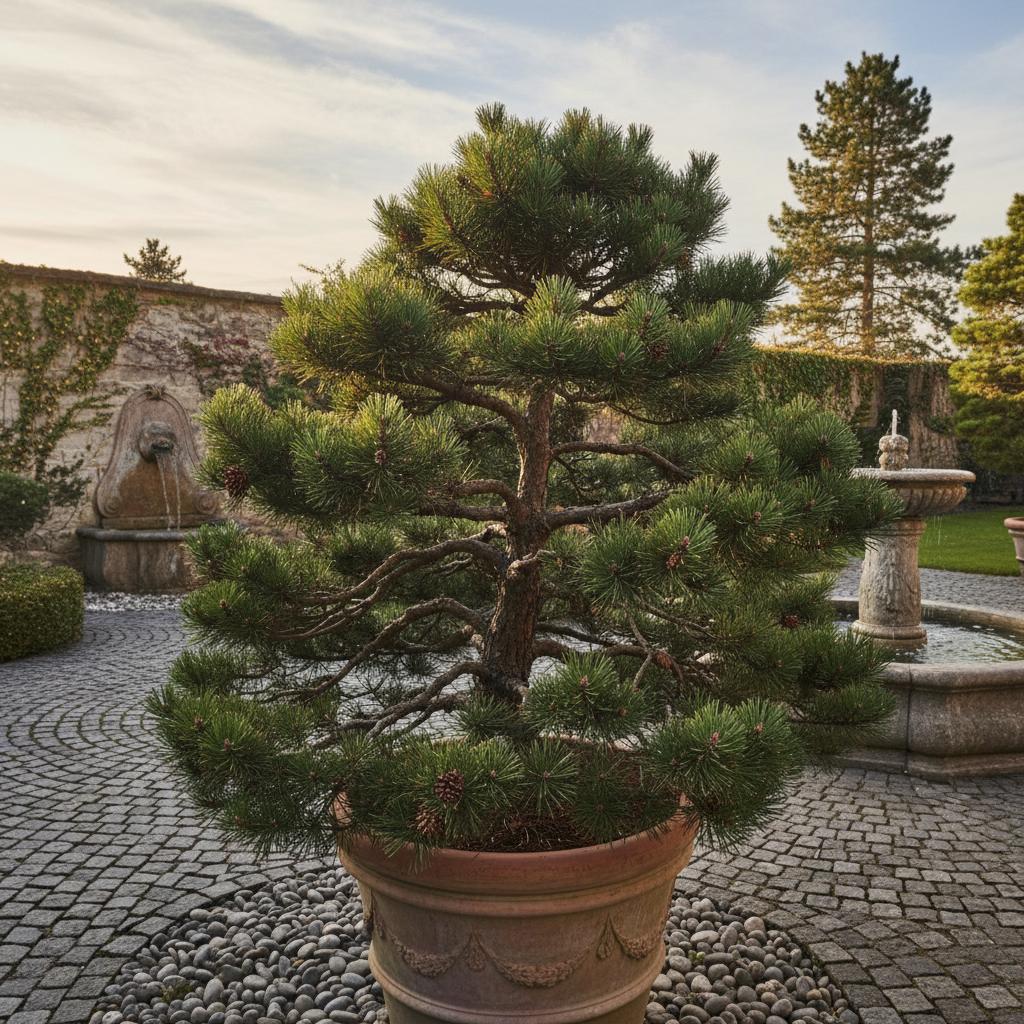
- Leaves: Needles in fascicles of two, 3 - 7 cm long, stiff, slightly twisted, and dark green;
- Cones: Symmetrical, ovoid, 2 - 5 cm long, maturing to dark brown with a prickly umbo on the scales;
- Bark: Dark greyish-brown, scaly, and fissured into irregular plates on older stems;
- Form: Typically a multi-stemmed, sprawling, or rounded shrub, rarely growing as a single-trunked tree.
Care Guide
Water deeply but infrequently, allowing the soil to dry out completely between waterings
Apply a balanced, slow-release granular fertilizer formulated for conifers or acid-loving plants. Requires minimal feeding; over-fertilization can cause rapid, weak growth.
Coffee Grounds Top Dressing:Sprinkle used, cooled coffee grounds lightly around the drip line and water in. Avoid thick layers to prevent mold and ensure proper soil aeration.- Pinch back new growth ("candles") by half in late spring to maintain a compact, dense shape;
- Do not cut into old wood that lacks needles, as pines generally will not back-bud from bare branches;
- Remove dead, damaged, or crossing branches in late winter to improve air circulation.
Toxicity
Warning: this plant may be toxic.
Pets: Mild toxicity per ASPCA guidelines for general pine species; ingestion can cause mechanical irritation or mild gastrointestinal upset.
Humans: Generally non-toxic; needles are sometimes used for teas, though ingestion of large amounts of raw needles may cause mild irritation.
Garden Uses & Culture
Culture: In European alpine regions, the mountain pine is a symbol of endurance and survival, often planted to represent resilience against harsh, high-altitude elements.
Usage: Widely used in rock gardens, foundation plantings, bonsai, and for erosion control on steep slopes. Pine oil is also extracted from its needles for commercial use.