 PlantFun
Plant Needs
Sunlight
Prefers partial to full sun; variegated forms benefit from protection against harsh afternoon rays.
Watering
Moderate watering; allow the topsoil to dry out between waterings. Drought tolerant once established.
Temperature
Frost-tender; thrives in warm, coastal, frost-free climates.
Characteristics
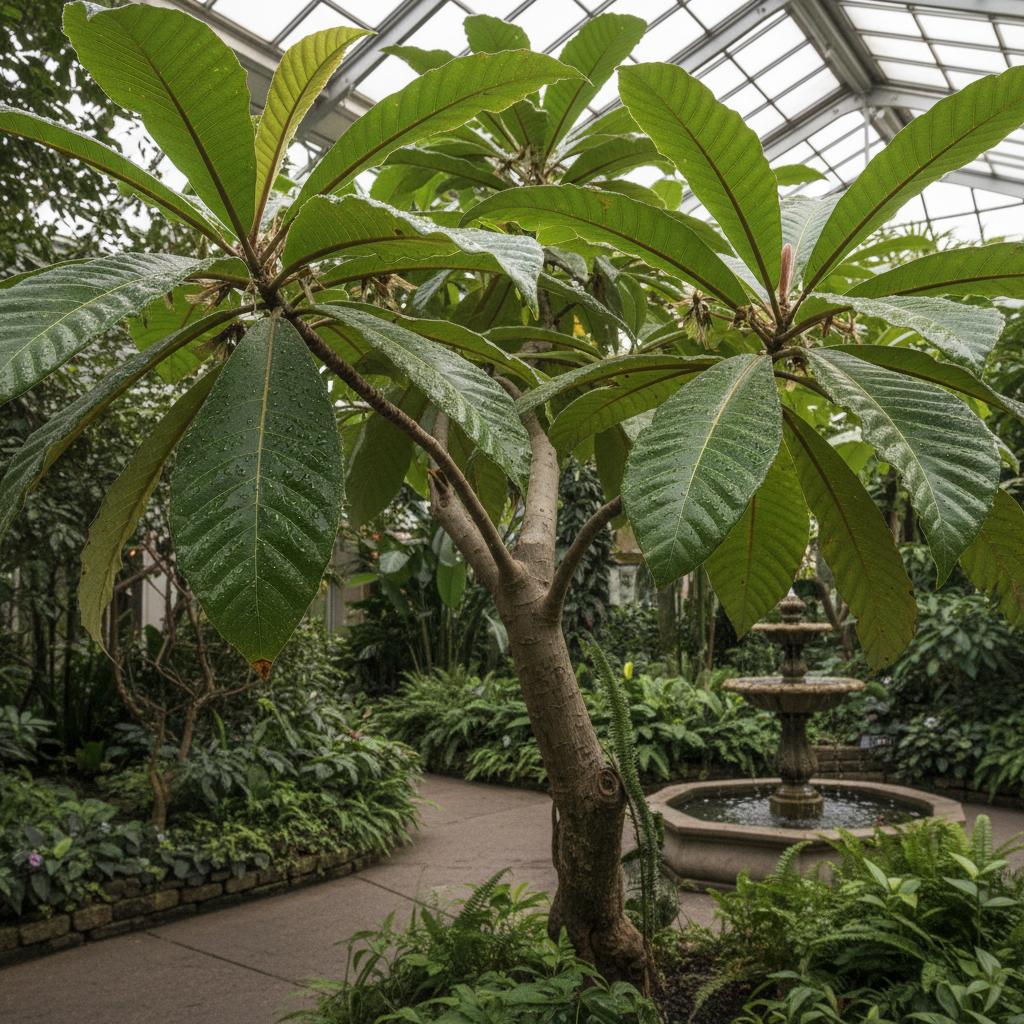
- Leaves: Large, glossy, opposite or whorled, elliptic to oblong, up to 40 cm long, sometimes variegated in cultivated forms;
- Flowers: Small, greenish-white to pinkish, arranged in multi-branched terminal panicles;
- Fruit: Narrow, ribbed seed pods exuding a highly viscous, sticky resin;
- Bark: Smooth, pale grey to brownish, becoming slightly fissured with age.
Care Guide
Watering
Water thoroughly when the top inch of soil is dry.
Fertilization
Apply a balanced fertilizer to encourage foliage growth.. Do not fertilize in winter during dormancy.
Banana Peel Tea:Soak chopped banana peels in water for 24-48 hours. Strain and use the liquid to water the plant. This provides gentle potassium for root and stem strength without risking salt buildup.Pruning
- Prune in early spring to maintain shape and control size;
- Remove lower branches to encourage a tree-like form;
- Crucial: Remove flower heads before they form seed pods if you wish to prevent the sticky seeds from trapping local wildlife or birds.
Toxicity
Warning: this plant may be toxic.
Pets & Humans
Pets: Not chemically toxic to cats, but sticky seeds pose a physical hazard if entangled in fur.
Humans: Not chemically toxic to humans, though the sticky sap can be a severe nuisance on skin.
Garden Uses & Culture
Culture: N/A
Usage: - Grown as an ornamental foliage plant in frost-free gardens; - Variegated forms are popular as large indoor conservatory plants; - Historically, the sticky sap was used by indigenous peoples to catch birds.