 PlantFun
Plant Needs
Characteristics
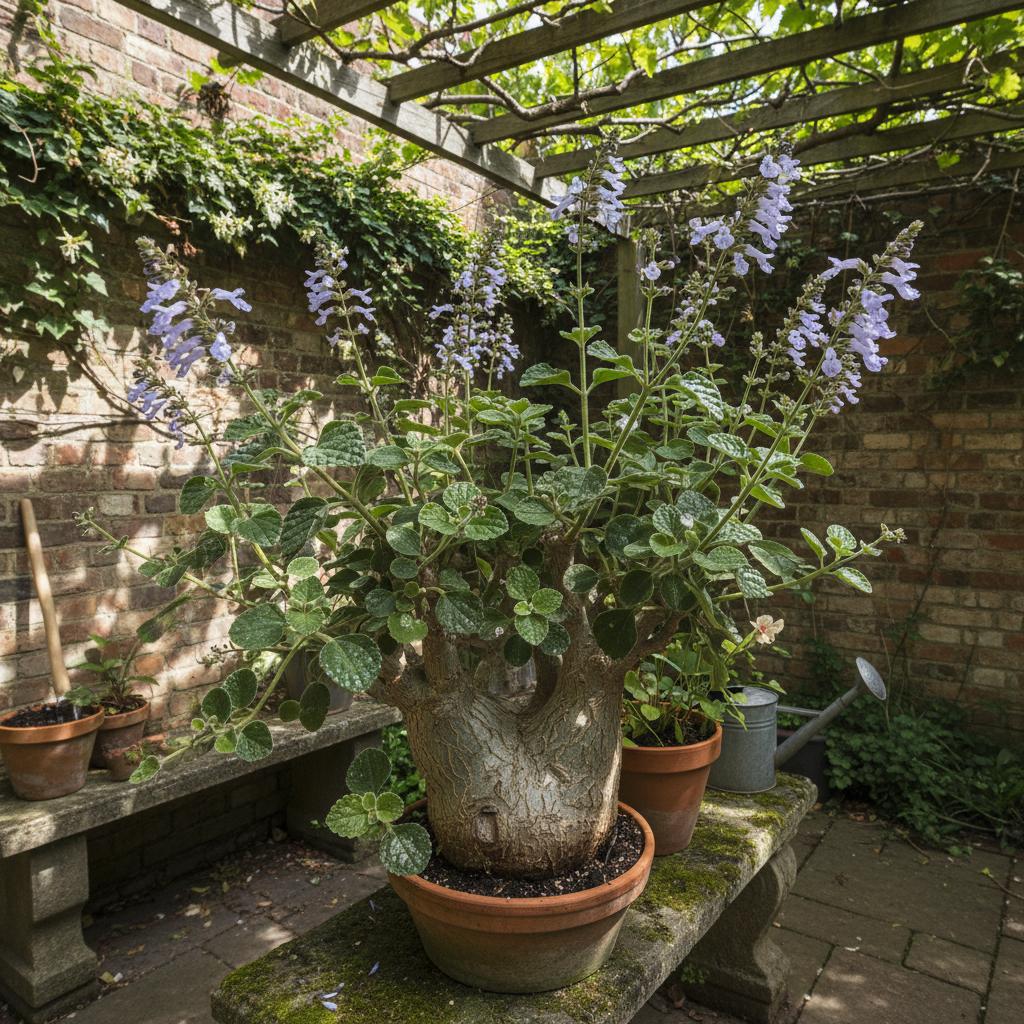
- Leaves: Small, ovate to deltoid, semi-succulent, with scalloped (crenate) margins; covered in fine glandular hairs and highly aromatic, emitting a minty or camphor-like scent when crushed.
- Stems: Distinctive swollen, segmented basal stems forming a caudex; grayish-brown and woody-looking at the base, becoming greener and softer towards the tips.
- Flowers: Borne on terminal racemes, small, tubular, and bilabiate (two-lipped); pale mauve, lavender, or whitish in color.
Care Guide
Water thoroughly when the potting medium is completely dry.
Apply a diluted, low-nitrogen succulent fertilizer.. Avoid over-fertilizing, which can cause rapid, weak growth and diminish the compact bonsai appearance.
Banana Peel Tea:Steep chopped banana peels in water for 24 hours. Strain the liquid and dilute 1:1 with water before applying to support root and caudex health. Discard the solid peels in an outdoor compost bin to avoid attracting fungus gnats indoors.- Pinch back the growing tips regularly during the active growing season to encourage branching.
- Prune leggy stems to maintain the compact, tree-like "bonsai" silhouette.
- Remove spent flower spikes to redirect the plant's energy back into foliage and caudex growth.
Toxicity
Warning: this plant may be toxic.
Pets: Mildly toxic to cats per ASPCA guidelines for related Plectranthus/Coleus species, primarily due to essential oils.
Humans: Generally considered non-toxic to humans, though ingestion of large amounts of the aromatic leaves may cause mild stomach upset.
Garden Uses & Culture
Culture: Highly prized in Western succulent and bonsai communities as an "instant bonsai" due to its naturally thick, aged-looking trunk that requires minimal training compared to traditional woody bonsai trees.
Usage: Cultivated primarily as an ornamental houseplant, a specimen for caudiciform collections, and a feature plant in miniature or fairy gardens.