 PlantFun
Plant Needs
Sunlight
Prefers partial sun to bright indirect light; morning sun enhances leaf color, but harsh afternoon sun can scorch the foliage.
Watering
Requires consistently moist, well-draining soil. Do not allow the soil to dry out completely or become waterlogged.
Temperature
Thrives in warm environments; highly sensitive to frost and cold drafts.
Characteristics
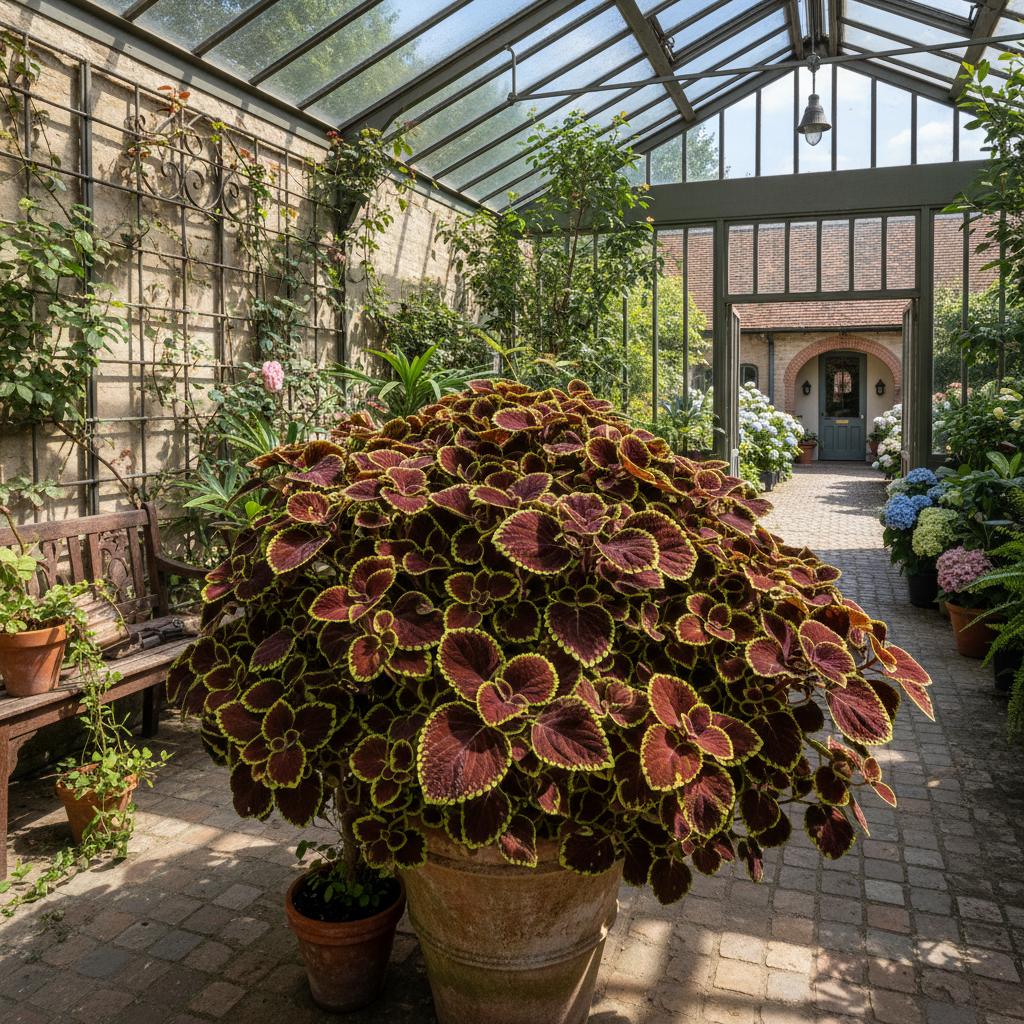
- Leaves: Opposite, ovate with scalloped or lobed margins, featuring a prominent dark chocolate-burgundy center and contrasting bright green edges;
- Stems: Square-shaped in cross-section, fleshy, green to purplish, typical of the mint family;
- Flowers: Small, tubular, pale blue to violet flowers borne on terminal spikes (often pinched off by gardeners to preserve foliage vigor).
Care Guide
Watering
Water thoroughly when the top inch of soil feels dry, keeping it evenly moist.
Fertilization
Apply a balanced liquid fertilizer diluted to half strength.. Regular feeding is essential for lush, colorful leaves.
Coffee Grounds Tea:Steep used coffee grounds in water overnight, strain, and use the liquid to water the plant. Provides a gentle nitrogen boost for lush foliage. Avoid applying thick layers of raw grounds directly to soil to prevent mold.Pruning
- Pinch off flower spikes as soon as they appear to direct the plant's energy back into foliage production;
- Regularly pinch back the growing tips of stems to encourage branching and a bushier, more compact habit;
- Remove any dead or damaged leaves to maintain appearance and prevent disease.
Toxicity
Warning: this plant may be toxic.
Pets & Humans
Pets: Toxic to cats per ASPCA due to essential oils (eugenol).
Humans: Mildly toxic if ingested; sap may cause minor skin irritation in sensitive individuals.
Garden Uses & Culture
Culture: Highly prized during the Victorian era in Europe and the Americas, where it became a staple in elaborate carpet bedding displays and conservatory collections.
Usage: Excellent for container gardens, hanging baskets, mixed borders, and as a vibrant indoor houseplant.