 PlantFun
Plant Needs
Sunlight
Requires bright, indirect light or dappled shade; avoid direct midday sun which can scorch the leaves.
Watering
Requires high humidity and consistent moisture; do not allow the root zone to dry out completely.
Temperature
Cool to intermediate growing conditions; prefers a noticeable temperature drop at night.
Characteristics
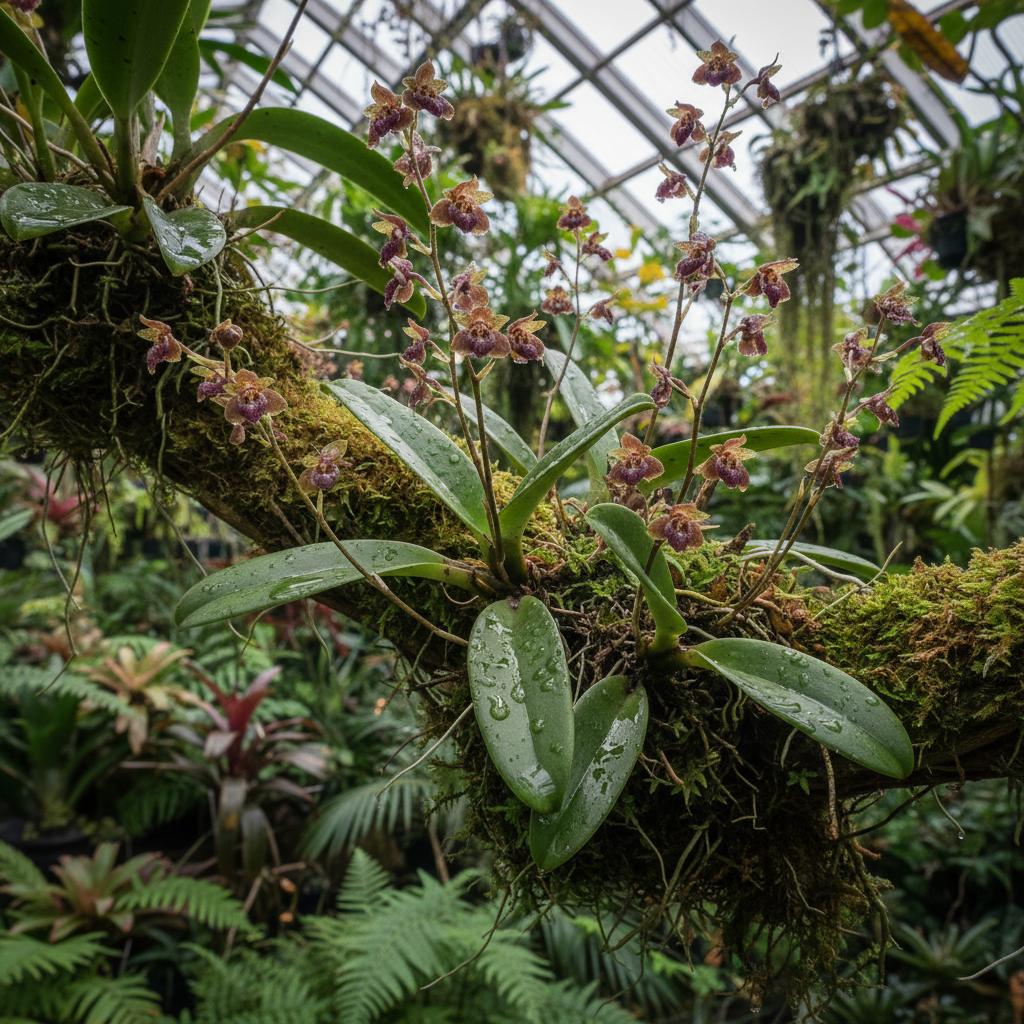
- Leaves: Distinctly heart-shaped (cordate) at the base, leathery, dark green, borne singly at the apex of slender stems;
- Flowers: Small, intricate, often reddish-brown to purplish, emerging directly from the base of the leaf (the spathe) and resting on the leaf surface;
- Stems: Slender, erect ramicauls enclosed by tubular, papery sheaths;
- Roots: Fine, epiphytic root system designed to cling to bark and absorb atmospheric moisture.
Care Guide
Watering
Water frequently to keep the potting medium evenly moist but not soggy.
Fertilization
Apply a weak, diluted orchid fertilizer.. Orchids are light feeders; flush the pot with pure water monthly to remove excess salts.
Aquarium Water Fertilizer:Use fresh, untreated aquarium change water to water the orchid. It provides a very mild, organic source of nitrogen that will not burn the sensitive epiphytic roots. Ensure the water is at room temperature.Pruning
- Sanitation: Always use sterilized cutting tools to prevent the spread of orchid viruses;
- Foliage: Remove completely yellowed or dead leaves at the base of the ramicaul;
- Flowers: Carefully trim away spent flower spikes without damaging the leaf tissue.
Toxicity
Warning: this plant may be toxic.
Pets & Humans
Pets: Non-toxic to cats per ASPCA guidelines for most Orchidaceae species.
Humans: Generally considered non-toxic to humans, though not meant for consumption.
Garden Uses & Culture
Culture: Highly sought after by miniature orchid enthusiasts in Europe and the Americas for its architectural, heart-shaped leaves and bizarre, alien-like blooms.
Usage: Cultivated primarily as an ornamental plant in specialized orchid collections, terrariums, and vivariums.