 PlantFun
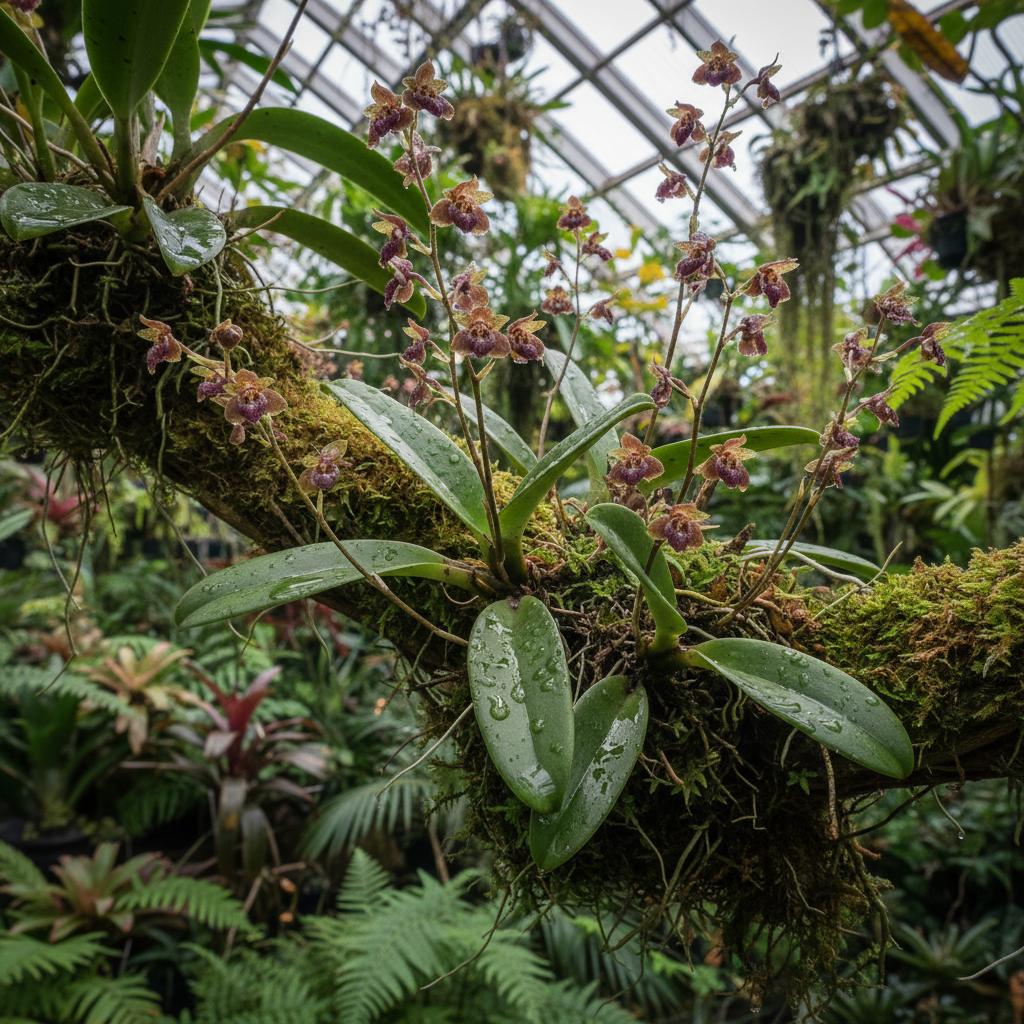
Plant Needs
Sunlight
Requires bright, indirect light or dappled shade; avoid direct midday sun which can scorch the leaves.
Watering
Requires constant moisture and high humidity; do not allow the potting medium to dry out completely.
Temperature
Prefers cool to intermediate temperatures typical of neotropical cloud forests.
Characteristics
- Leaves: Coriaceous, elliptical to lanceolate, borne singly at the apex of slender ramicauls;
- Flowers: Small, yellowish-green to pale yellow, emerging in clusters from a spathe at the base of the leaf;
- Stem: Slender, erect ramicauls enclosed by tubular, papery sheaths;
- Roots: Fine, fibrous epiphytic roots adapted for clinging to tree bark.
Care Guide
Watering
Water frequently to keep the medium evenly moist, ensuring good drainage.
Fertilization
Apply a balanced, water-soluble orchid fertilizer diluted to 1/4 strength.. Orchids are light feeders; flush the pot with pure water once a month to prevent salt buildup.
Aquarium Water:Use water from routine freshwater aquarium changes to water the orchid; ensure it is room temperature and free of heavy salts or medications.Pruning
- Remove yellowed or dead leaves at the base using sterilized snips;
- Trim away dried, spent flower spikes to maintain tidiness;
- Remove decaying organic matter from the base to prevent fungal rot.
Toxicity
Warning: this plant may be toxic.
Pets & Humans
Pets: Non-toxic to cats per ASPCA guidelines for Orchidaceae.
Humans: Generally recognized as safe and non-toxic to humans.
Garden Uses & Culture
Culture: Highly prized in European and American miniature orchid collections and terrarium setups for their unique leaf-borne blooms and compact growth habit.
Usage: - Ornamental cultivation in terrariums and vivariums; - Botanical greenhouse collections.