 PlantFun
Plant Needs
Sunlight
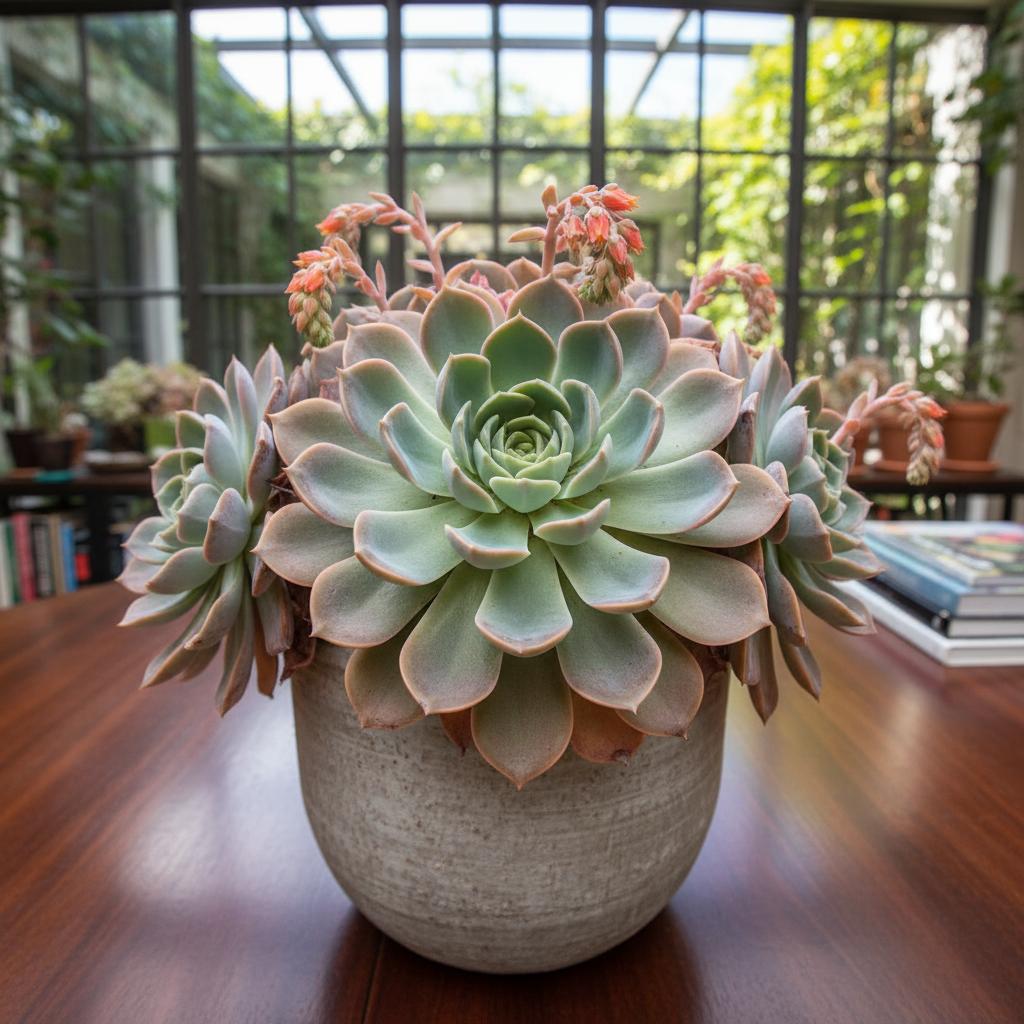
Requires bright, direct sunlight to maintain its compact rosette shape and silvery-lilac coloration.
Watering
Drought tolerant. Water deeply but infrequently, allowing the soil to dry out completely between waterings.
Temperature
Prefers warm temperatures; not frost-hardy and must be protected from freezing.
Characteristics
- Leaves: Broad, obovate, silvery-grey to powdery lilac, covered in farina (epicuticular wax), forming a tight rosette up to 20 cm across;
- Flowers: Bell-shaped, coral-pink to orange, borne on arching racemes in late summer;
- Stem: Short, stout, often hidden by the dense basal rosette.
Care Guide
Watering
Water thoroughly when the soil is completely dry, ensuring excess water drains away.
Fertilization
Apply a diluted, low-nitrogen succulent fertilizer once at the beginning of the growing season.. Avoid over-fertilizing, which can cause weak, leggy growth.
Banana Peel Tea:Steep dried banana peels in water for 24 hours. Dilute 1:1 with water. Avoid using too often to prevent salt buildup and soil gnats.Pruning
- Gently remove dead or dried basal leaves to prevent rot and eliminate hiding spots for pests like mealybugs;
- Snip off spent flower stalks near the base to redirect the plant's energy back to the rosette.
Toxicity
Warning: this plant may be toxic.
Pets & Humans
Pets: Non-toxic to cats per ASPCA guidelines for the Echeveria genus.
Humans: Non-toxic to humans.
Garden Uses & Culture
Culture: Succulents like Echeveria have become symbols of endurance and timeless beauty in modern Western interior design, often featured in minimalist and contemporary decor.
Usage: Excellent for rock gardens, container arrangements, windowsill displays, terrariums (with caution regarding humidity), and bridal bouquets.