 PlantFun
Plant Needs
Sunlight
Prefers bright, indirect light; avoid harsh direct afternoon sun which can scorch leaves.
Watering
Water when the top inch of soil feels dry to the touch; do not let it sit in water.
Temperature
Thrives in warm environments; highly sensitive to cold drafts below 15°C.
Characteristics
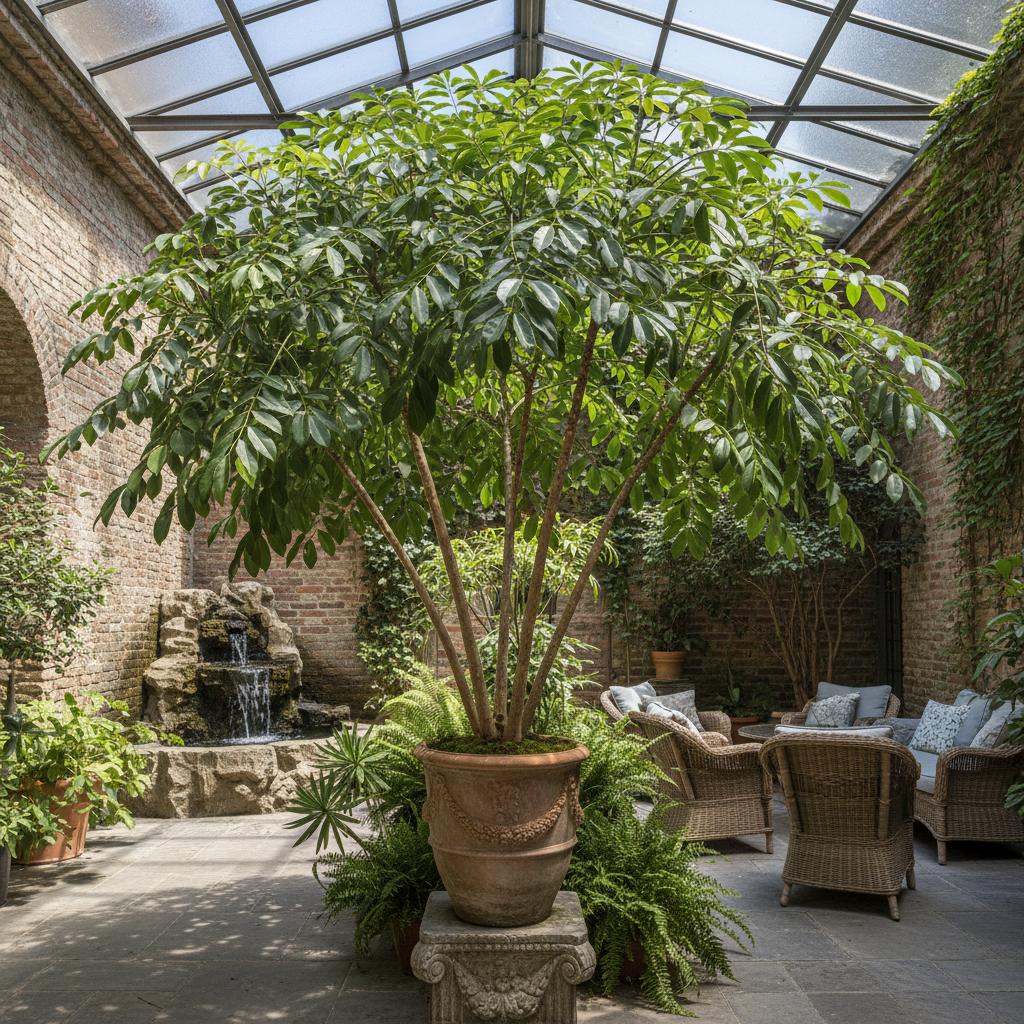
- Leaves: Bi- to tri-pinnately compound, leaflets narrowly ovate to lanceolate, deeply lobed or serrated, dark green and glossy;
- Stems: Woody, upright, often twisting or branching gracefully, with prominent leaf scars;
- Flowers: Small, inconspicuous, greenish-white to pale yellow, arranged in terminal panicles of umbels.
Care Guide
Watering
Water thoroughly when the topsoil dries out, ensuring good drainage.
Fertilization
Apply a balanced, diluted fertilizer to support new foliage growth.. Feed lightly, as it is a slow grower and excess fertilizer can burn the roots.
Aquarium Water Fertilizer:Use dirty water from routine freshwater aquarium changes to water the plant. It provides gentle, natural nitrogen without the risk of chemical burn. Ensure the water has no added salts or fish medications.Pruning
- Prune stem tips in spring to encourage denser branching;
- Remove any yellowing or dead leaves promptly to maintain appearance;
- Trim back leggy growth to maintain its compact, bonsai-like form.
Toxicity
Warning: this plant may be toxic.
Pets & Humans
Pets: Toxic per ASPCA (contains saponins); ingestion causes vomiting, diarrhea, and anorexia.
Humans: Sap may cause minor skin irritation; ingestion can cause mild gastrointestinal upset.
Garden Uses & Culture
Culture: Popularized in Western interior landscaping during the 1970s, it became a staple in modern homes and offices for its architectural, bonsai-like appearance.
Usage: Indoor ornamental, specimen plant, bonsai subject, and conservatory feature.